

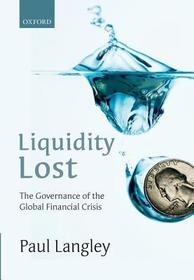
Liquidity Lost
The Governance of the Global Financial Crisis
-
10% KEDVEZMÉNY?
- A kedvezmény csak az 'Értesítés a kedvenc témákról' hírlevelünk címzettjeinek rendeléseire érvényes.
- Kiadói listaár GBP 97.00
-
46 341 Ft (44 135 Ft + 5% áfa)
Az ár azért becsült, mert a rendelés pillanatában nem lehet pontosan tudni, hogy a beérkezéskor milyen lesz a forint árfolyama az adott termék eredeti devizájához képest. Ha a forint romlana, kissé többet, ha javulna, kissé kevesebbet kell majd fizetnie.
- Kedvezmény(ek) 10% (cc. 4 634 Ft off)
- Kedvezményes ár 41 708 Ft (39 722 Ft + 5% áfa)
Iratkozzon fel most és részesüljön kedvezőbb árainkból!
Feliratkozom
46 341 Ft

Beszerezhetőség
Megrendelésre a kiadó utánnyomja a könyvet. Rendelhető, de a szokásosnál kicsit lassabban érkezik meg.
Why don't you give exact delivery time?
A beszerzés időigényét az eddigi tapasztalatokra alapozva adjuk meg. Azért becsült, mert a terméket külföldről hozzuk be, így a kiadó kiszolgálásának pillanatnyi gyorsaságától is függ. A megadottnál gyorsabb és lassabb szállítás is elképzelhető, de mindent megteszünk, hogy Ön a lehető leghamarabb jusson hozzá a termékhez.
A termék adatai:
- Kiadó OUP Oxford
- Megjelenés dátuma 2014. december 11.
- ISBN 9780199683789
- Kötéstípus Keménykötés
- Terjedelem236 oldal
- Méret 238x163x20 mm
- Súly 512 g
- Nyelv angol 0
Kategóriák
Rövid leírás:
Contributing to interdisciplinary debates in cultural economy and the social studies of finance, and grounded in extensive empirical research, this book offers an innovative analysis of how the contemporary global financial crisis was governed. The focus is on the US and UK between 2007 and 2011
TöbbHosszú leírás:
Contributing to interdisciplinary debates in cultural economy and the social studies of finance, and grounded in extensive empirical research, Liquidity Lost offers an innovative analysis of how the contemporary global financial crisis was governed. Through an exploration of the interventions made by central banks, treasuries, and regulatory authorities in the Anglo-American heartland of the crisis between 2007 and 2011, experimental and strategic apparatuses of crisis governance are shown to have emerged. These discrete apparatuses established six technical problems to be acted upon - liquidity, toxicity, solvency, risk, regulation, and debt - but also shared certain proclivities and preferences. Crisis governance assembled discourses and devices of economy in relation with sovereign monetary, fiscal, and regulatory techniques, and elicited an affective atmosphere of confidence. It also sought to secure the financialized way of life which turns on the opportunities ostensibly afforded by uncertain financial circulations, and gave rise to post-crisis technical fixes designed to advance the resilience of banking and the macro-prudential regulation of financial stability. Thus, the consensus that prevails across economics, political economy, and beyond - wherein sovereign state institutions are cast as coming to the rescue of the markets, banking, or neo-liberal capitalism - conceals a great deal more than it reveals about the governance of the global financial crisis.
This book by Langley ... offers an innovative analysis of how the global financial crisis of 2007 was governed ...Recommended
Tartalomjegyzék:
Introduction
Financial Crisis Governance
Liquidity
Toxicity
Solvency
Risk
Regulation
Debt
Conclusion

