

-
10% KEDVEZMÉNY?
- A kedvezmény csak az 'Értesítés a kedvenc témákról' hírlevelünk címzettjeinek rendeléseire érvényes.
- Kiadói listaár GBP 90.00
-
42 997 Ft (40 950 Ft + 5% áfa)
Az ár azért becsült, mert a rendelés pillanatában nem lehet pontosan tudni, hogy a beérkezéskor milyen lesz a forint árfolyama az adott termék eredeti devizájához képest. Ha a forint romlana, kissé többet, ha javulna, kissé kevesebbet kell majd fizetnie.
- Kedvezmény(ek) 10% (cc. 4 300 Ft off)
- Kedvezményes ár 38 698 Ft (36 855 Ft + 5% áfa)
Iratkozzon fel most és részesüljön kedvezőbb árainkból!
Feliratkozom
42 997 Ft

Beszerezhetőség
Megrendelésre a kiadó utánnyomja a könyvet. Rendelhető, de a szokásosnál kicsit lassabban érkezik meg.
Why don't you give exact delivery time?
A beszerzés időigényét az eddigi tapasztalatokra alapozva adjuk meg. Azért becsült, mert a terméket külföldről hozzuk be, így a kiadó kiszolgálásának pillanatnyi gyorsaságától is függ. A megadottnál gyorsabb és lassabb szállítás is elképzelhető, de mindent megteszünk, hogy Ön a lehető leghamarabb jusson hozzá a termékhez.
A termék adatai:
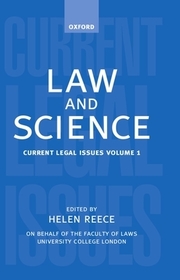
- Kiadás sorszáma és címe Law and Science v.1
- Kiadó OUP Oxford
- Megjelenés dátuma 1998. július 30.
- ISBN 9780198267942
- Kötéstípus Keménykötés
- Terjedelem332 oldal
- Méret 224x143x20 mm
- Súly 478 g
- Nyelv angol 0
Kategóriák
Rövid leírás:
This is the first volume of an exciting new series, Current Legal Issues, which will be published each spring as a sister volume to Current Legal Problems. This book is the first volume in the series and explores the relationship of law and science, with a particular focus on the role of science as evidence. Scientific evidence impinges on a wide range of legal issues, including, for example, risk assessment in mental health and child abuse, criminal investigations, chemical and medical products, mass tort cases and the attribution of paternity. Science promises to reduce (or even eliminate) uncertainty; how should lawyers respond to such ambitious claims? As the civil justice process undergoes a major overhaul, this diverse and stimulating collection of essays provides a timely and thought-provoking reassessment of the relationship between law and science in general and the uses and value of scientific evidence in particular.
TöbbHosszú leírás:
This is the first volume of an exciting new series, Current Legal Issues, which will be published each spring as a sister volume to Current Legal Problems. The basis for each interdisciplinary volume will be a two-day colloquium held each year by the Faculty of Laws at University College London. This first volume explores the interrelationship of law and science. Future volumes will examine themes such as law and literature, law and medicine, law and religion, etc.
This book, the first volume of Current Legal Issues, explores the relationship of law and science, with a particular focus on the role of science as evidence. Scientific evidence impinges on a wide range of legal issues, including, for example, risk assessment in mental health and child abuse, criminal investigations, chemical and medical products, mass tort cases and the attribution of paternity. Science promises to reduce (or even eliminate) uncertainty; how should lawyers respond to such ambitious claims? As the civil justice process undergoes a major overhaul, this diverse and stimulating collection of essays provides a timely and thought-provoking reassessment of the relationship between law and science in general and the uses and value of scientific evidence in particular.
From the Editors' Introduction
This volume addresses the intersection between law and science, two monolithic institutions which generally compete for, but sometimes coincide in presenting, an authoritative analysis of the world. The contributors to this volume take different views as to who is the victor in this contest Science deals in objective reality; therefore it is for scientists to reveal as much as they can about reality, and for the law to determine what should be made of the discoveries. Perhaps this division of labour is too simplistic, but if it is taken as a model, it is apparent that law and science are bound together and that mutual understanding is essential. If this volume contributes to that understanding then it will have performed an invaluable service.
Tartalomjegyzék:
Cognitive science, legal theory and the possibility of an observation/theory distinction in morality and law
Science, reason, and tort law: looking for the reasonable person
The role of scientific evidence in the assessment of causation in medicinal product liability litigation: a probabilistic and economic analysis
Pedro Juan Cubillo v Commonwealth of Australia (1995): right result, wrong method
The BSE crisis: a study of the precautionary principle and the politics of science in law
A new criterion for the admissibility of scientific evidence? The metamorphosis of helpfulness
Reflections on expert evidence in Canadian criminal proceedings: more lessons from North America
The risks and dangers of experts in court
Laws truth, lay truth and medical science: three case studies
Brainwashing evidence in the light of Daubert: science and unpopular religions
What lawyers need to know about science

