

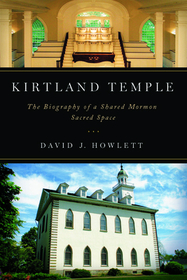
Kirtland Temple
The Biography of a Shared Mormon Sacred Space
-
10% KEDVEZMÉNY?
- A kedvezmény csak az 'Értesítés a kedvenc témákról' hírlevelünk címzettjeinek rendeléseire érvényes.
- Kiadói listaár GBP 20.99
-
10 027 Ft (9 550 Ft + 5% áfa)
Az ár azért becsült, mert a rendelés pillanatában nem lehet pontosan tudni, hogy a beérkezéskor milyen lesz a forint árfolyama az adott termék eredeti devizájához képest. Ha a forint romlana, kissé többet, ha javulna, kissé kevesebbet kell majd fizetnie.
- Kedvezmény(ek) 10% (cc. 1 003 Ft off)
- Kedvezményes ár 9 025 Ft (8 595 Ft + 5% áfa)
Kedvezményes ár heti hírlevelünkre feliratkozott ügyfeleinknek.
Iratkozzon fel most és részesüljön kedvezőbb árainkból!
Feliratkozom
Iratkozzon fel most és részesüljön kedvezőbb árainkból!
Feliratkozom
10 027 Ft

Beszerezhetőség
Becsült beszerzési idő: A Prosperónál jelenleg nincsen raktáron, de a kiadónál igen. Beszerzés kb. 3-5 hét..
A Prosperónál jelenleg nincsen raktáron.
Why don't you give exact delivery time?
A beszerzés időigényét az eddigi tapasztalatokra alapozva adjuk meg. Azért becsült, mert a terméket külföldről hozzuk be, így a kiadó kiszolgálásának pillanatnyi gyorsaságától is függ. A megadottnál gyorsabb és lassabb szállítás is elképzelhető, de mindent megteszünk, hogy Ön a lehető leghamarabb jusson hozzá a termékhez.
A termék adatai:
- Kiadás sorszáma 1st Edition
- Kiadó University of Illinois Press
- Megjelenés dátuma 2014. május 12.
- Kötetek száma Paperback
- ISBN 9780252079986
- Kötéstípus Puhakötés
- Lásd még 9780252038488
- Terjedelem280 oldal
- Méret 229x152x20 mm
- Súly 367 g
- Nyelv angol
- Illusztrációk 7 black and white photographs, 1 line drawing, 2 maps, 3 tables 0
Kategóriák
Hosszú leírás:
The only temple completed by Mormonism's founder, Joseph Smith Jr., the Kirtland Temple in Kirtland, Ohio, receives 30,000 Mormon pilgrims every year. Though the site is sacred to all Mormons, the temple's religious significance and the space itself are contested by rival Mormon dominations: its owner, the relatively liberal Community of Christ, and the larger Church of Jesus Christ of Latter-day Saints.
David J. Howlett sets the biography of Kirtland Temple against the backdrop of religious rivalry. The two sides have long contested the temple's ownership, purpose, and significance in both the courts and Mormon literature. Yet members of each denomination have occasionally cooperated to establish periods of co-worship, host joint tours, and create friendships. Howlett uses the temple to build a model for understanding what he calls parallel pilgrimage--the set of dynamics of disagreement and alliance by religious rivals at a shared sacred site. At the same time, he illuminates social and intellectual changes in the two main branches of Mormonism since the 1830s, providing a much-needed history of the lesser-known Community of Christ.
Több
David J. Howlett sets the biography of Kirtland Temple against the backdrop of religious rivalry. The two sides have long contested the temple's ownership, purpose, and significance in both the courts and Mormon literature. Yet members of each denomination have occasionally cooperated to establish periods of co-worship, host joint tours, and create friendships. Howlett uses the temple to build a model for understanding what he calls parallel pilgrimage--the set of dynamics of disagreement and alliance by religious rivals at a shared sacred site. At the same time, he illuminates social and intellectual changes in the two main branches of Mormonism since the 1830s, providing a much-needed history of the lesser-known Community of Christ.
Tartalomjegyzék:
"
Cover
Title
Contents
List of Illustrations
Acknowledgments
Introduction. The Kirtland Temple as a Parallel Pilgrimage
Part I: Pattern and Preparation
1. A ""House of the Lord"" in Kirtland, 1831–1844
2. Splintered Saints and the Temple, 1844–1900
3. Reforming Identities, Reframing Pilgrimage, 1900–1965
Part 2. Proximity
4. Creating a Cursed and Sanctified Temple, 1965–1984
5. The Destroyer and the Peacemakers, 1984–1990
6. New Shrines and New Capital, 1990–2012
Part 3. Performance
7. Staging the Temple, 1972–2012
8. Tour Guiding, 1959–2012
9. Dealing with Diversity, 1965–2012
Conclusion: Parallel Pilgrimages, Parallel Temples
Appendix: Theorizing Pilgrimage
Notes
Index

