

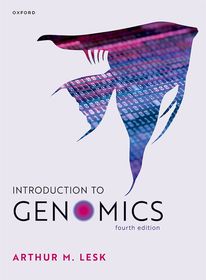
Introduction to Genomics
-
10% KEDVEZMÉNY?
- A kedvezmény csak az 'Értesítés a kedvenc témákról' hírlevelünk címzettjeinek rendeléseire érvényes.
- Kiadói listaár GBP 55.99
-
25 279 Ft (24 075 Ft + 5% áfa)
Az ár azért becsült, mert a rendelés pillanatában nem lehet pontosan tudni, hogy a beérkezéskor milyen lesz a forint árfolyama az adott termék eredeti devizájához képest. Ha a forint romlana, kissé többet, ha javulna, kissé kevesebbet kell majd fizetnie.
- Kedvezmény(ek) 10% (kb. 2 528 Ft)
- Kedvezményes ár 22 751 Ft (21 668 Ft + 5% áfa)
Iratkozzon fel most és részesüljön kedvezőbb árainkból!
Feliratkozom
25 279 Ft

Beszerezhetőség
Becsült beszerzési idő: A Prosperónál jelenleg nincsen raktáron, de a kiadónál igen. Beszerzés kb. 3-5 hét..
A Prosperónál jelenleg nincsen raktáron.
Why don't you give exact delivery time?
A beszerzés időigényét az eddigi tapasztalatokra alapozva adjuk meg. Azért becsült, mert a terméket külföldről hozzuk be, így a kiadó kiszolgálásának pillanatnyi gyorsaságától is függ. A megadottnál gyorsabb és lassabb szállítás is elképzelhető, de mindent megteszünk, hogy Ön a lehető leghamarabb jusson hozzá a termékhez.
A termék adatai:
- Kiadás sorszáma 4
- Kiadó OUP Oxford
- Megjelenés dátuma 2025. április 17.
- ISBN 9780198866893
- Kötéstípus Puhakötés
- Terjedelem624 oldal
- Méret 267x216x25 mm
- Súly 1164 g
- Nyelv angol 979
Kategóriák
Rövid leírás:
The most up-to-date and complete textbook for first time genomics students, Introduction to Genomics offers a fascinating insight into how organisms differ or match; how different organisms evolved; how the genome is constructed and how it operates; and what our understanding of genomics means in terms of our future health and wellbeing.
TöbbHosszú leírás:
Our genome is the blueprint for our existence: it encodes all the information we need to develop from a single cell into a hugely complicated functional organism. Yet it is more than a static information store: our genome is a dynamic, tightly regulated collection of genes, which switch on and off in many combinations to give the variety of cells from which our bodies are formed. But how do we identify the genes that make up our genome? How do we determine their function? And how do different genes form the regulatory networks that direct the processes of life?
Introduction to Genomics is the most up-to-date and complete textbook for students approaching the subject for the first time. Lesk's engaging writing style brings a narrative to a disparate field of study and offers a fascinating insight into what can be revealed from the study of genomes. The book covers: the similarities and differences between organisms; how different organisms evolved; how the genome is constructed and how it operates; and what our understanding of genomics means in terms of our future health and wellbeing.
Digital formats and resources
The book is available for students and institutions to purchase in a variety of formats, and is supported by online resources:
· The e-book offers a mobile-compatible experience and convenient access along with functionality tools, navigation features, and links that offer extra learning support: www.oxfordtextbooks.co.uk/ebooks
· Online resources, available for registered adopters, include downloadable figures and tables from the book
· E-book and Trove formats are enriched with online resources for students, including extensive and imaginative weblems (web-based problems) for each chapter; hints and answers to end-of-chapter problems and exercises to support self-directed learning; a guided tour of websites and major archival databanks in genomics to springboard further research; Journal Club (links to related research articles on topics covered in the book paired with engaging questions); and rotating figures which allow readers to visualize complex structures.
Review from previous edition
This book is great for introducing the field of genomics, providing the basic concepts underpinning the field, including cutting edge techniques, along with examples of its application.
Tartalomjegyzék:
Introduction and background
The Human Genome Project: achievements and applications
Bioinformatics
Classical genetics, mapping and sequencing
Evolution and genomic change
Comparative genomics
Genomes of prokaryotes and viruses
Genomes of eukaryotes
Genomics and anthropology: human evolution, Migration, and domestication of plants and animals
The impact of genomics on human health and disease
Transcriptomics
Proteomics
Metabolomics
Systems biology

