

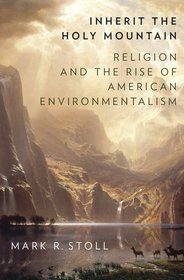
Inherit the Holy Mountain
Religion and the Rise of American Environmentalism
-
10% KEDVEZMÉNY?
- A kedvezmény csak az 'Értesítés a kedvenc témákról' hírlevelünk címzettjeinek rendeléseire érvényes.
- Kiadói listaár GBP 60.00
-
28 665 Ft (27 300 Ft + 5% áfa)
Az ár azért becsült, mert a rendelés pillanatában nem lehet pontosan tudni, hogy a beérkezéskor milyen lesz a forint árfolyama az adott termék eredeti devizájához képest. Ha a forint romlana, kissé többet, ha javulna, kissé kevesebbet kell majd fizetnie.
- Kedvezmény(ek) 10% (cc. 2 867 Ft off)
- Kedvezményes ár 25 799 Ft (24 570 Ft + 5% áfa)
Iratkozzon fel most és részesüljön kedvezőbb árainkból!
Feliratkozom
28 665 Ft

Beszerezhetőség
Becsült beszerzési idő: A Prosperónál jelenleg nincsen raktáron, de a kiadónál igen. Beszerzés kb. 3-5 hét..
A Prosperónál jelenleg nincsen raktáron.
Why don't you give exact delivery time?
A beszerzés időigényét az eddigi tapasztalatokra alapozva adjuk meg. Azért becsült, mert a terméket külföldről hozzuk be, így a kiadó kiszolgálásának pillanatnyi gyorsaságától is függ. A megadottnál gyorsabb és lassabb szállítás is elképzelhető, de mindent megteszünk, hogy Ön a lehető leghamarabb jusson hozzá a termékhez.
A termék adatai:
- Kiadó OUP USA
- Megjelenés dátuma 2015. június 25.
- ISBN 9780190230869
- Kötéstípus Keménykötés
- Terjedelem424 oldal
- Méret 239x160x33 mm
- Súly 680 g
- Nyelv angol
- Illusztrációk 15 illustrations 0
Kategóriák
Rövid leírás:
Inherit the Holy Mountain puts religion at the center of the history of American environmentalism rather than at its margins, demonstrating how religion provided environmentalists with content, direction, and tone for the environmental causes they espoused.
TöbbHosszú leírás:
Historians of American environmentalism have long given religion either a negligible role or a negative one in the development of the field. According to the standard view, Christianity fostered attitudes hostile or indifferent to nature, with Protestantism the worst offender. While virtually all leading environmental figures did eventually leave organized religion, a large majority however had religious childhoods, usually in Reformed Protestant churches, and often counted clergy as close relatives. And although popular support for conservation and environmentalism was relatively non-denominational, Congregationalists provided the foundational ideas of conservation, while the rise and decline of environmentalism as a powerful national movement coincided with the prevalence of Presbyterian leadership.
By tracing the history of American environmentalism from a perspective that puts religion at the center rather than the margins, Mark Stoll opens up a fundamentally new and much needed narrative in environmental studies. Inherit the Holy Mountain argues against the divide between religion and American environmentalism, demonstrating how religion necessarily provided environmentalists with deeply-embedded moral and cultural ways of viewing the world giving content, direction, and tone to the environmental causes they espoused. The book demonstrates how individuals' denominational origins corresponded with characteristic sets of ideas about nature and the environment, with each denomination fostering a distinctive culture with its own moral framework and its own placement of humans within the natural world. Stoll also demonstrates how each denomination also fostered a distinctive aesthetic reaction to nature, beginning each chapter of the book with an analysis of a representative work of art.
Inherit the Holy Mountain also provides insight into the possible future of environmentalism in the United States, concluding with an examination of the current religious scene and consideration of what it may tell us. Whatever form the response to these problems will take in the twenty-first century, Stoll says, it will look very different, with different values, goals, and styles of leadership, than it did when the children of the Reformed churches created and led it.
If the geographic region of focus is the United States, then the book is mandatory. The impressive amount of data covered in its pages, and the cohesive narrative that contextualizes and analyzes this data, cannot be captured in a 1,600-word book review. Scholars owe Stoll a debt of gratitude for the 30 years of dedication to crafting this thorough treatment of the impact religion has had on environmentalism in the US. This gratitude should begin with the assignment of this book in graduate seminars devoted to interactions between religion and nature, where it can provide a shining example of scholarship toward which future leaders of the field should aspire.
Tartalomjegyzék:
Dedication
Epigraph
Contents
List of Illustrations
Acknowledgments
Introduction
1. Calvinism and Nature: American Foundations
2. Origins of Conservation in the Puritan Landscape
3. Building the Moral Society: Farms, Forests, and Parks
4. Nature, Parks, and Emersonian Modernism
5. Progressive Presbyterian Conservation
6. Presbyterians and the Environmental Movement
7. Nature and New England's Outsiders
8. A New Era
Conclusion
Appendix
Notes
Index

