

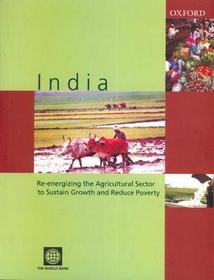
India
Re-Energizing the Agricultural Sector to Sustain Growth and Reduce Poverty
-
10% KEDVEZMÉNY?
- A kedvezmény csak az 'Értesítés a kedvenc témákról' hírlevelünk címzettjeinek rendeléseire érvényes.
- Kiadói listaár USD 8.00
-
2 814 Ft (2 680 Ft + 5% áfa)
Az ár azért becsült, mert a rendelés pillanatában nem lehet pontosan tudni, hogy a beérkezéskor milyen lesz a forint árfolyama az adott termék eredeti devizájához képest. Ha a forint romlana, kissé többet, ha javulna, kissé kevesebbet kell majd fizetnie.
- Kedvezmény(ek) 10% (cc. 281 Ft off)
- Kedvezményes ár 2 533 Ft (2 412 Ft + 5% áfa)
Iratkozzon fel most és részesüljön kedvezőbb árainkból!
Feliratkozom
2 814 Ft

Beszerezhetőség
Becsült beszerzési idő: A Prosperónál jelenleg nincsen raktáron, de a kiadónál igen. Beszerzés kb. 3-5 hét..
A Prosperónál jelenleg nincsen raktáron.
Why don't you give exact delivery time?
A beszerzés időigényét az eddigi tapasztalatokra alapozva adjuk meg. Azért becsült, mert a terméket külföldről hozzuk be, így a kiadó kiszolgálásának pillanatnyi gyorsaságától is függ. A megadottnál gyorsabb és lassabb szállítás is elképzelhető, de mindent megteszünk, hogy Ön a lehető leghamarabb jusson hozzá a termékhez.
A termék adatai:
- Kiadó Oxford University Press
- Megjelenés dátuma 2005. június 2.
- ISBN 9780195674323
- Kötéstípus Puhakötés
- Terjedelem96 oldal
- Méret 279x214x7 mm
- Súly 288 g
- Nyelv angol
- Illusztrációk numerous figures & tables 0
Kategóriák
Rövid leírás:
Agriculture contributes only about a quarter of India's total GDP, but its importance in the economic, social, and political fabric of India goes beyond what mere numbers indicate. Central to policy making in India is the enduring concern with the large number of poor agricultural households and their income vulnerablity. These concerns, in turn, drive both policy and public expenditure in agriculture. While significant progress has been made towards rapid agricultural growth,
eradication of poverty, and ensuring food security, since the 1990s agricultural growth has slowed down. A concern with the slowdown is evident in the priority given to raising agricultural productivity in the Indian government's National Agricultural Policy and the 10th Five Year Plan.
Hosszú leírás:
Agriculture contributes only about a quarter of India's total GDP, but its importance in the economic, social, and political fabric of India goes beyond what mere numbers indicate. Central to policy making in India is the enduring concern with the large number of poor agricultural households and their income vulnerablity. These concerns, in turn, drive both policy and public expenditure in agriculture. While significant progress has been made towards rapid agricultural growth,
eradication of poverty, and ensuring food security, since the 1990s agricultural growth has slowed down. A concern with the slowdown is evident in the priority given to raising agricultural productivity in the Indian government's National Agricultural Policy and the 10th Five Year Plan.
In comprehensively addressing these issues, the report recommends:
BL Moving away from traditional subsidy-based regimes
BL Building a highly productive, internationally competitive agricultural sector
BL Making t he sector more diversified
Such a programme, the report argues, will have a direct impact on reducing poverty by:
BL Enhancing producer incomes
BL Maximizing consumer welfare through changes in food prices
BL Increasing employment and wage effects leading to growth-induced effects throughout the economy.
Providing important data on the state and future directions of India's agricultural sector, that is compatible and sustainable with the changed environment of the twenty-first century, the report suggests concrete policy options for increased productivity. These include reorienting government expenditures toward more productive investments in rural infrastructure and services, as also removing restrictions on domestic trade--changes that will improve the investment climate for farmers and the
private sector to meet market opportunites.
Conceptualized and written by noted agricultural experts and development economists in India and abroad, its statistical quality a nd analytical richness will make this report invaluable for government, academic, activist, business, and financial circles. Students, teachers, and researchers will also find it an indispensable resource.
Tartalomjegyzék:
Acknowledgements
India at a Glance
Executive Summary
Introduction
Overview of the Agricultural Economy
Changing Agricultural Policy Environment in the 1990s
Agricultural Input Policies: Impact and Costs
Re-energizing the Agricultural Sector: Policy Options
References
Tables
Figures
Boxes

