

-
10% KEDVEZMÉNY?
- A kedvezmény csak az 'Értesítés a kedvenc témákról' hírlevelünk címzettjeinek rendeléseire érvényes.
- Kiadói listaár GBP 93.00
-
44 430 Ft (42 315 Ft + 5% áfa)
Az ár azért becsült, mert a rendelés pillanatában nem lehet pontosan tudni, hogy a beérkezéskor milyen lesz a forint árfolyama az adott termék eredeti devizájához képest. Ha a forint romlana, kissé többet, ha javulna, kissé kevesebbet kell majd fizetnie.
- Kedvezmény(ek) 10% (cc. 4 443 Ft off)
- Kedvezményes ár 39 988 Ft (38 084 Ft + 5% áfa)
Iratkozzon fel most és részesüljön kedvezőbb árainkból!
Feliratkozom
44 430 Ft

Beszerezhetőség
Megrendelésre a kiadó utánnyomja a könyvet. Rendelhető, de a szokásosnál kicsit lassabban érkezik meg.
Why don't you give exact delivery time?
A beszerzés időigényét az eddigi tapasztalatokra alapozva adjuk meg. Azért becsült, mert a terméket külföldről hozzuk be, így a kiadó kiszolgálásának pillanatnyi gyorsaságától is függ. A megadottnál gyorsabb és lassabb szállítás is elképzelhető, de mindent megteszünk, hogy Ön a lehető leghamarabb jusson hozzá a termékhez.
A termék adatai:
- Kiadó OUP USA
- Megjelenés dátuma 2009. június 4.
- ISBN 9780195374964
- Kötéstípus Keménykötés
- Terjedelem504 oldal
- Méret 160x236x35 mm
- Súly 825 g
- Nyelv angol 0
Kategóriák
Rövid leírás:
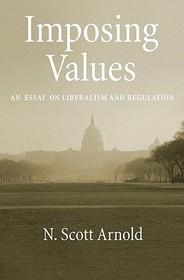
Imposing Values provides an even-handed characterization of the differences between modern liberalism and classical liberalism about the proper scope of government. It also systematically and comprehensively discusses arguments for and against various regulatory regimes favored by modern liberals and opposed by classical liberals.
TöbbHosszú leírás:
A major question for liberal politics and liberal political theory concerns the proper scope of government. Liberalism has always favored limited government, but there has been wide-ranging dispute among liberals about just how extensive the scope of government should be. Included in this dispute are questions about the extent of state ownership of the means of production, redistribution of wealth and income through the tax code and transfer programs, and the extent of government regulation.
One of N. Scott Arnold's goals is to give an accurate characterization of both modern liberalism and classical liberalism, explaining along the way why libertarianism is not the only form that classical liberalism can take. The main focus of Arnold's book, however, concerns regulation--specifically, the modern liberal regulatory agenda as it has taken shape in contemporary American society. This is the set of regulatory regimes favored by all modern liberals and opposed by all classical liberals. It includes contemporary employment law in all its manifestations, health and safety regulation, and land use regulation. The heart of the book consists of a systematic evaluation of arguments for and against all the items on this agenda. It turns out that there are good arguments on both sides for most of these regulatory regimes. Because of this, and because someone's vision of the proper scope of government will ultimately prevail, some procedural requirements that all liberals could agree to must be satisfied for one side to impose legitimately its values on the polity at large. These procedural requirements are identified, argued for, and then applied to the elements of the modern liberal regulatory agenda. Arnold argues that many, though not all, of these elements have been illegitimately imposed on American society.
Tartalomjegyzék:
Rights, Externalities, and Public Goods
Private and Public Property
the Nature of Private Property Rights
The Modern Liberal Regulatory Agenda
Common Ground Arguments
Regulatory Public Goods
Conversion Arguments: Employment Law
Conversion Arguments: Anti-Discrimination Law
Conversion Arguments: Health & Safety Regulation
Conversion Arguments: Land Use Regulation
Imposing Values
Applications

