

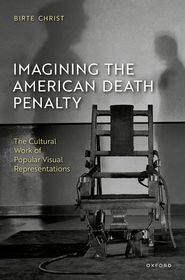
Imagining the American Death Penalty
The Cultural Work of Popular Visual Representations
Sorozatcím: Law and Literature;
-
10% KEDVEZMÉNY?
- A kedvezmény csak az 'Értesítés a kedvenc témákról' hírlevelünk címzettjeinek rendeléseire érvényes.
- Kiadói listaár GBP 88.00
-
42 042 Ft (40 040 Ft + 5% áfa)
Az ár azért becsült, mert a rendelés pillanatában nem lehet pontosan tudni, hogy a beérkezéskor milyen lesz a forint árfolyama az adott termék eredeti devizájához képest. Ha a forint romlana, kissé többet, ha javulna, kissé kevesebbet kell majd fizetnie.
- Kedvezmény(ek) 10% (cc. 4 204 Ft off)
- Kedvezményes ár 37 838 Ft (36 036 Ft + 5% áfa)
Iratkozzon fel most és részesüljön kedvezőbb árainkból!
Feliratkozom
42 042 Ft

Beszerezhetőség
Becsült beszerzési idő: A Prosperónál jelenleg nincsen raktáron, de a kiadónál igen. Beszerzés kb. 3-5 hét..
A Prosperónál jelenleg nincsen raktáron.
Why don't you give exact delivery time?
A beszerzés időigényét az eddigi tapasztalatokra alapozva adjuk meg. Azért becsült, mert a terméket külföldről hozzuk be, így a kiadó kiszolgálásának pillanatnyi gyorsaságától is függ. A megadottnál gyorsabb és lassabb szállítás is elképzelhető, de mindent megteszünk, hogy Ön a lehető leghamarabb jusson hozzá a termékhez.
A termék adatai:
- Kiadó OUP Oxford
- Megjelenés dátuma 2025. május 31.
- ISBN 9780198935087
- Kötéstípus Keménykötés
- Terjedelem320 oldal
- Méret 240x164x25 mm
- Súly 630 g
- Nyelv angol 616
Kategóriák
Rövid leírás:
Imagining the American Death Penalty traces the ways in which US American culture represented capital punishment in film and television from the 1890s to the twenty-first century. The book focuses on early film, crime film noir, and legal TV series.
TöbbHosszú leírás:
Imagining the American Death Penalty traces the US American cultural imaginary of capital punishment through popular visual representations from the 1890s to the twenty-first century. The book focuses on three generic and historical clusters of representations: early film from the 1890s through Intolerance (1916), crime film noir of the 1950s and1960s, and legal TV series from the 1990s through the early 2000s. The book makes two central arguments. First, it demonstrates that an increased concern with the death penalty in popular media does not mean that these texts promote an abolitionist agenda: their cultural work is ambiguous at best. This ambiguity is always contingent upon both the affordances of the particular genre and medium in question and on political-legal discursive context. The book explores both in detail. Early film is enchanted with its own representational possibilities due to the progress of technology and, in analogy, with the progress in execution technique, specifically the electric chair. In film noir, genre conventions and the legal back-and-forth before and after Furman predicate ambiguity. In legal TV series, the genre's ensemble casts and its focus on conversational exchange invite open debate. The second argument is that popular visual representations consistently whitewash the death penalty. The book demonstrates that this is the case because the most common narrative around executions in film and TV is to cast the condemned man as a hero who defies the violence of the state, gains dignity by accepting his fate and faults, and in some ways triumphs over death. The American imaginary, until very recently, did or could not imagine Black men to possess that measure of agency that it attributed to its white heroes.
TöbbTartalomjegyzék:
Introduction: Imagining the American Death Penalty
PART I. THE C AMER A AND THE CHAIR , 1890-1916
New Technologies of Representation and Death
Scenes of Execution
PART II. BL ACK FILM, WHITE FACES
Before Furman
Hollywood's "Mixed Verdict"
PART III. PUTTING DE ATH INTO DISCOURSE
New Abolitionism, New Genre
Multiple Audience Positions in Legal Series
Conclusion: Entertaining Ambiguity, and Imagining New Black Men and Women

