

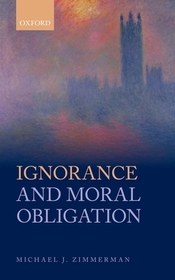
Ignorance and Moral Obligation
-
10% KEDVEZMÉNY?
- A kedvezmény csak az 'Értesítés a kedvenc témákról' hírlevelünk címzettjeinek rendeléseire érvényes.
- Kiadói listaár GBP 68.00
-
30 702 Ft (29 240 Ft + 5% áfa)
Az ár azért becsült, mert a rendelés pillanatában nem lehet pontosan tudni, hogy a beérkezéskor milyen lesz a forint árfolyama az adott termék eredeti devizájához képest. Ha a forint romlana, kissé többet, ha javulna, kissé kevesebbet kell majd fizetnie.
- Kedvezmény(ek) 10% (cc. 3 070 Ft off)
- Kedvezményes ár 27 632 Ft (26 316 Ft + 5% áfa)
Iratkozzon fel most és részesüljön kedvezőbb árainkból!
Feliratkozom
30 702 Ft

Beszerezhetőség
Megrendelésre a kiadó utánnyomja a könyvet. Rendelhető, de a szokásosnál kicsit lassabban érkezik meg.
Why don't you give exact delivery time?
A beszerzés időigényét az eddigi tapasztalatokra alapozva adjuk meg. Azért becsült, mert a terméket külföldről hozzuk be, így a kiadó kiszolgálásának pillanatnyi gyorsaságától is függ. A megadottnál gyorsabb és lassabb szállítás is elképzelhető, de mindent megteszünk, hogy Ön a lehető leghamarabb jusson hozzá a termékhez.
A termék adatai:
- Kiadó OUP Oxford
- Megjelenés dátuma 2014. március 27.
- ISBN 9780199688852
- Kötéstípus Keménykötés
- Terjedelem160 oldal
- Méret 223x154x18 mm
- Súly 322 g
- Nyelv angol 0
Kategóriák
Rövid leírás:
Michael J. Zimmerman explores whether and how our ignorance about ourselves and our circumstances affects what our moral obligations and moral rights are. He rejects objective and subjective views of the nature of moral obligation, and presents a new case for a 'prospective' view.
TöbbHosszú leírás:
Ignorance and Moral Obligation concerns whether and how our ignorance about ourselves and our circumstances affects what our moral obligations and moral rights are. Michael J. Zimmerman begins by distinguishing three well-established views about the nature of moral obligation: the Objective, Subjective, and Prospective Views. Some philosophers have attempted to reconcile the three views in question, but these attempts are shown to fail. The question thus arises: which of the three views ought to be accepted and which rejected? Zimmerman argues that, in light of the ignorance that besets us, the Objective and Subjective Views should be rejected and the Prospective View accepted. The argument is based on close consideration of a kind of case provided by Frank Jackson, one in which an agent has deficient evidence regarding the outcomes of his options. Many objections to this argument are entertained and rebutted, by means of which the Prospective View is itself elaborated and defended. Among those who accept the Prospective View, the primary motivation for doing so has often been that of finding a useful guide to action, but Zimmerman argues that the Prospective View can be only of strictly limited help in providing such a guide. Finally, he addresses some implications that the Prospective View has regarding the nature of moral rights. Our possession of moral rights is precarious, being dependent on the evidence possessed by others. Once again, several objections are entertained and rebutted. The distinction between rights and desert is stressed, and the relevance of risk to rights is explored.
To conclude, those interested in the nature of moral obligation should certainly read Zimmerman's book. It is well written and insightful.
Tartalomjegyzék:
Preface
Acknowledgments
Three Views of Moral Obligation
In Defense of the Prospective View
In Further Defense of the Prospective View
Action-guidance
Moral Rights
Bibliography
Index

