

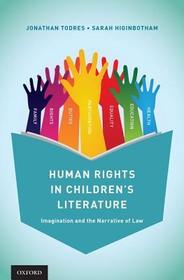
Human Rights in Children's Literature
Imagination and the Narrative of Law
-
10% KEDVEZMÉNY?
- A kedvezmény csak az 'Értesítés a kedvenc témákról' hírlevelünk címzettjeinek rendeléseire érvényes.
- Kiadói listaár GBP 105.00
-
47 407 Ft (45 150 Ft + 5% áfa)
Az ár azért becsült, mert a rendelés pillanatában nem lehet pontosan tudni, hogy a beérkezéskor milyen lesz a forint árfolyama az adott termék eredeti devizájához képest. Ha a forint romlana, kissé többet, ha javulna, kissé kevesebbet kell majd fizetnie.
- Kedvezmény(ek) 10% (kb. 4 740 Ft)
- Kedvezményes ár 42 667 Ft (40 635 Ft + 5% áfa)
Iratkozzon fel most és részesüljön kedvezőbb árainkból!
Feliratkozom
47 407 Ft

Beszerezhetőség
Megrendelésre a kiadó utánnyomja a könyvet. Rendelhető, de a szokásosnál kicsit lassabban érkezik meg.
Why don't you give exact delivery time?
A beszerzés időigényét az eddigi tapasztalatokra alapozva adjuk meg. Azért becsült, mert a terméket külföldről hozzuk be, így a kiadó kiszolgálásának pillanatnyi gyorsaságától is függ. A megadottnál gyorsabb és lassabb szállítás is elképzelhető, de mindent megteszünk, hogy Ön a lehető leghamarabb jusson hozzá a termékhez.
A termék adatai:
- Kiadó OUP USA
- Megjelenés dátuma 2016. január 28.
- ISBN 9780190213343
- Kötéstípus Keménykötés
- Terjedelem320 oldal
- Méret 236x157x22 mm
- Súly 590 g
- Nyelv angol 0
Kategóriák
Rövid leírás:
How can children grow to realize their inherent human rights and respect the rights of others? This book explores this question through children's literature from Peter Rabbit to Horton Hears a Who! to Harry Potter. The authors investigate children's rights under international law - identity and family rights, the right to be heard, the right to be free from discrimination, and other civil, political, economic, social and cultural rights - and consider the way in which those rights are embedded in children's literature.
TöbbHosszú leírás:
How can children grow to realize their inherent rights and respect the rights of others? In this book, authors Jonathan Todres and Sarah Higinbotham explore this question through both human rights law and children's literature. Both international and domestic law affirm that children have rights, but how are these norms disseminated so that they make a difference in children's lives? Human rights education research demonstrates that when children learn about human rights, they exhibit greater self-esteem and respect the rights of others. The Convention on the Rights of the Child--the most widely-ratified human rights treaty--not only ensures that children have rights, it also requires that states make those rights "widely known, by appropriate and active means, to adults and children alike." This first-of-its-kind requirement for a human rights treaty indicates that if rights are to be meaningful to the lives of children, then government and civil society must engage with those rights in ways that are relevant to children.
Human Rights in Children's Literature investigates children's rights under international law - identity and family rights, the right to be heard, the right to be free from discrimination, and other civil, political, economic, social and cultural rights - and considers the way in which those rights are embedded in children's literature from Peter Rabbit to Horton Hears a Who! to Harry Potter. This book traverses children's rights law, literary theory, and human rights education to argue that in order for children to fully realize their human rights, they first have to imagine and understand them.
One of its strengths is that it does not merely depend on adults' analyses of key works of children's literature, but it also incorporates responses from child readers themselves. As the authors explain, they 'designed a qualitative, descriptive study' that involved their facilitation of reading groups comprised of 'children as young as four years old and as old as seventeen in their natural settings (schools and after-school programs)'; in turn, they drew on the participants' insights, anecdotes and questions as they considered how 'children's books allow children to think about human rights in ways that are developmentally suitable and profoundly imaginative'. s
Tartalomjegyzék:
Foreword by Carol Bellamy, Former Executive Director of UNICEF
Preface by Jonathan Todres
Acknowledgments
Chapter 1: Making Children's Rights Widely Known
Chapter 2: Participation Rights and the Voice of the Child
Chapter 3: Confronting Discrimination, Pursuing Equality
Chapter 4: Identity Rights and Family Rights
Chapter 5: Civil and Political Rights of Children: Accountability with Dignity
Chapter 6: Securing Child Well-being: The Economic, Social, and Cultural Rights of the Child
Chapter 7: Adults in the World of Children's Literature
Chapter 8: Reading, Rights, and the Best Interests of the Child
Appendix 1: United Nations Convention on the Rights of the Child
Appendix 2: Discrimination against Children
Appendix 3: Cinderella around the World
Appendix 4: Empirical Study: How Children Interpret Human Rights in Stories
Children's Literature Bibliography
Bibliography
For more information
Index

