

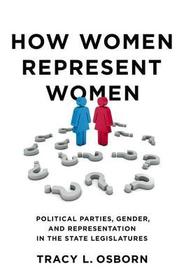
How Women Represent Women
Political Parties, Gender and Representation in the State Legislatures
-
10% KEDVEZMÉNY?
- A kedvezmény csak az 'Értesítés a kedvenc témákról' hírlevelünk címzettjeinek rendeléseire érvényes.
- Kiadói listaár GBP 107.50
-
51 358 Ft (48 912 Ft + 5% áfa)
Az ár azért becsült, mert a rendelés pillanatában nem lehet pontosan tudni, hogy a beérkezéskor milyen lesz a forint árfolyama az adott termék eredeti devizájához képest. Ha a forint romlana, kissé többet, ha javulna, kissé kevesebbet kell majd fizetnie.
- Kedvezmény(ek) 10% (cc. 5 136 Ft off)
- Kedvezményes ár 46 222 Ft (44 021 Ft + 5% áfa)
Iratkozzon fel most és részesüljön kedvezőbb árainkból!
Feliratkozom
51 358 Ft

Beszerezhetőség
Megrendelésre a kiadó utánnyomja a könyvet. Rendelhető, de a szokásosnál kicsit lassabban érkezik meg.
Why don't you give exact delivery time?
A beszerzés időigényét az eddigi tapasztalatokra alapozva adjuk meg. Azért becsült, mert a terméket külföldről hozzuk be, így a kiadó kiszolgálásának pillanatnyi gyorsaságától is függ. A megadottnál gyorsabb és lassabb szállítás is elképzelhető, de mindent megteszünk, hogy Ön a lehető leghamarabb jusson hozzá a termékhez.
A termék adatai:
- Kiadó OUP USA
- Megjelenés dátuma 2012. március 22.
- ISBN 9780199845347
- Kötéstípus Keménykötés
- Terjedelem256 oldal
- Méret 236x152x25 mm
- Súly 517 g
- Nyelv angol 0
Kategóriák
Rövid leírás:
How Women Represent Women argues that political parties fundamentally structure the ways in which women legislators represent women's interests. Using original election, sponsorship and roll call data across the U.S. state chambers from 1999-2000, Osborn shows how parties shape the policy alternatives women offer.
TöbbHosszú leírás:
Though the number of women elected to the U.S. state legislatures has grown substantially in the last forty years, researchers still struggle to connect women's presence in the legislature to public policy outcomes that affect women. One reason for this struggle is that we lack a complete understanding of how political parties modify the relationship between women legislators' interests in representing women and the creation of public policies affecting women.
In How Women Represent Women: Political Parties, Gender and Representation in the State Legislatures, Tracy L. Osborn examines the two avenues through which political parties fundamentally affect the ways in which partisan women legislators pursue women's issues policies. She argues that political parties structure representation in two ways. First, women's party identities shape the types of policy alternatives they offer to solve women's policy problems. Second, parties organize the legislative process by holding majority control, to varying degrees, over agenda setting and policy creation, promoting some women legislators' policy proposals over others.
Osborn tests these two avenues of influence by comparing partisan women's legislative behavior toward the creation of women's issues policies across different party environments in the U.S. state legislatures. She uses original election, sponsorship, and roll call data in nearly all ninety-nine state legislative chambers in 1999-2000. She concludes that Republican and Democratic women offer different solutions to women's policy problems based on their party identities. Depending on which party controls the legislative process and how strongly they do so, this party control promotes one set of partisan policy alternatives over the other. Thus, political parties determine which women's issues policies become law. Ultimately, this book demonstrates how essential parties are to understanding how women elected to public office translate their interest in women's issues into substantive public policy.
Osborn's book is well written, important and original...a valuable contribution to understanding how and under what circumstances the representation of womens interest occurs.
Tartalomjegyzék:
List of Tables
List of Figures
Chapter 1: Introduction
Chapter 2: How Parties Affect Gender and Representation
Chapter 3: Examining Party Identity and Institutional Partisanship
Chapter 4: Party Identity and Issue Preferences in the 1998 Election
Chapter 5: Party Identity and Institutional Partisanship in Agenda Setting
Chapter 6: Institutional Partisanship and Roll Call Voting
Chapter 7: Conclusion
Appendix A: NPAT Questionnaire and Additional Analyses from Chapter 4
Appendix B: Coding Scheme for Bills and Roll Call Votes and Additional
Analyses for Chapters 5-6
References
Index

