

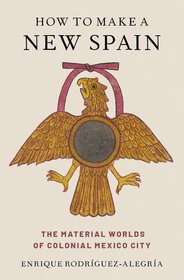
How to Make a New Spain
The Material Worlds of Colonial Mexico City
-
10% KEDVEZMÉNY?
- A kedvezmény csak az 'Értesítés a kedvenc témákról' hírlevelünk címzettjeinek rendeléseire érvényes.
- Kiadói listaár GBP 94.00
-
44 908 Ft (42 770 Ft + 5% áfa)
Az ár azért becsült, mert a rendelés pillanatában nem lehet pontosan tudni, hogy a beérkezéskor milyen lesz a forint árfolyama az adott termék eredeti devizájához képest. Ha a forint romlana, kissé többet, ha javulna, kissé kevesebbet kell majd fizetnie.
- Kedvezmény(ek) 10% (cc. 4 491 Ft off)
- Kedvezményes ár 40 418 Ft (38 493 Ft + 5% áfa)
Iratkozzon fel most és részesüljön kedvezőbb árainkból!
Feliratkozom
44 908 Ft

Beszerezhetőség
Becsült beszerzési idő: A Prosperónál jelenleg nincsen raktáron, de a kiadónál igen. Beszerzés kb. 3-5 hét..
A Prosperónál jelenleg nincsen raktáron.
Why don't you give exact delivery time?
A beszerzés időigényét az eddigi tapasztalatokra alapozva adjuk meg. Azért becsült, mert a terméket külföldről hozzuk be, így a kiadó kiszolgálásának pillanatnyi gyorsaságától is függ. A megadottnál gyorsabb és lassabb szállítás is elképzelhető, de mindent megteszünk, hogy Ön a lehető leghamarabb jusson hozzá a termékhez.
A termék adatai:
- Kiadó OUP USA
- Megjelenés dátuma 2023. május 4.
- ISBN 9780197682296
- Kötéstípus Keménykötés
- Terjedelem344 oldal
- Méret 162x242x23 mm
- Súly 798 g
- Nyelv angol 459
Kategóriák
Rövid leírás:
How to Make a New Spain presents an unprecedented view of the material worlds of Mexico City in the sixteenth century, drawing from a combination of sources and methodologies. It presents the author's original analysis of over 11,000 items in the probate inventories of thirty-nine Spanish colonizers. It also synthesizes information from archaeological excavations of Spanish houses at the center of Mexico City.
TöbbHosszú leírás:
How to Make a New Spain presents an unprecedented view of the material worlds of Mexico City in the sixteenth century, drawing from a combination of sources and methodologies. It presents the author's original analysis of over 11,000 items in the probate inventories of thirty-nine Spanish colonizers. It also synthesizes information from archaeological excavations of Spanish houses at the center of Mexico City.
The book begins with a critique of theories of materiality, in which scholars emphasize the agency of things at the expense of an investigation of social relationships. Rodríguez-Alegría argues that now that scholars have shown that the descendants of the Mexica (often known as the Aztecs) maintained social and political power in the colonial period, we should reexamine how Indigenous people, colonizers, and Black people together created the material and social worlds of colonial Mexico. The book assimilates information on architecture, money, clothing, furniture, pottery, slaves, livestock, and tools to provide a new vision of daily life in colonial Mexico City. It shows that colonialism was based on the recognition of people of similar classes across ethnic boundaries, and on the forging of relationships with powerful Indigenous people. Even colonizers who sought to display distinction from Indigenous people with their material culture depended on Indigenous products and technology to achieve that distinction. The complex history of materiality and power that emerges from this book compels us to reimagine colonial Mexico and the people who created it.
This book serves as an exemplary work of ethnohistory, employing both archaeological findings and records of deceased early colonizers' possessions to compose a comprehensive view of the material life of the Spanish inhabitants of New Spain.... [It] should be read by all scholars and graduate students interested in materiality, urban Latin America, or colonial New Spain.
Tartalomjegyzék:
Preface
Acknowledgments
A Note on Terminology and Gentilics
How to enter the material and social worlds
Chapter 1: How to make money
Chapter 2: How to build houses
Chapter 3: How to furnish a house
Chapter 4: How to get pottery and food
Chapter 5: How to dress the part
Chapter 6: How to build sociotechnical systems: tools, livestock, and slaves
Chapter 7: How to link wealth and consumption, or not
Conclusion: The Material Worlds of Spanish Colonizers
Appendix 5.1: Items of clothing in the probate inventories
Appendix 6.1: Tools listed in the documents
Appendix 7.1: Prices of shirts with an indicated origin
References

