

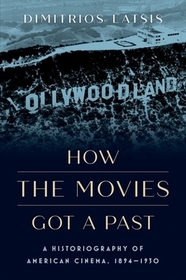
How the Movies Got a Past
A Historiography of American Cinema, 1894-1930
-
10% KEDVEZMÉNY?
- A kedvezmény csak az 'Értesítés a kedvenc témákról' hírlevelünk címzettjeinek rendeléseire érvényes.
- Kiadói listaár GBP 79.00
-
35 668 Ft (33 970 Ft + 5% áfa)
Az ár azért becsült, mert a rendelés pillanatában nem lehet pontosan tudni, hogy a beérkezéskor milyen lesz a forint árfolyama az adott termék eredeti devizájához képest. Ha a forint romlana, kissé többet, ha javulna, kissé kevesebbet kell majd fizetnie.
- Kedvezmény(ek) 10% (kb. 3 566 Ft)
- Kedvezményes ár 32 102 Ft (30 573 Ft + 5% áfa)
Iratkozzon fel most és részesüljön kedvezőbb árainkból!
Feliratkozom
35 668 Ft

Beszerezhetőség
Becsült beszerzési idő: A Prosperónál jelenleg nincsen raktáron, de a kiadónál igen. Beszerzés kb. 3-5 hét..
A Prosperónál jelenleg nincsen raktáron.
Why don't you give exact delivery time?
A beszerzés időigényét az eddigi tapasztalatokra alapozva adjuk meg. Azért becsült, mert a terméket külföldről hozzuk be, így a kiadó kiszolgálásának pillanatnyi gyorsaságától is függ. A megadottnál gyorsabb és lassabb szállítás is elképzelhető, de mindent megteszünk, hogy Ön a lehető leghamarabb jusson hozzá a termékhez.
A termék adatai:
- Kiadó OUP USA
- Megjelenés dátuma 2023. szeptember 22.
- ISBN 9780197689271
- Kötéstípus Keménykötés
- Terjedelem408 oldal
- Méret 242x163x26 mm
- Súly 708 g
- Nyelv angol
- Illusztrációk 50 b/w images 422
Kategóriák
Rövid leírás:
How the Movies Got a Past presents a comprehensive survey of the rise of historiographical discourse on cinema in North America as it is reflected in publications, exhibitions, lectures, and films about the cinema as a technology, artform, and source of entertainment, from its inception up to 1930. With a wealth of case studies and illustrations, this book will appeal to media historians, silent movie buffs, film archivists, and students alike.
TöbbHosszú leírás:
How the Movies Got a Past presents a comprehensive survey of the rise of historiographical discourse on cinema in North America as it is reflected in publications, exhibitions, lectures, and films about the cinema as a technology, form of art, and source of entertainment, from its inception up to 1930. This pioneering historiography of American movies proposes a typology of genres of historical knowledge and examines the role that its articulation played in legitimating the moving image as a form of cultural heritage and a field of study.
How did early studios seek to understand and promote their own activities as part of a brand-new form of entertainment with its own traditions, "founding fathers," and ambitions? How did early writers modulate between retrospection and analysis, between nostalgia and ballyhoo, between journalism and research into the "relics" of the nascent film industry and what were their motivations and influence on subsequent historians? What rhetorical and material platforms were deployed to talk about and show the history of cinema and for what audiences were they meant? In teasing out answers to these and other questions, this book makes an argument for early cinema historiography as an emergent genre with its own conventions and goals instead of a "primitive" version of today's historical writing on the movies. With a wealth of case studies, and illustrations, How the Movies Got a Past will appeal to media historians, silent movie buffs, film archivists, and students alike.
This important book transforms our understanding of the history of early cinema by expanding on the limited range of material that past studies have drawn upon. Supported by extensive research, Latsis creates a lucid study supported by a wide range of sources, including industry self studies.
Tartalomjegyzék:
Acknowledgments
Introduction: The Evolving Practice of Film Historiography
Part I: Historiography
1. A Vivisection: Writing the History of an Emergent Medium
2. The First Canonical Histories: Ramsaye, Rotha and Beyond
3. Finding Its Voice? Sound and the (Re)-writing of Film History
PART II: Meta-History
4. Through a Glass Darkly: Early Nonfiction Films about the History of Cinema
5. Programming the Classics: Revivals, The Little Theater Movement and the Emergence of a Canon
6. The Future-Past of Moving Images: Towards a Pre-history of Film Archiving
7. Exhibitions and Museums: The Past of Cinema on Display
8. Invented Traditions: Commemorations and Anniversaries
9. Learning and Earning: Film History Enters the University Curriculum
Conclusion
Appendix: Silent Non-Fiction Films Related to the History of Cinema
Bibliography
Index

