

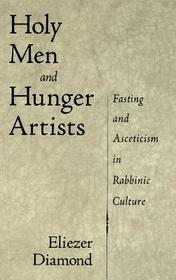
Holy Men and Hunger Artists
Fasting and Asceticism in Rabbinic Culture
-
10% KEDVEZMÉNY?
- A kedvezmény csak az 'Értesítés a kedvenc témákról' hírlevelünk címzettjeinek rendeléseire érvényes.
- Kiadói listaár GBP 99.00
-
44 698 Ft (42 570 Ft + 5% áfa)
Az ár azért becsült, mert a rendelés pillanatában nem lehet pontosan tudni, hogy a beérkezéskor milyen lesz a forint árfolyama az adott termék eredeti devizájához képest. Ha a forint romlana, kissé többet, ha javulna, kissé kevesebbet kell majd fizetnie.
- Kedvezmény(ek) 10% (kb. 4 469 Ft)
- Kedvezményes ár 40 229 Ft (38 313 Ft + 5% áfa)
Iratkozzon fel most és részesüljön kedvezőbb árainkból!
Feliratkozom
44 698 Ft

Beszerezhetőség
Megrendelésre a kiadó utánnyomja a könyvet. Rendelhető, de a szokásosnál kicsit lassabban érkezik meg.
Why don't you give exact delivery time?
A beszerzés időigényét az eddigi tapasztalatokra alapozva adjuk meg. Azért becsült, mert a terméket külföldről hozzuk be, így a kiadó kiszolgálásának pillanatnyi gyorsaságától is függ. A megadottnál gyorsabb és lassabb szállítás is elképzelhető, de mindent megteszünk, hogy Ön a lehető leghamarabb jusson hozzá a termékhez.
A termék adatai:
- Kiadó OUP Oxford
- Megjelenés dátuma 2004. január 8.
- ISBN 9780195137507
- Kötéstípus Keménykötés
- Terjedelem240 oldal
- Méret 228x177x23 mm
- Súly 567 g
- Nyelv angol 0
Kategóriák
Rövid leírás:
The existence of ascetic elements within rabbinic Judaism has generally been either overlooked or actually denied. Diamond shows that rabbinic asceticism does indeed exist. This asceticism is mainly secondary, rather than primary, in that the rabbis place no value on self-denial in and of itself, but rather require of themselves the virtual abandonment of familial, social, and economic life in favour of an absolute commitment to the study of the Torah. He also notes that this asceticism dovetails with the rabbinic theology of sin and punishment, which encourages delaying gratification in this world in the hopes of a greater reward in the next.
TöbbHosszú leírás:
The existence of ascetic elements within rabbinic Judaism has generally been either overlooked or actually denied. This is in part because asceticism is not commonly identified with celibacy, whereas the rabbis emphasized sexuality as a positive good. In addition, argues Eliezer Diamond, it serves the theological agendas of both Jewish and Christian scholars to characterise Judaism as non- or anti-ascetic. In fact, however, Diamond shows that rabbinic asceticism does indeed exist. This asceticism is secondary, rather than primary, in that the rabbis place no value on self-denial in and of itself, but rather require themselves the virtual abandonment of familial, social, and economic life in favour of an absolute commitment to the study of the Torah. It is an asceticism of neglect, rather than negation. One form of asceticism in particular - fasting - became increasingly popular in the wake of the destruction of the second temple. He traces this to the need to mourn the temple's devastation but also to the cessation of temple -related rituals. Diamond shows that fasting was seen as a substitute for these rituals when the Temple was destroyed.
an untypical but revealing book

