

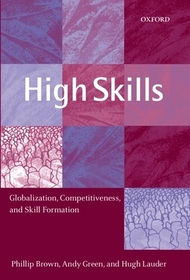
High Skills
Globalization, Competitiveness, and Skill Formation
-
10% KEDVEZMÉNY?
- A kedvezmény csak az 'Értesítés a kedvenc témákról' hírlevelünk címzettjeinek rendeléseire érvényes.
- Kiadói listaár GBP 58.00
-
27 709 Ft (26 390 Ft + 5% áfa)
Az ár azért becsült, mert a rendelés pillanatában nem lehet pontosan tudni, hogy a beérkezéskor milyen lesz a forint árfolyama az adott termék eredeti devizájához képest. Ha a forint romlana, kissé többet, ha javulna, kissé kevesebbet kell majd fizetnie.
- Kedvezmény(ek) 10% (cc. 2 771 Ft off)
- Kedvezményes ár 24 939 Ft (23 751 Ft + 5% áfa)
Iratkozzon fel most és részesüljön kedvezőbb árainkból!
Feliratkozom
27 709 Ft

Beszerezhetőség
Megrendelésre a kiadó utánnyomja a könyvet. Rendelhető, de a szokásosnál kicsit lassabban érkezik meg.
Why don't you give exact delivery time?
A beszerzés időigényét az eddigi tapasztalatokra alapozva adjuk meg. Azért becsült, mert a terméket külföldről hozzuk be, így a kiadó kiszolgálásának pillanatnyi gyorsaságától is függ. A megadottnál gyorsabb és lassabb szállítás is elképzelhető, de mindent megteszünk, hogy Ön a lehető leghamarabb jusson hozzá a termékhez.
A termék adatai:
- Kiadó OUP Oxford
- Megjelenés dátuma 2001. szeptember 20.
- ISBN 9780199244201
- Kötéstípus Puhakötés
- Terjedelem320 oldal
- Méret 234x156x18 mm
- Súly 469 g
- Nyelv angol
- Illusztrációk numerous figures and tables 0
Kategóriák
Rövid leírás:
A major contribution to current debates about the future of skill formation in a context of economic globalization, rapid technological innovation, and change within education, training, and the labour market. It represents a major theoretical advance in its holistic approach to the political economy of high skills, and has implications that stand at the core of firm strategies and government policy in Europe, North America, and Asia.
TöbbHosszú leírás:
Economic globalization has led to intense debates about the competitiveness of nations. Prosperity, social justice, and welfare are now seen to depend on the creation of a 'high skilled' workforce. This international consensus around high skills has led recent American presidents to claim themselves 'education presidents' and in Britain, Tony Blair has announced that 'talent is 21st-century wealth'.
This view of knowledge-driven capitalism has led all the developed economies to increase numbers of highly-trained people in preparation for technical, professional, and managerial employment. But it also harbours the view that what we regard as a 'skilled' worker is being transformed. The pace of technological innovation, corporate restructuring, and the changing nature of work require a new configuration of skills described in the language of creativity, teamwork, employability, self-management, and lifelong learning.
But is this optimistic account of a future of high-skilled work for all justified? This book draws on the findings of a major international comparative study of national routes to a 'high skills' economy in Britain, Germany, Japan, Singapore, South Korea, and the United States, and includes data from interviews with over 250 key stakeholders.
It is the first book to offer a comparative examination of 'high skill' policies -- a topic of major public debate that is destined to become of even greater importance in all the developed economies in the early decades of the twenty-first century.
Tartalomjegyzék:
Skill Formation in the Twenty-First Century
Models of High Skills in National Competition Strategies
Innovation, Skill Diffusion, and Social Exclusion
Globalization, Skill, and the Labour Market
Globalization and the Political Economy of High Skills
Appendix 1: List of Organizations Interviewed
References

