

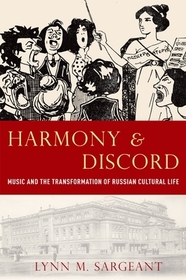
Harmony and Discord
Music and the Transformation of Russian Cultural Life
Sorozatcím: The New Cultural History of Music Series;
-
10% KEDVEZMÉNY?
- A kedvezmény csak az 'Értesítés a kedvenc témákról' hírlevelünk címzettjeinek rendeléseire érvényes.
- Kiadói listaár GBP 75.00
-
33 862 Ft (32 250 Ft + 5% áfa)
Az ár azért becsült, mert a rendelés pillanatában nem lehet pontosan tudni, hogy a beérkezéskor milyen lesz a forint árfolyama az adott termék eredeti devizájához képest. Ha a forint romlana, kissé többet, ha javulna, kissé kevesebbet kell majd fizetnie.
- Kedvezmény(ek) 10% (cc. 3 386 Ft off)
- Kedvezményes ár 30 476 Ft (29 025 Ft + 5% áfa)
Iratkozzon fel most és részesüljön kedvezőbb árainkból!
Feliratkozom
33 862 Ft

Beszerezhetőség
Megrendelésre a kiadó utánnyomja a könyvet. Rendelhető, de a szokásosnál kicsit lassabban érkezik meg.
Why don't you give exact delivery time?
A beszerzés időigényét az eddigi tapasztalatokra alapozva adjuk meg. Azért becsült, mert a terméket külföldről hozzuk be, így a kiadó kiszolgálásának pillanatnyi gyorsaságától is függ. A megadottnál gyorsabb és lassabb szállítás is elképzelhető, de mindent megteszünk, hogy Ön a lehető leghamarabb jusson hozzá a termékhez.
A termék adatai:
- Kiadó OUP USA
- Megjelenés dátuma 2011. február 3.
- ISBN 9780199735266
- Kötéstípus Keménykötés
- Terjedelem368 oldal
- Méret 236x155x33 mm
- Súly 617 g
- Nyelv angol
- Illusztrációk 8 tables and 16 halftones 0
Kategóriák
Rövid leírás:
Harmony and Discord: Music and the Transformation of Russian Cultural Life explores the complex development of Russian musical life during the nineteenth and early twentieth centuries. Author Lynn M. Sargeant demonstrates that the successful development of a Russian musical infrastructure salved persistent anxieties about Russia's place vis-?-vis its European cultural competitors.
TöbbHosszú leírás:
Harmony and Discord: Music and the Transformation of Russian Cultural Life explores the complex development of Russian musical life during the nineteenth and early twentieth centuries. At the heart of this cultural history lies the Russian Musical Society, as both a unique driving force behind the institutionalization of music and a representative of the growing importance of voluntary associations in public life. Sustained simultaneously by private initiative and cooperative relationships with the state, the Russian Musical Society played a key role in the creation of Russia's infrastructure for music and music education.
Author Lynn M. Sargeant explores the fluid nature of Russian social identity through the broad scope of musical life, including not only the "leading lights" of the era but also rank-and-file musicians, teachers, and students. Although Russian musicians longed for a secure place within the new hierarchy of professions, their social status remained ambiguous throughout the nineteenth century. Traditional reliance on serf musicians and foreigners left lasting scars that motivated musicians' efforts to obtain legal rights and social respectability. And women's increasing visibility in the musical world provoked acrimonious debates that were, at heart, efforts by male musicians to strengthen their claims to professional status by denying the legitimacy of female participation. Sargeant demonstrates that the successful development of a Russian musical infrastructure salved persistent anxieties about Russia's place vis-?-vis its European cultural competitors. Remarkably, the institutions developed by the Russian Musical Society survived the upheavals of war and revolution to become the foundation for the Soviet musical system.
A wealth of historical documentation makes Harmony and Discord required reading for musicologists, sociologists and historians interested in this period, and the abundance of amusing anecdotes and the author's lucid and lively literary style make it an enjoyable history for all readers.
Lucidly written, thoroughly researched and meticulously documented, Harmony and Discord should be read not just by Russian musicologists, also by cultural and social historians of Russia, and indeed by comparative European historians keen to explore the role played by education and in shaping the national identity of an often misunderstood country.
Tartalomjegyzék:
Introduction
A Far From Silent World: Musical Life before the Great Reforms.
Zealots of Culture: The Russian Musical Society, Voluntary Associations, and Cultural Life
The Conservatory in Russian Society: The Institutionalization of Musical Life
Conflicted Identities: The Professionalization of Russian Musical Life
The Geography of Culture: The Expansion of Musical Life in the Provinces
Crisis, Celebration, and the Decline of the Old Cultural Order
Conclusion: Everything Old is New Again
Endnotes
Bibliography
Index

