

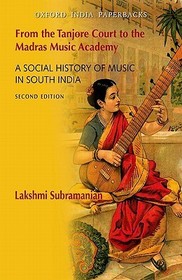
From the Tanjore Court to the Madras Music Academy
A Social History of Music in South India
-
10% KEDVEZMÉNY?
- A kedvezmény csak az 'Értesítés a kedvenc témákról' hírlevelünk címzettjeinek rendeléseire érvényes.
- Kiadói listaár GBP 11.99
-
5 413 Ft (5 155 Ft + 5% áfa)
Az ár azért becsült, mert a rendelés pillanatában nem lehet pontosan tudni, hogy a beérkezéskor milyen lesz a forint árfolyama az adott termék eredeti devizájához képest. Ha a forint romlana, kissé többet, ha javulna, kissé kevesebbet kell majd fizetnie.
- Kedvezmény(ek) 10% (kb. 542 Ft)
- Kedvezményes ár 4 871 Ft (4 640 Ft + 5% áfa)
Iratkozzon fel most és részesüljön kedvezőbb árainkból!
Feliratkozom
5 413 Ft

Beszerezhetőség
Csak rendelésre kapható a kiadónál, kissé időigényes.
Why don't you give exact delivery time?
A beszerzés időigényét az eddigi tapasztalatokra alapozva adjuk meg. Azért becsült, mert a terméket külföldről hozzuk be, így a kiadó kiszolgálásának pillanatnyi gyorsaságától is függ. A megadottnál gyorsabb és lassabb szállítás is elképzelhető, de mindent megteszünk, hogy Ön a lehető leghamarabb jusson hozzá a termékhez.
A termék adatai:
- Kiadó OUP India
- Megjelenés dátuma 2011. március 10.
- ISBN 9780198071907
- Kötéstípus Puhakötés
- Terjedelem232 oldal
- Méret 216x141x11 mm
- Súly 248 g
- Nyelv angol
- Illusztrációk 4 Halftones 0
Kategóriák
Rövid leírás:
This book deals with the production of knowledge about music and the related institution-building process in south India. It also examines the role of identity, imagination, nationalism, and patronage in the development of musical tradition in south India.
TöbbHosszú leírás:
This book traces the adaptation of the traditional music in south India, from the quiet courtyards of Tanjore to the concert halls of Madras, to the necessities of colonial and post-colonial social realities. An engaging narrative of the production of knowledge about music and the related institution-building process, the volume raises larger questions of identity and imagination. It discusses the influence of nationalism in the creation of an auditory habit as much as it shows how performance and patronage influenced the self-development of the consuming elite. Anticipating the dilemmas of the emerging modern Indian middle class, the author also explores the ambivalence and ambiguities that informed musical practices in the nineteenth and twentieth centuries. The second edition carries a new introduction which updates research on the subject and also discusses the new issues and trends emerging in the study of south Indian classical music.
This book will interest students and scholars of history, music, sociology, ethnomusicology, cultural studies, south India, as well as informed general readers.
This study is an engaging and fascinating read, of interest to scholars and students well beyond the geographical boundaries of the book.
Tartalomjegyzék:
Preface and Acknowledgements; List of Illustrations; Introduction; Chapter 1. Music Comes to the City; Chapter 2. Defining the Classical: The Nationalist Imperative; Chapter 3. Consolidating the Classical: The Madras Music Academy and the Politics of Custodianship; Chapter 4. On the Margins of the Classical: Law, Social Reform, and the Devadasis in the Madras Presidency; Chapter 5. Contesting the Classical: The Tamil Isai Iyakkam and the Contest for Custodianship; Epilogue; Bibliography; Index.
Több
