

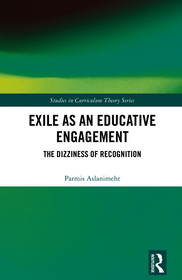
Exile as an Educative Engagement
The Dizziness of Recognition
Sorozatcím: Studies in Curriculum Theory Series;
-
10% KEDVEZMÉNY?
- Kiadói listaár GBP 46.99
-
21 215 Ft (20 205 Ft + 5% áfa)
Az ár azért becsült, mert a rendelés pillanatában nem lehet pontosan tudni, hogy a beérkezéskor milyen lesz a forint árfolyama az adott termék eredeti devizájához képest. Ha a forint romlana, kissé többet, ha javulna, kissé kevesebbet kell majd fizetnie.
- Kedvezmény(ek) 10% (cc. 1 Ft off)
- Kedvezményes ár 19 094 Ft (18 185 Ft + 5% áfa)
19 094 Ft

Beszerezhetőség
Még nem jelent meg, de rendelhető. A megjelenéstől számított néhány héten belül megérkezik.
Why don't you give exact delivery time?
A beszerzés időigényét az eddigi tapasztalatokra alapozva adjuk meg. Azért becsült, mert a terméket külföldről hozzuk be, így a kiadó kiszolgálásának pillanatnyi gyorsaságától is függ. A megadottnál gyorsabb és lassabb szállítás is elképzelhető, de mindent megteszünk, hogy Ön a lehető leghamarabb jusson hozzá a termékhez.
A termék adatai:
- Kiadás sorszáma 1
- Kiadó Routledge
- Megjelenés dátuma 2026. szeptember 28.
- ISBN 9781041002277
- Kötéstípus Puhakötés
- Terjedelem162 oldal
- Méret 229x152 mm
- Súly 453 g
- Nyelv angol 700
Kategóriák
Rövid leírás:
This book explores the concept of exile, experienced not as a physical displacement, but as a subjective experience of disconnection from the Other.
TöbbHosszú leírás:
This book explores the concept of exile, experienced not as a physical displacement but as a subjective experience of disconnection from the Other. It further clarifies the notion of exilic subjectivity, whereby a hidden facet of the self—ineffable both to the Other and to the Self—causes a distance between self-comprehension and external perception. In doing so, it poses a challenge to recognition theory’s assertion that self-understanding occurs through interactions with Others. Engaging with the writings of Georg Wilhelm Friedrich Hegel, Charles Taylor, Axel Honneth, Søren Kierkegaard, and Rumi, the book explores the difficulties individuals encounter when transitioning their inwardly focused private identities into public spaces, such as educational institutions. It emphasizes the critical role educators can play in cultivating an atmosphere of attentive listening attuned to the unique experiences that may exile the self. Through the complex interplay of writings by thinkers such as Hegel, Kierkegaard, Rumi, Taylor, and Pinar, this work transcends traditional theories of recognition. Rather than resolving misrecognition, it embraces it as a central aspect of the human condition, examining the tension between self-perception and external acknowledgement. The text phenomenologically investigates “seeing” the Other and the risk of misrecognizing an individual’s innermost depths. These insights find resonance in academia, where even amid success, a chasm may persist, isolating students and educators from each other. As the self dwells in the uneasiness of estrangement, the discussion welcomes the ownership of silence and inwardness into the classroom. From this detached perspective, the possibility of recognizing the convergence of familiarity and strangeness before and within oneself may emerge.
This book is tailored for scholars, educators, and readers interested in the intersections of philosophy, education, and lived experience. It offers readers innovative approaches to understanding exile and recognition, fostering deeper engagement with the complexities of identity, alienation, and the self.
Több
Tartalomjegyzék:
1. Epilogue 2. Sentenced to Exile 3. Up-Rooting Recognition 4. Eye-Witnessing Recognition 5. In-Seeing the Inexplicable 6. Hosting the Silence 7. Beyond Witnessing as Recognition 8. Homecoming
Több

