

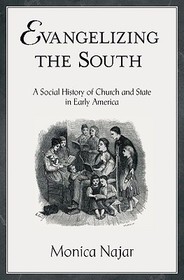
Evangelizing the South
Sorozatcím: Religion in America;
-
10% KEDVEZMÉNY?
- A kedvezmény csak az 'Értesítés a kedvenc témákról' hírlevelünk címzettjeinek rendeléseire érvényes.
- Kiadói listaár GBP 83.00
-
37 474 Ft (35 690 Ft + 5% áfa)
Az ár azért becsült, mert a rendelés pillanatában nem lehet pontosan tudni, hogy a beérkezéskor milyen lesz a forint árfolyama az adott termék eredeti devizájához képest. Ha a forint romlana, kissé többet, ha javulna, kissé kevesebbet kell majd fizetnie.
- Kedvezmény(ek) 10% (cc. 3 747 Ft off)
- Kedvezményes ár 33 727 Ft (32 121 Ft + 5% áfa)
Iratkozzon fel most és részesüljön kedvezőbb árainkból!
Feliratkozom
37 474 Ft

Beszerezhetőség
Megrendelésre a kiadó utánnyomja a könyvet. Rendelhető, de a szokásosnál kicsit lassabban érkezik meg.
Why don't you give exact delivery time?
A beszerzés időigényét az eddigi tapasztalatokra alapozva adjuk meg. Azért becsült, mert a terméket külföldről hozzuk be, így a kiadó kiszolgálásának pillanatnyi gyorsaságától is függ. A megadottnál gyorsabb és lassabb szállítás is elképzelhető, de mindent megteszünk, hogy Ön a lehető leghamarabb jusson hozzá a termékhez.
A termék adatai:
- Kiadás sorszáma és címe witnessed the astonishingly rapid rise of evangelical religion in the Upper South. Within just a few years
- Kiadó OUP USA
- Megjelenés dátuma 2008. február 28.
- ISBN 9780195309003
- Kötéstípus Keménykötés
- Terjedelem264 oldal
- Méret 155x234x27 mm
- Súly 539 g
- Nyelv angol 0
Kategóriák
Hosszú leírás:
Although many refer to the American South as the "Bible Belt", the region was not always characterized by a powerful religious culture. In the seventeenth century and early eighteenth century, religion-in terms both of church membership and personal piety-was virtually absent from southern culture. The late eighteenth century and early nineteenth century, however, witnessed the astonishingly rapid rise of evangelical religion in the Upper South. Within just a few years, evangelicals had spread their beliefs and their fervor, gaining converts and building churches throughout Virginia and North Carolina and into the western regions. But what was it that made evangelicalism so attractive to a region previously uninterested in religion?
Monica Najar argues that early evangelicals successfully negotiated the various challenges of the eighteenth-century landscape by creating churches that functioned as civil as well as religious bodies. The evangelical church of the late eighteenth century was the cornerstone of its community, regulating marriages, monitoring prices, arbitrating business, and settling disputes. As the era experienced substantial rifts in the relationship between church and state, the disestablishment of colonial churches paved the way for new formulations of church-state relations. The evangelical churches were well-positioned to provide guidance in uncertain times, and their multiple functions allowed them to reshape many of the central elements of authority in southern society. They assisted in reformulating the lines between the "religious" and "secular" realms, with significant consequences for both religion and the emerging nation-state.
Touching on the creation of a distinctive southern culture, the position of women in the private and public arenas, family life in the Old South, the relationship between religion and slavery, and the political culture of the early republic, Najar reveals the history behind a religious heritage that remains a distinguishing mark of American society.
"Evangelizing the South is thoughtfully researched, carefully and convincingly argued, and engagingly written. Through close study of dozens of congregational and associational records and almost four thousand disciplinary cases, Monica Najar demonstrates that the Baptist "transformation" of the South was well under way by 1815. Equally important, it clarifies the process whereby the South's "transformation" of the Baptists left few congregations willing to challenge the morality of slave-owning. This is an accomplished piece of scholarship that will inform and enlighten scholars in religious and church-state history, gender history, and the history of the Revolutionary and Early Republic eras." --Anne M. Boylan, Professor of History at the University of Delaware, author of The Origins of Women's Activism

