

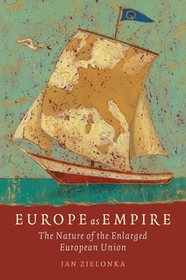
Europe as Empire
The Nature of the Enlarged European Union
-
10% KEDVEZMÉNY?
- A kedvezmény csak az 'Értesítés a kedvenc témákról' hírlevelünk címzettjeinek rendeléseire érvényes.
- Kiadói listaár GBP 40.99
-
18 506 Ft (17 625 Ft + 5% áfa)
Az ár azért becsült, mert a rendelés pillanatában nem lehet pontosan tudni, hogy a beérkezéskor milyen lesz a forint árfolyama az adott termék eredeti devizájához képest. Ha a forint romlana, kissé többet, ha javulna, kissé kevesebbet kell majd fizetnie.
- Kedvezmény(ek) 10% (kb. 1 850 Ft)
- Kedvezményes ár 16 656 Ft (15 863 Ft + 5% áfa)
Iratkozzon fel most és részesüljön kedvezőbb árainkból!
Feliratkozom
18 506 Ft

Beszerezhetőség
Megrendelésre a kiadó utánnyomja a könyvet. Rendelhető, de a szokásosnál kicsit lassabban érkezik meg.
Why don't you give exact delivery time?
A beszerzés időigényét az eddigi tapasztalatokra alapozva adjuk meg. Azért becsült, mert a terméket külföldről hozzuk be, így a kiadó kiszolgálásának pillanatnyi gyorsaságától is függ. A megadottnál gyorsabb és lassabb szállítás is elképzelhető, de mindent megteszünk, hogy Ön a lehető leghamarabb jusson hozzá a termékhez.
A termék adatai:
- Kiadó OUP Oxford
- Megjelenés dátuma 2007. október 11.
- ISBN 9780199231867
- Kötéstípus Puhakötés
- Terjedelem312 oldal
- Méret 233x156x18 mm
- Súly 456 g
- Nyelv angol
- Illusztrációk 2 figures, 14 tables 0
Kategóriák
Rövid leírás:
This book offers a strikingly new perspective on EU enlargement. Basing his findings on substantial empirical evidence, Zielonka presents a carefully argued account of the kind of political entity the European Union is becoming, with particular reference to recent enlargement.
TöbbHosszú leírás:
This book seeks to comprehend the evolving nature of the European Union following the fall of the Berlin Wall and the failure of the European Constitution. Its prime focus is the last wave of enlargement that has profoundly transformed the EU. Although there are many parallels between the European integration process and state building processes, the Union is nothing like a Westphalian super state. The new emerging polity resembles a kind of neo-medieval empire with a polycentric system of government, multiple and overlapping jurisdictions, striking cultural and economic heterogeneity, fuzzy borders, and divided sovereignty. The book tries to spell out the origin, the shape, and the implications of this empire.
The aim of this book is to suggest a novel way of thinking about the European Union and the process of European integration. The book shows 'two Europes' coming together following the end of the cold war. It proposes a system of economic and democratic governance that meets the ever greater challenges of modernization, interdependence, and globalization. It identifies the most plausible scenario of promoting peaceful change in Europe and beyond. The author argues that mainstream thinking about European integration is based on mistaken statist assumptions and suggests more effective and legitimate ways of governing Europe than through adoption of a European Constitution, creation of a European army, or introduction of a European social model.
The book covers many fields from politics, and economics to foreign affairs and security. It analyzes developments in both Eastern and Western Europe. It also gives ample room to both theoretical and empirical considerations.
Europe as Empire is an ambitious and an important book which presents a radical case for a Europe perpetually enlarging, perpetually decentralizing and finding new ways to bring accountability and legitimacy...Zielonka brings a passion for Europe along with a refreshing scepticism of its ambitions...and an ability to write clearly and elegantly, eschewing overly complex theory while also demonstrating considerable academic erudition.
Tartalomjegyzék:
Preface
Introduction: The Neo-Medieval Paradigm
Return to Europe
European Power Politics
Diversity and Adaptation
Economic Governance
Democratic Governance
Governance Beyond Borders
Implications of Neo-Medievalism
Bibliography

