

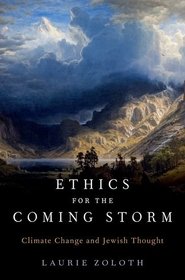
Ethics for the Coming Storm
Climate Change and Jewish Thought
-
10% KEDVEZMÉNY?
- A kedvezmény csak az 'Értesítés a kedvenc témákról' hírlevelünk címzettjeinek rendeléseire érvényes.
- Kiadói listaár GBP 20.99
-
10 027 Ft (9 550 Ft + 5% áfa)
Az ár azért becsült, mert a rendelés pillanatában nem lehet pontosan tudni, hogy a beérkezéskor milyen lesz a forint árfolyama az adott termék eredeti devizájához képest. Ha a forint romlana, kissé többet, ha javulna, kissé kevesebbet kell majd fizetnie.
- Kedvezmény(ek) 10% (cc. 1 003 Ft off)
- Kedvezményes ár 9 025 Ft (8 595 Ft + 5% áfa)
Iratkozzon fel most és részesüljön kedvezőbb árainkból!
Feliratkozom
10 027 Ft

Beszerezhetőség
Becsült beszerzési idő: A Prosperónál jelenleg nincsen raktáron, de a kiadónál igen. Beszerzés kb. 3-5 hét..
A Prosperónál jelenleg nincsen raktáron.
Why don't you give exact delivery time?
A beszerzés időigényét az eddigi tapasztalatokra alapozva adjuk meg. Azért becsült, mert a terméket külföldről hozzuk be, így a kiadó kiszolgálásának pillanatnyi gyorsaságától is függ. A megadottnál gyorsabb és lassabb szállítás is elképzelhető, de mindent megteszünk, hogy Ön a lehető leghamarabb jusson hozzá a termékhez.
A termék adatai:
- Kiadó OUP USA
- Megjelenés dátuma 2024. június 19.
- ISBN 9780197661352
- Kötéstípus Puhakötés
- Terjedelem272 oldal
- Méret 160x226x20 mm
- Súly 340 g
- Nyelv angol 546
Kategóriák
Rövid leírás:
In Ethics for the Coming Storm, Laurie Zoloth argues that our debates about environmental issues have largely been driven by the language of economics and political power, and have become both deeply divisive and symbolic, turning our differing truth claims and moral appeals into signs of identity. This discourse has utterly failed to change the human behavior or political and economic structures necessary to face global warming head on. So Zoloth turns to another language, found in the texts and traditions of Jewish thought--the language of Scripture, the Talmud, and philosophy of Judaism--which, she contends, offers a different kind of argument for such a change.
TöbbHosszú leírás:
How can we come to understand our existence on this earth, surrounded by air and light and water, while living in a place we deliberately and carelessly abuse, where resources are becoming scarce, and where the well-being and basic health of our neighbors is threatened? In Ethics for the Coming Storm, Laurie Zoloth argues that our debates about environmental issues have largely been driven by the language of economics and political power, and have become both deeply divisive and symbolic, turning our differing truth claims and moral appeals into signs of identity. This discourse has utterly failed to change the human behavior or political and economic structures necessary to face global warming head on. So Zoloth turns to another language, found in the texts and traditions of Jewish thought--the language of Scripture, the Talmud, and philosophy of Judaism--which, she contends, offers a different kind of argument for such a change. In fact, Zoloth claims, the traditions, histories, and texts of Jewish thought address precisely the sort of existential crisis that we now face, and thus deepen and enrich our public discourse about what to do, and who to be.
This book uses a careful attention to rabbinic and philosophical sources in Jewish thought to provide a novel framework through which we can reassess the choices we make that affect our climate, our environment, and our social structures.
Zoloth is right to note that religious communities' narratives and ethical traditions are critical to weathering the storm and, simultaneously, the locus of most of what is worth salvaging.
Tartalomjegyzék:
Introduction: Lightning from a Distant Storm
Chapter 1. The Coming Storm: An Introduction to our Situation
Chapter 2. The Promises of Exile: Diaspora as Ontology
Chapter 3. Making a Place: Lisbon and the Narrative of Disaster
Chapter 4. Risky Hospitality: Ordinal Ethics and the Duties of Abundance
Chapter 5. At the Last Well on Earth: Climate Change as a Feminist Issue
Chapter 6. Strangers on the Train: Moral Luck and Problem of Responsibility
Chapter 7. Bad Guys: Amalek and the Production of Doubt
Chapter 8. You Must Interrupt Your Life
Chapter 9. Conclusion

