

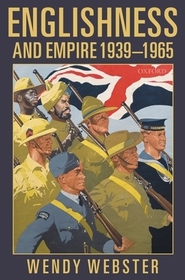
Englishness and Empire 1939-1965
-
10% KEDVEZMÉNY?
- A kedvezmény csak az 'Értesítés a kedvenc témákról' hírlevelünk címzettjeinek rendeléseire érvényes.
- Kiadói listaár GBP 137.50
-
65 690 Ft (62 562 Ft + 5% áfa)
Az ár azért becsült, mert a rendelés pillanatában nem lehet pontosan tudni, hogy a beérkezéskor milyen lesz a forint árfolyama az adott termék eredeti devizájához képest. Ha a forint romlana, kissé többet, ha javulna, kissé kevesebbet kell majd fizetnie.
- Kedvezmény(ek) 10% (cc. 6 569 Ft off)
- Kedvezményes ár 59 121 Ft (56 306 Ft + 5% áfa)
Iratkozzon fel most és részesüljön kedvezőbb árainkból!
Feliratkozom
65 690 Ft

Beszerezhetőség
Megrendelésre a kiadó utánnyomja a könyvet. Rendelhető, de a szokásosnál kicsit lassabban érkezik meg.
Why don't you give exact delivery time?
A beszerzés időigényét az eddigi tapasztalatokra alapozva adjuk meg. Azért becsült, mert a terméket külföldről hozzuk be, így a kiadó kiszolgálásának pillanatnyi gyorsaságától is függ. A megadottnál gyorsabb és lassabb szállítás is elképzelhető, de mindent megteszünk, hogy Ön a lehető leghamarabb jusson hozzá a termékhez.
A termék adatai:
- Kiadó OUP Oxford
- Megjelenés dátuma 2005. március 3.
- ISBN 9780199258604
- Kötéstípus Keménykötés
- Terjedelem264 oldal
- Méret 242x163x19 mm
- Súly 543 g
- Nyelv angol 0
Kategóriák
Rövid leírás:
Did loss of imperial power and the end of empire have any significant impact on metropolitan culture and identity after 1939? Within a burgeoning literature on national identity and Englishness, this is a question that has received surprisingly little attention.
Drawing on extensive research in the media archive, Englishness and Empire explores how far, and in what contexts and unexpected places, imperial identity and loss of imperial power resonated in popular narratives of nation. As the first full monograph to investigate the significance of empire and its legacies in shaping national identity after 1939, this is an important study for scholars and students of modern British history, empire and Commonwealth, decolonisation, migration, gender, ethnicity, and race.
Hosszú leírás:
Did loss of imperial power and the end of empire have any significant impact on metropolitan culture and identity after 1939? Within a burgeoning literature on national identity and Englishness, this is a question that has received surprisingly little attention.
Drawing on extensive research in the media archive, Wendy Webster's highly readable study investigates popular narratives of nation, and the significance of empire and its legacies in shaping national identity after 1939. What were the tensions and uncertainties involved in defining a post-imperial nation? How did imperial legacies inform questions about who belonged in Britain and debates about race, immigration and nationality? What did the Commonwealth mean? What was the significance of America to the making of a post-imperial nation? Focusing on stories told through prolific filmic and television imagery - the Second World War, the Coronation and Everest, colonial wars of the 1950s, Winston Churchill's funeral - the book explores how far, and in what contexts and unexpected places, imperial identity and loss of imperial power resonated in popular narratives of nation.
A novel thematic focus on empire and Englishness in the post-1945 period makes this an important study for scholars and students of modern British history, empire and Commonwealth, decolonisation, migration, gender, ethnicity, and race.
...an impressive book, valuable for its exhaustive and multifaceted use of sources and for the author's sophisticated perceptions of cultural change and its impact.
Tartalomjegyzék:
Introduction
The People's Empire and the People's War
The Post-War People's Empire
Coronation Britain
Colonial Wars
Immigration
Elegies for Empire: The Romance of Manliness
Epilogue
Bibliography

