

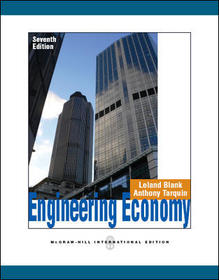
Engineering Economy
Sorozatcím: Asia Higher Education Engineering/Computer Science Industrial Engineering;
-
10% KEDVEZMÉNY?
- A kedvezmény csak az 'Értesítés a kedvenc témákról' hírlevelünk címzettjeinek rendeléseire érvényes.
- Kiadói listaár GBP 55.99
-
25 279 Ft (24 075 Ft + 5% áfa)
Az ár azért becsült, mert a rendelés pillanatában nem lehet pontosan tudni, hogy a beérkezéskor milyen lesz a forint árfolyama az adott termék eredeti devizájához képest. Ha a forint romlana, kissé többet, ha javulna, kissé kevesebbet kell majd fizetnie.
- Kedvezmény(ek) 10% (kb. 2 528 Ft)
- Kedvezményes ár 22 751 Ft (21 668 Ft + 5% áfa)
Iratkozzon fel most és részesüljön kedvezőbb árainkból!
Feliratkozom
25 279 Ft

Beszerezhetőség
A kiadónál véglegesen elfogyott, nem rendelhető. Érdemes újra keresni a címmel, hátha van újabb kiadás.
Why don't you give exact delivery time?
A beszerzés időigényét az eddigi tapasztalatokra alapozva adjuk meg. Azért becsült, mert a terméket külföldről hozzuk be, így a kiadó kiszolgálásának pillanatnyi gyorsaságától is függ. A megadottnál gyorsabb és lassabb szállítás is elképzelhető, de mindent megteszünk, hogy Ön a lehető leghamarabb jusson hozzá a termékhez.
A termék adatai:
- Kiadás sorszáma 7
- Kiadó McGraw-Hill
- Megjelenés dátuma 2011. május 16.
- ISBN 9780071086097
- Kötéstípus Puhakötés
- Terjedelem0 oldal
- Méret 277x220x23 mm
- Súly 1 g
- Nyelv angol 0
Kategóriák
Hosszú leírás:
Engineering Economy, 7th edition, presents a crisp, bold new design using color, highlighting and icons to focus on important concepts, terms, equations and decision guidelines. There are new features, new topics (such as ethics and staged decision making), and new online tools; yet no compromise on coverage, examples, or the well-accepted writing style of this popular text. The preface provides an overview of What's New and graphically depicts resources for Instructors and Students. Solved examples, problems and case studies target many of the current engineering challenges in areas such as energy, ethics, the environment, and the world's changing economics. Approximately eighty percent of the end-of-chapter problems are revised or new for this edition.
Some of the outstanding pedagogical characteristics of this new edition include its easy-to-read writing style, learning outcomes for each section, progressive examples used throughout a chapter, solved examples using manual and integrated spreadsheet solutions, updated case studies, Fundamentals of Engineering (FE) exam questions for each chapter, and numerous new end-of-chapter exercises.
A significant new feature is the availability of brief, downloadable online presentations (podcasts) that incorporate voice-over, animated Power Point slides. These are available on the text's website for students and instructors to utilize as support tools in or outside the classroom. Each module includes descriptive material and worked examples that supplement course material.
Engineering Economy, 7th edition, presents a crisp, bold new design using color, highlighting and icons to focus on important concepts, terms, equations and decision guidelines. There are new features, new topics (such as ethics and staged decision making), and new online tools; yet no compromise on coverage, examples, or the well-accepted writing style of this popular text. The preface provides an overview of What's New and graphically depicts resources for Instructors and Students. Solved examples, problems and case studies target many of the current engineering challenges in areas such as energy, ethics, the environment, and the world's changing economics. Approximately eighty percent of the end-of-chapter problems are revised or new for this edition.
Some of the outstanding pedagogical characteristics of this new edition include its easy-to-read writing style, learning outcomes for each section, progressive examples used throughout a chapter, solved examples using manual and integrated spreadsheet solutions, updated case studies, Fundamentals of Engineering (FE) exam questions for each chapter, and numerous new end-of-chapter exercises.
A significant new feature is the availability of brief, downloadable online presentations (podcasts) that incorporate voice-over, animated Power Point slides. These are available on the text's website for students and instructors to utilize as support tools in or outside the classroom. Each module includes descriptive material and worked examples that supplement course material.
Több
