

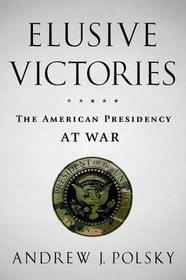
Elusive Victories
The American Presidency at War
-
10% KEDVEZMÉNY?
- A kedvezmény csak az 'Értesítés a kedvenc témákról' hírlevelünk címzettjeinek rendeléseire érvényes.
- Kiadói listaár GBP 26.49
-
11 960 Ft (11 390 Ft + 5% áfa)
Az ár azért becsült, mert a rendelés pillanatában nem lehet pontosan tudni, hogy a beérkezéskor milyen lesz a forint árfolyama az adott termék eredeti devizájához képest. Ha a forint romlana, kissé többet, ha javulna, kissé kevesebbet kell majd fizetnie.
- Kedvezmény(ek) 10% (cc. 1 196 Ft off)
- Kedvezményes ár 10 764 Ft (10 251 Ft + 5% áfa)
Iratkozzon fel most és részesüljön kedvezőbb árainkból!
Feliratkozom
11 960 Ft

Beszerezhetőség
Megrendelésre a kiadó utánnyomja a könyvet. Rendelhető, de a szokásosnál kicsit lassabban érkezik meg.
Why don't you give exact delivery time?
A beszerzés időigényét az eddigi tapasztalatokra alapozva adjuk meg. Azért becsült, mert a terméket külföldről hozzuk be, így a kiadó kiszolgálásának pillanatnyi gyorsaságától is függ. A megadottnál gyorsabb és lassabb szállítás is elképzelhető, de mindent megteszünk, hogy Ön a lehető leghamarabb jusson hozzá a termékhez.
A termék adatai:
- Kiadó OUP USA
- Megjelenés dátuma 2012. június 14.
- ISBN 9780199860937
- Kötéstípus Keménykötés
- Terjedelem456 oldal
- Méret 236x165x38 mm
- Súly 748 g
- Nyelv angol 0
Kategóriák
Rövid leírás:
A penetrating analysis of the multiple dimensions of presidential leadership in wartime
TöbbHosszú leírás:
On April 4, 1864, Abraham Lincoln made a shocking admission about his presidency during the Civil War. "I claim not to have controlled events," he wrote in a letter, "but confess plainly that events have controlled me." Lincoln's words carry an invaluable lesson for wartime presidents, writes Andrew J. Polsky in this seminal book. As Polsky shows, when commanders-in-chief do try to control wartime events, more often than not they fail utterly.
In Elusive Victories, Polsky provides a fascinating study of six wartime presidents, drawing larger lessons about the limits of the power of the White House during armed conflict. He examines, in turn, Lincoln, Woodrow Wilson, Franklin D. Roosevelt, Lyndon Johnson, Richard Nixon, George W. Bush, and Barack Obama, showing how each gravely overestimated his power as commander-in-chief. In each case, these presidents' resources did not match the key challenges that recur from war to war. Both Lincoln and Johnson intervened in military operations, giving orders to specific units; yet both struggled with the rising unpopularity of their conflicts. Both Wilson and Bush entered hostilities with idealistic agendas for the aftermath, yet found themselves helpless to enact them. With insight and clarity, Polsky identifies overarching issues that will inform current and future policymakers. The single most important dynamic, he writes, is the erosion of a president's freedom of action. Each decision propels him down a path from which he cannot turn back. When George W. Bush rejected the idea of invading Iraq with 400,000 troops, he could not send such a force two years later as the insurgency spread. In the final chapter, Polsky examines Barack Obama's options in light of these conclusions, and considers how the experiences of the past might inform the world we face now.
Elusive Victories is the first book to provide a comprehensive account of presidential leadership during wartime, highlighting the key dangers that presidents have ignored at their peril.
Tartalomjegyzék:
Chapter 1 Introduction
Chapter 2 The Ideal Wartime Leader: Lincoln Casts a Shadow
Chapter 3 A War to Transform the World: Wilson Misjudges His Powers
Chapter 4 Freedom of Action: Franklin Roosevelt Resists Hard Choices
Chapter 5 Staying the Course: Johnson and Nixon Pay the Political Costs of Military Stalemate
Chapter 6 The Perils of Optimism: George W. Bush with Forseeable Disaster
Chapter 7 Conclusion: Lessons for Obama's War and Beyond

