
• Kapcsolat

  • Hírlevél

  • Rólunk

  • Szállítási lehetőségek

  • Prospero könyvpiaci podcast

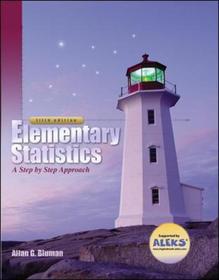
  • Elementary Statistics: A Step-By-Step Approach with MathZone Student Edition

    Elementary Statistics: A Step-By-Step Approach with MathZone Student Edition by Bluman, Allan G.;

      • 10% KEDVEZMÉNY?

      • A kedvezmény csak az 'Értesítés a kedvenc témákról' hírlevelünk címzettjeinek rendeléseire érvényes.
      • Kiadói listaár GBP 85.61
      • Az ár azért becsült, mert a rendelés pillanatában nem lehet pontosan tudni, hogy a beérkezéskor milyen lesz a forint árfolyama az adott termék eredeti devizájához képest. Ha a forint romlana, kissé többet, ha javulna, kissé kevesebbet kell majd fizetnie.

        40 900 Ft (38 952 Ft + 5% áfa)
      • Kedvezmény(ek) 10% (cc. 4 090 Ft off)
      • Kedvezményes ár 36 810 Ft (35 057 Ft + 5% áfa)

    40 900 Ft

    Beszerezhetőség

    Bizonytalan a beszerezhetőség. Érdemes még egyszer keresni szerzővel és címmel. Ha nem talál másik, kapható kiadást, forduljon ügyfélszolgálatunkhoz!

    Why don't you give exact delivery time?

    A beszerzés időigényét az eddigi tapasztalatokra alapozva adjuk meg. Azért becsült, mert a terméket külföldről hozzuk be, így a kiadó kiszolgálásának pillanatnyi gyorsaságától is függ. A megadottnál gyorsabb és lassabb szállítás is elképzelhető, de mindent megteszünk, hogy Ön a lehető leghamarabb jusson hozzá a termékhez.

    A termék adatai:

    • Kiadás sorszáma 5
    • Kiadó McGraw-Hill Higher Education
    • Megjelenés dátuma 2003. július 1.

    • ISBN 9780073016474
    • Kötéstípus Kötés ismeretlen
    • Terjedelem0 oldal
    • Méret 289x213x34 mm
    • Súly 1810 g
    • Nyelv angol
    • 0

    Kategóriák

    Hosszú leírás:

    ELEMENTARY STATISTICS: A STEP BY STEP APPROACH is for general beginning statistics courses with a basic algebra prerequisite. The book is non-theoretical, explaining concepts intuitively and teaching problem solving through worked examples and step-by-step instructions. This edition features increased emphasis on Excel, MINITAB, and the TI-83 Plus graphing calculator, computing technologies commonly used in such coureses.

    ELEMENTARY STATISTICS: A STEP BY STEP APPROACH is for general beginning statistics courses with a basic algebra prerequisite. The book is non-theoretical, explaining concepts intuitively and teaching problem solving through worked examples and step-by-step instructions. This edition features increased emphasis on Excel, MINITAB, and the TI-83 Plus graphing calculator, computing technologies commonly used in such coureses.

    Több

    Tartalomjegyzék:

    1The Nature of Probability and Statistics

    1-1 Introduction

    1-2 Descriptive and Inferential Statistics

    1-3 Variables and Types of Data

    1-4 Data Collection and Sampling Techniques

    1-5 Observational and Experimental Studies

    1-6 Uses and Misuses of Statistics

    1-7 Computers and Calculators

    1-8 Summary

    2Frequency Distributions and Graphs

    2-1 Introduction

    2-2 Organizing Data

    2-3 Histograms, Frequency Polygons, and Ogives

    2-4 Other Types of Graphs

    2-5 Summary

    3Data Description

    3-1 Introduction

    3-2 Measures of Central Tendency

    3-3 Measures of Variation

    3-4 Measures of Position

    3-5 Exploratory Data Analysis

    3-6 Summary

    4Probability and Counting Rules

    4-1 Introduction

    4-2 Sample Spaces and Probability

    4-3 The Addition Rules for Probability

    4-4 The Multiplication Rules and Conditional Probability

    4-5 Counting Rules

    4-6 Probability and Counting Rules

    4-7 Summary

    5Discrete Probability Distributions

    5-1 Introduction

    5-2 Probability Distributions

    5-3 Mean, Variance, and Expectation

    5-4 The Binomial Distribution

    5-5 Other Types of Distributions (Optional)

    5-6 Summary

    6The Normal Distribution

    6-1 Introduction

    6-2 Properties of the Normal Distribution

    6-3 The Standard Normal Distribution

    6-4 Applications of the Normal Distribution

    6-5 The Central Limit Theorem

    6-6 The Normal Approximation to the Binomial Distribution

    6-7 Summary

    7 Confidence Intervals and Sample Size

    7-1 Introduction

    7-2 Confidence Intervals for the Mean (s Known or n30)

    7-3 Confidence Intervals for the Mean (s Unknown or n<30)

    7-4 Confidence Intervals and Sample Size for Proportions

    7-5 Confidence Intervals for Variances and Standard Deviations

    7-6 Summary

    8Hypothesis Testing

    8-1 Introduction

    8-2 Steps in Hypothesis Testing - Traditional Method

    8-3 z Test for a Mean

    8-4 t Test for a Mean

    8-5 z Test for a Proportion

    8-6 chi^2 test for a Variance or Standard Deviation

    8-7 Additional Topics Regarding Hypothesis Testing

    8-8 Summary

    9Testing the Difference Between Two Means, Two Variances, and Two Proportions

    9-1 Introduction

    9-2 Testing the Difference Between Two Means: Large Samples

    9-3 Testing the Difference Between Two Variances

    9-4 Testing the Difference Between Two Means: Small Independent Samples

    9-5 Testing the Difference Between Two Means: Small Dependent Samples

    9-6 Testing the Difference Between Proportions

    9-7 Summary

    10Correlation and Regression

    10-1 Introduction

    10-2 Scatter Plots

    10-3 Correlation

    10-4 Regression

    10-5 Coefficient of Determination and Standard Error of the Estimate

    10-6 Multiple Regression (Optional)

    10-7 Summary

    11Other Chi-Square Tests

    11-1 Introduction

    11-2 Test for Goodness of Fit

    11-3 Tests Using Contingency Tables

    11-4 Summary

    12 Analysis of Variance

    12-1 Introduction

    12-2 One-Way Analysis of Variance

    12-3 The Scheffé Test and the Tukey Test

    12-4 Two-Way Analysis of Variance

    12-5 Summary

    13Nonparametric Statistics

    13-1 Introduction

    13-2 Advantages and Disadvantages of Nonparametric Methods

    13-3 The Sign Test

    13-4 The Wilcoxon Rank Sum Test

    13-5 The Wilcoxon Signed-Rank Test

    13-6 The Kruskal-Wallis Test

    13-7 The Spearman Rank Correlation Coefficient and the Runs Test

    18-8 Summary

    14Sampling and Simulation

    14-1 Introduction

    14-2 Common Sampling Techniques

    14-3 Surveys and Questionnaire Design

    14-4 Simulation Techniques

    14-5 The Monte Carlo Method

    14-6 Summary

    Appendix A: Algebra Review

    Appendix B-1: Writing the Research Report

    Appendix B-2: Bayes's Theorem

    Appendix B-3: Alternate Method for the Standard Normal Distribution

    Appendix C: Tables

    Appendix D: Data Bank

    Appendix E: Glossary

    Appendix F: Bibliography

    Appendix G: Photo Credits

    Appendix H: Selected Answers

    Több

    0