

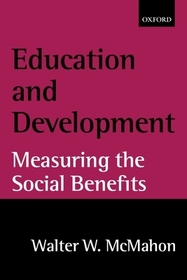
Education and Development
Measuring the Social Benefits
-
10% KEDVEZMÉNY?
- A kedvezmény csak az 'Értesítés a kedvenc témákról' hírlevelünk címzettjeinek rendeléseire érvényes.
- Kiadói listaár GBP 58.00
-
26 187 Ft (24 940 Ft + 5% áfa)
Az ár azért becsült, mert a rendelés pillanatában nem lehet pontosan tudni, hogy a beérkezéskor milyen lesz a forint árfolyama az adott termék eredeti devizájához képest. Ha a forint romlana, kissé többet, ha javulna, kissé kevesebbet kell majd fizetnie.
- Kedvezmény(ek) 10% (cc. 2 619 Ft off)
- Kedvezményes ár 23 568 Ft (22 446 Ft + 5% áfa)
Iratkozzon fel most és részesüljön kedvezőbb árainkból!
Feliratkozom
26 187 Ft

Beszerezhetőség
Megrendelésre a kiadó utánnyomja a könyvet. Rendelhető, de a szokásosnál kicsit lassabban érkezik meg.
Why don't you give exact delivery time?
A beszerzés időigényét az eddigi tapasztalatokra alapozva adjuk meg. Azért becsült, mert a terméket külföldről hozzuk be, így a kiadó kiszolgálásának pillanatnyi gyorsaságától is függ. A megadottnál gyorsabb és lassabb szállítás is elképzelhető, de mindent megteszünk, hogy Ön a lehető leghamarabb jusson hozzá a termékhez.
A termék adatai:
- Kiadó OUP Oxford
- Megjelenés dátuma 2002. január 17.
- ISBN 9780199250721
- Kötéstípus Puhakötés
- Terjedelem316 oldal
- Méret 234x156x18 mm
- Súly 455 g
- Nyelv angol
- Illusztrációk numerous figures 0
Kategóriák
Rövid leírás:
Education is a key area for knowledge-based, globalizing economies. Economies depend on education not only for the diffusion of knowledge and learning of new techniques, but also for long-term poverty reduction and improved health. This book develops a new approach for measuring the social benefits of education and finding more cost-effective policies.
TöbbHosszú leírás:
This book develops a new approach to measuring the total returns to human resource development through investment in education. Drawing on microanalytic foundations, it uses regional and worldwide data to estimate the net marginal contributions of education and new knowledge both to economic growth and to wider effects on democratization, human rights, political stability, health, longevity, net population growth rates, reduction of poverty, inequality in income distribution, crime, drug use, and the environment.
Externalities including indirect and delayed effects are identified and measured for these market and non-market returns. The total impacts of education policy changes on endogenous development are then estimated for several East Asian, Latin American, African, and industrialized nations using an interactive model.
This new approach is important to industrialized and developing countries alike. The diffusion of knowledge and the adaptation of new techniques has been identified as crucial to the growth process in the new endogenous growth models, and is of increasing strategic importance in current knowledge-based globalizing economies.
Similarly, the non-monetary returns from education are important in improving human welfare. Measurement of these non-market returns is a crucial but much neglected subject. It has proved frustrating, and existing microanalytic measures have proved piecemeal. The new approach developed here offers some comprehensive estimates and simulation techniques for finding more cost-effective policies, and also suggests new hypotheses for further microanalytic testing.
The main value of McMahon's book is in providing the most complete taxonomic catalogue ever of the multiplicity of education benefits ... I find the book an invaluable lexicon that will guide many others to follow-up and estimate even partial relationships in his model.
Tartalomjegyzék:
Part I: Introduction
Measuring the Returns to Education
Part II: Economic Growth
Human Capital, Endogenous Growth Models, and Economic Development
Education and Growth in East Asia
Education and Growth in Latin America
Africa's Population Growth and Dilution of Human Capital (with Ali Arifa)
Part III: Measuring the Non-Monetary Benefits
Health and Net Population Growth
Democracy, Human Rights, and Political Stability
Poverty and Inequality
The Environment
Education and Crime
Part IV: The Complete Model: Education and Economic Development
Tracing the Impacts of Education on Development: A Summary
Measuring the Total Social Benefits of Education: The Complete Model
Separating and Valuing the Direct and Indirect Effects of Education
Summary of Conclusions: Measuring the Social Benefits, Convergence, and Policy Dialogue

