

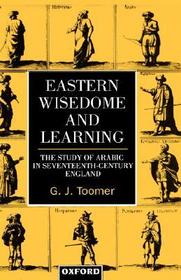
Eastern Wisedome and Learning
The Study of Arabic in Seventeenth-Century England
-
10% KEDVEZMÉNY?
- A kedvezmény csak az 'Értesítés a kedvenc témákról' hírlevelünk címzettjeinek rendeléseire érvényes.
- Kiadói listaár GBP 297.50
-
134 321 Ft (127 925 Ft + 5% áfa)
Az ár azért becsült, mert a rendelés pillanatában nem lehet pontosan tudni, hogy a beérkezéskor milyen lesz a forint árfolyama az adott termék eredeti devizájához képest. Ha a forint romlana, kissé többet, ha javulna, kissé kevesebbet kell majd fizetnie.
- Kedvezmény(ek) 10% (kb. 13 432 Ft)
- Kedvezményes ár 120 889 Ft (115 133 Ft + 5% áfa)
Iratkozzon fel most és részesüljön kedvezőbb árainkból!
Feliratkozom
134 321 Ft

Beszerezhetőség
Megrendelésre a kiadó utánnyomja a könyvet. Rendelhető, de a szokásosnál kicsit lassabban érkezik meg.
Why don't you give exact delivery time?
A beszerzés időigényét az eddigi tapasztalatokra alapozva adjuk meg. Azért becsült, mert a terméket külföldről hozzuk be, így a kiadó kiszolgálásának pillanatnyi gyorsaságától is függ. A megadottnál gyorsabb és lassabb szállítás is elképzelhető, de mindent megteszünk, hogy Ön a lehető leghamarabb jusson hozzá a termékhez.
A termék adatai:
- Kiadó Clarendon Press
- Megjelenés dátuma 1996. március 28.
- ISBN 9780198202912
- Kötéstípus Keménykötés
- Terjedelem396 oldal
- Méret 223x145x28 mm
- Súly 652 g
- Nyelv angol 0
Kategóriák
Rövid leírás:
In the England of 1600 Arabic was merely exotic. Only one Englishman knew it well and almost no Arabic books were available. By 1666 England ranked foremost in Europe in the study of Arabic. There were permanent Chairs for it at Oxford and Cambridge, Arabic printing presses in Oxford and London had produced important works, and a great Arabic library was accumulating at Oxford. In this masterly and original study Professor Toomer explains how this extraordinary change came about, and why there was a drastic decline towards the end of the century.
TöbbHosszú leírás:
This book narrates the extraordinary growth in the study of Arabic in England from the late sixteenth century, when it was almost non-existent, to the end of the seventeenth. By its high point around 1666, England was pre-eminent among European countries in the study of Arabic. Permanent Chairs of Arabic had been established at Oxford and Cambridge, and specialized presses in Oxford and London had produced Arabic works. The Professor at Oxford, Edward Pococke, was recognized as the foremost scholar in the field in Europe, and a great collection of Arabic manuscripts, begun by Archbishop Laud, was being built up at Oxford.
In this masterly and original study, Professor Toomer gives the first detailed account of this process, set against the religious and political background in England and Europe. He shows how trade with the Ottoman Empire and mistrust of Islam influenced the study of Arabic. Finally, he traces the course and causes of the drastic decline in Arabic studies towards the end of the century.
a treasure-trove that any student of the contacts between Europe and the Islamic workd can now use a s guide in order to elaborate any of the issues not already covered extensively by Toomer ... the analytical expositions of the author are carfully woven together and constitute in themselves a rich groundwork for dissertations in progress and those yet to be written.

