

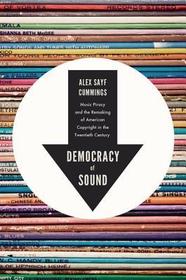
Democracy of Sound
Music Piracy and the Remaking of American Copyright in the Twentieth Century
-
10% KEDVEZMÉNY?
- A kedvezmény csak az 'Értesítés a kedvenc témákról' hírlevelünk címzettjeinek rendeléseire érvényes.
- Kiadói listaár GBP 43.49
-
19 635 Ft (18 700 Ft + 5% áfa)
Az ár azért becsült, mert a rendelés pillanatában nem lehet pontosan tudni, hogy a beérkezéskor milyen lesz a forint árfolyama az adott termék eredeti devizájához képest. Ha a forint romlana, kissé többet, ha javulna, kissé kevesebbet kell majd fizetnie.
- Kedvezmény(ek) 10% (cc. 1 964 Ft off)
- Kedvezményes ár 17 672 Ft (16 830 Ft + 5% áfa)
Iratkozzon fel most és részesüljön kedvezőbb árainkból!
Feliratkozom
19 635 Ft

Beszerezhetőség
Megrendelésre a kiadó utánnyomja a könyvet. Rendelhető, de a szokásosnál kicsit lassabban érkezik meg.
Why don't you give exact delivery time?
A beszerzés időigényét az eddigi tapasztalatokra alapozva adjuk meg. Azért becsült, mert a terméket külföldről hozzuk be, így a kiadó kiszolgálásának pillanatnyi gyorsaságától is függ. A megadottnál gyorsabb és lassabb szállítás is elképzelhető, de mindent megteszünk, hogy Ön a lehető leghamarabb jusson hozzá a termékhez.
A termék adatai:
- Kiadó OUP USA
- Megjelenés dátuma 2013. április 25.
- ISBN 9780199858224
- Kötéstípus Keménykötés
- Terjedelem272 oldal
- Méret 155x239x27 mm
- Súly 499 g
- Nyelv angol
- Illusztrációk 20 hts 0
Kategóriák
Rövid leírás:
Democracy of Sound tells the story of the pirates, radicals, jazzbos, Deadheads, and DJs who challenged the record industry for control of recorded sound throughout the twentieth century. A political and cultural history, it shows how the primacy of "intellectual property" gradually eclipsed an American political tradition that was suspicious of monopolies and favored free competition.
TöbbHosszú leírás:
Democracy of Sound is the first book to examine music piracy in the United States from the dawn of sound recording to the rise of Napster and online file-sharing. It asks why Americans stopped thinking of copyright as a monopoly-a kind of necessary evil-and came to see intellectual property as sacrosanct and necessary for the prosperity of an "information economy." Recordings only became eligible for federal copyright in 1972, following years of struggle between pirates, musicians, songwriters, broadcasters, and record companies over the right to own sound. Beginning in the 1890s, the book follows the competing visions of Americans who proposed ways to keep obscure and noncommercial music in circulation, preserve out-of-print recordings from extinction, or simply make records more freely and cheaply available. Genteel jazz collectors swapped and copied rare records in the 1930s; radicals pitched piracy as a mortal threat to capitalism in the 1960s, while hip-hop DJs from the 1970s onwards reused and transformed sounds to create a freer and less regulated market for mixtapes. Each challenged the idea that sound could be owned by anyone. The conflict led to the contemporary stalemate between those who believe that "information wants to be free" and those who insist that economic prosperity depends on protecting intellectual property. The saga of piracy also shows how the dubbers, bootleggers, and tape traders forged new social networks that ultimately gave rise to the social media of the twenty first century. Democracy of Sound is a colorful story of people making law, resisting law, and imagining how law might shape the future of music, from the Victrola and pianola to iTunes and BitTorrent.
a jolly good read ... captivating ... packed with excellent historical research that charts music piracy as far back as 1877
Tartalomjegyzék:
Introduction
Part One: The Birth and Growth of Piracy, 1877-1955
Ch. 1: Music, Machines, and Monopoly
Ch. 2: Collectors, Con Men, and the Struggle for Property Rights
Ch. 3: Piracy and the Rise of New Media
Part Two: The Legal Backlash, 1945-1998
Ch. 4: Counterculture, Popular Music, and the Bootleg Boom
Ch. 5: The Criminalization of Piracy
Ch. 6: Deadheads, Hip Hop, and the Possibility of Compromise
Ch. 7: The Global War on Piracy
Conclusion: Piracy as Social Media
Notes
Index

