

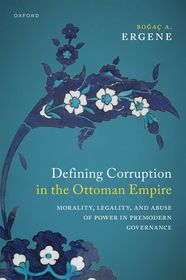
Defining Corruption in the Ottoman Empire
Morality, Legality, and Abuse of Power in Premodern Governance
-
10% KEDVEZMÉNY?
- A kedvezmény csak az 'Értesítés a kedvenc témákról' hírlevelünk címzettjeinek rendeléseire érvényes.
- Kiadói listaár GBP 108.00
-
51 597 Ft (49 140 Ft + 5% áfa)
Az ár azért becsült, mert a rendelés pillanatában nem lehet pontosan tudni, hogy a beérkezéskor milyen lesz a forint árfolyama az adott termék eredeti devizájához képest. Ha a forint romlana, kissé többet, ha javulna, kissé kevesebbet kell majd fizetnie.
- Kedvezmény(ek) 10% (cc. 5 160 Ft off)
- Kedvezményes ár 46 437 Ft (44 226 Ft + 5% áfa)
Iratkozzon fel most és részesüljön kedvezőbb árainkból!
Feliratkozom
51 597 Ft

Beszerezhetőség
Becsült beszerzési idő: A Prosperónál jelenleg nincsen raktáron, de a kiadónál igen. Beszerzés kb. 3-5 hét..
A Prosperónál jelenleg nincsen raktáron.
Why don't you give exact delivery time?
A beszerzés időigényét az eddigi tapasztalatokra alapozva adjuk meg. Azért becsült, mert a terméket külföldről hozzuk be, így a kiadó kiszolgálásának pillanatnyi gyorsaságától is függ. A megadottnál gyorsabb és lassabb szállítás is elképzelhető, de mindent megteszünk, hogy Ön a lehető leghamarabb jusson hozzá a termékhez.
A termék adatai:
- Kiadó OUP Oxford
- Megjelenés dátuma 2024. május 9.
- ISBN 9780198916215
- Kötéstípus Keménykötés
- Terjedelem352 oldal
- Méret 240x165x25 mm
- Súly 694 g
- Nyelv angol
- Illusztrációk 4 figures and 16 tables 510
Kategóriák
Rövid leírás:
This book explores how premodern Ottomans characterised public office corruption and what specific transgressions they associated with this notion before the nineteenth century. It identifies articulations of self-interested abuses of power in this context and illustrates how they resonate in some ways with modern perspectives.
TöbbHosszú leírás:
How did the premodern Ottomans understand public office corruption? To answer this question, Defining Corruption in the Ottoman Empire explores how Ottoman jurists, statesmen, political commentators, and others characterized this notion and what specific transgressions they associated with it before the nineteenth century. The book is based on extensive research and a wide variety of sources, including jurisprudential texts, imperial orders and communications, chronicles, and travel and diplomatic accounts. It identifies articulations of self-interested abuses of power by official and communal actors in these sources and illustrates how they resonate in some ways with modern perspectives. These premodern formulations, however, are shown to have collectively constituted a conceptual space that was contentious and temporally unstable, and no single overarching term was able to encapsulate all the specific misdeeds frequently linked to modern depictions of corruption.
The book's genre-specific discursive survey is complemented by discussions that highlight, in the Ottoman context, the shifty boundaries that separated legitimate and illegitimate forms of revenue extraction; that examine the state's efforts to monitor and punish abuses by government officials; and that explore the context-dependent and often contested moralities of many acts, such as gift giving as bribery, office selling, and favoritism. It also considers the ways in which "corrupt" state actors might have rationalized their offenses.
Defining Corruption is a conceptually driven work that is both comparative and interdisciplinary, engaging seriously with non-Ottoman historiographies, including broader Middle Eastern, European, and Chinese, and multiple disciplines besides history, in particular anthropology and economics, to provide a comprehensive analysis of premodern Ottoman perceptions of administrative abuse.
With its well-researched analysis and critical engagement with historiographical debates, this book makes a significant contribution not only to Ottoman history but also to broader discussions on corruption, legalhistory, and governance in pre-modern societies.
Tartalomjegyzék:
Glossary
A Note on Transliteration
Introduction Conceptual Reflections
Corruption Based on Pre-Ottoman Jurisprudential Sources
Corruption in Ottoman Jurisprudence
Abuse and Predation in State Documents
Controlling Corruption
Corruption in Ottoman Political Literature
Corruption According to Accounts for Foreigners
Gifts as Bribes
On the Morality of Patronage: The Case of Ilmiye
Conclusion: Possible Rationalizations of Corruption and Other Afterthoughts
References
Index

