

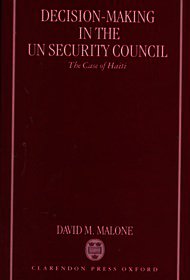
Decision-Making in the UN Security Council
The Case of Haiti, 1990-1997
-
10% KEDVEZMÉNY?
- A kedvezmény csak az 'Értesítés a kedvenc témákról' hírlevelünk címzettjeinek rendeléseire érvényes.
- Kiadói listaár GBP 43.99
-
19 861 Ft (18 915 Ft + 5% áfa)
Az ár azért becsült, mert a rendelés pillanatában nem lehet pontosan tudni, hogy a beérkezéskor milyen lesz a forint árfolyama az adott termék eredeti devizájához képest. Ha a forint romlana, kissé többet, ha javulna, kissé kevesebbet kell majd fizetnie.
- Kedvezmény(ek) 10% (cc. 1 986 Ft off)
- Kedvezményes ár 17 875 Ft (17 024 Ft + 5% áfa)
Iratkozzon fel most és részesüljön kedvezőbb árainkból!
Feliratkozom
19 861 Ft

Beszerezhetőség
Megrendelésre a kiadó utánnyomja a könyvet. Rendelhető, de a szokásosnál kicsit lassabban érkezik meg.
Why don't you give exact delivery time?
A beszerzés időigényét az eddigi tapasztalatokra alapozva adjuk meg. Azért becsült, mert a terméket külföldről hozzuk be, így a kiadó kiszolgálásának pillanatnyi gyorsaságától is függ. A megadottnál gyorsabb és lassabb szállítás is elképzelhető, de mindent megteszünk, hogy Ön a lehető leghamarabb jusson hozzá a termékhez.
A termék adatai:
- Kiadó OUP Oxford
- Megjelenés dátuma 1998. november 5.
- ISBN 9780198294832
- Kötéstípus Keménykötés
- Terjedelem356 oldal
- Méret 243x162x23 mm
- Súly 646 g
- Nyelv angol 0
Kategóriák
Rövid leírás:
This unique and intriguing study examines the UN's efforts to reinstate Haitian President Aristide, overthrown in a 1991 coup. An active participant in some of the dramatic events in Haiti, David Malone sheds new light on the roles and motivations of key actors, particularly the US; the Security Council authorized use of force; issues of power and influence at the UN; the links between the Haiti crisis and other contemporary international conflicts; and UN co-operation with the Organization of American States.
TöbbHosszú leírás:
After President Aristide was overthrown by the Haitian military in September 1991, the UN Security Council and the OAS instituted a progression of measures to restore him to power. This unique and intriguing study examines how and why the UN Security Council took its decisions on Haiti, including authorization in July 1994 of the use of force by a US-led multinational coalition against the de facto regime.
After outlining key trends in the Council's work from 1990-97 and providing a sketch of Haiti's history, the author reviews the milestones in the Haitian crisis, focusing principally on their international dimension but also discussing Haitian domestic factors which influenced the crisis. Drawing on an unprecedented range of UN and OAS documents, media reports and original interviews, Malone explores how and why the Haiti case found its way on to the Security Council's agenda, probes the motivations and roles of key actors, examines the Security Council as an institutional framework for action, and asseses the success of Security Council strategies on Haiti. The study touches on issues of power and influence within the UN Security Council, the links between the Security Council's decisions on Haiti and its reactions to other, recent, international crises, UN cooperation with the OAS, and the factors shaping national positions in the Security Council, with a particular focus on the impact of US domestic events.
'accessible and of great value.'
Tartalomjegyzék:
Foreword by Adam Roberts
Introduction
Rise and Decline of Security Council Activism, 1990-97
An Overview of Haiti's History
The Anti-Aristide Coup and the International Response, January 1991-November 1992
The Governors Island Agreement, December 1992-November 1993
Authorization for the Use of Force and Aristide's Return, November 1993-October 1994
Stabilization and Peacebuilding, October 1994-December 1997
Conclusions
Chronology

