

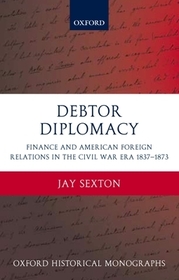
Debtor Diplomacy
Finance and American Foreign Relations in the Civil War Era 1837-1873
Sorozatcím: Oxford Historical Monographs;
-
10% KEDVEZMÉNY?
- A kedvezmény csak az 'Értesítés a kedvenc témákról' hírlevelünk címzettjeinek rendeléseire érvényes.
- Kiadói listaár GBP 187.50
-
84 656 Ft (80 625 Ft + 5% áfa)
Az ár azért becsült, mert a rendelés pillanatában nem lehet pontosan tudni, hogy a beérkezéskor milyen lesz a forint árfolyama az adott termék eredeti devizájához képest. Ha a forint romlana, kissé többet, ha javulna, kissé kevesebbet kell majd fizetnie.
- Kedvezmény(ek) 10% (cc. 8 466 Ft off)
- Kedvezményes ár 76 191 Ft (72 563 Ft + 5% áfa)
Iratkozzon fel most és részesüljön kedvezőbb árainkból!
Feliratkozom
84 656 Ft

Beszerezhetőség
Megrendelésre a kiadó utánnyomja a könyvet. Rendelhető, de a szokásosnál kicsit lassabban érkezik meg.
Why don't you give exact delivery time?
A beszerzés időigényét az eddigi tapasztalatokra alapozva adjuk meg. Azért becsült, mert a terméket külföldről hozzuk be, így a kiadó kiszolgálásának pillanatnyi gyorsaságától is függ. A megadottnál gyorsabb és lassabb szállítás is elképzelhető, de mindent megteszünk, hogy Ön a lehető leghamarabb jusson hozzá a termékhez.
A termék adatai:
- Kiadó OUP Oxford
- Megjelenés dátuma 2005. július 21.
- ISBN 9780199281039
- Kötéstípus Keménykötés
- Terjedelem300 oldal
- Méret 224x145x22 mm
- Súly 452 g
- Nyelv angol
- Illusztrációk numerous graphs, 2 tables 0
Kategóriák
Rövid leírás:
The United States was a debtor nation in the mid-nineteenth century, with half of its debt held overseas. The need to obtain foreign capital greatly influenced American foreign policy, principally relations with Britain. The intersection of finance and diplomacy was particularly evident during the Civil War when both the North and South integrated attempts to procure loans from European banks into their larger international strategies. Drawing on the unused archives of London banks and the papers of statesmen on both sides of the Atlantic, this work explores a central theme of mid-nineteenth-century foreign relations and a crucial, but previously ignored, aspect of the Civil War.
TöbbHosszú leírás:
The United States was a debtor nation in the mid-nineteenth century, with half of its national debt held overseas. Lacking the resources to develop the nation and to fund the wars necessary to expand and then preserve it, the United States looked across the Atlantic for investment capital. The need to obtain foreign capital greatly influenced American foreign policy, principally relations with Britain. The intersection of finance and diplomacy was particularly evident during the Civil War when both the North and South integrated attempts to procure loans from European banks into their larger international strategies. Furthermore, the financial needs of the United States (and the Confederacy) imparted significant political power to an elite group of London-based financiers who became intimately involved in American foreign relations during this period. This study explores and assesses how the United State's need for capital influenced its foreign relations in the tumultuous years wedged between the two great financial crises of the nineteenth century, 1837 to 1873.
Drawing on the unused archives of London banks and the papers of statesmen on both sides of the Atlantic, this work illuminates our understanding of mid-nineteenth-century American foreign relations by highlighting how financial considerations influenced the formation of foreign policy and functioned as a peace factor in Anglo-American relations. This study also analyses a crucial, but ignored, dimension of the Civil War - the efforts of both the North and the South to attract the support of European financiers. Though foreign contributions to each side failed to match the hopes of Union and Confederate leaders, the financial diplomacy of the Civil War shaped the larger foreign policy strategies of both sides and contributed to both the preservation of British neutrality and the ultimate defeat of the Confederacy.
Sexton's analysis demonstrates that he spent a great deal of time reading and analysing primary source documets from the period
Tartalomjegyzék:
Introduction: Finance and Foreign Relations in the Mid-Nineteenth Century
The Baring Years, 1837-1861
Union Finance and Diplomacy
Confederate Finance and Diplomacy
'Were it not for our Debt,' 1865-73
Conclusion
Bibliography

