

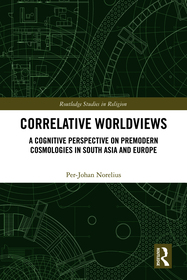
Correlative Worldviews
A Cognitive Perspective on Premodern Cosmologies in South Asia and Europe
Sorozatcím: Routledge Studies in Religion;
-
10% KEDVEZMÉNY?
- Kiadói listaár GBP 171.99
-
77 653 Ft (73 955 Ft + 5% áfa)
Az ár azért becsült, mert a rendelés pillanatában nem lehet pontosan tudni, hogy a beérkezéskor milyen lesz a forint árfolyama az adott termék eredeti devizájához képest. Ha a forint romlana, kissé többet, ha javulna, kissé kevesebbet kell majd fizetnie.
- Kedvezmény(ek) 10% (cc. 1 Ft off)
- Kedvezményes ár 69 887 Ft (66 560 Ft + 5% áfa)
69 887 Ft

Beszerezhetőség
Még nem jelent meg, de rendelhető. A megjelenéstől számított néhány héten belül megérkezik.
Why don't you give exact delivery time?
A beszerzés időigényét az eddigi tapasztalatokra alapozva adjuk meg. Azért becsült, mert a terméket külföldről hozzuk be, így a kiadó kiszolgálásának pillanatnyi gyorsaságától is függ. A megadottnál gyorsabb és lassabb szállítás is elképzelhető, de mindent megteszünk, hogy Ön a lehető leghamarabb jusson hozzá a termékhez.
A termék adatai:
- Kiadás sorszáma 1
- Kiadó Routledge
- Megjelenés dátuma 2026. szeptember 7.
- ISBN 9781041361350
- Kötéstípus Keménykötés
- Terjedelem236 oldal
- Méret 234x156 mm
- Nyelv angol
- Illusztrációk 2 Tables, black & white 700
Kategóriák
Rövid leírás:
This book explores the topic of correlative worldviews from a comparative and cognitive perspective. Correlative worldviews are premodern cosmologies that posit linkages between different planes of existence, e.g. between the elements of the body and of the cosmos.?
TöbbHosszú leírás:
This book explores the topic of correlative worldviews from a comparative and cognitive perspective. Correlative worldviews are premodern cosmologies that posit linkages between different planes of existence, e.g. between the elements of the body and of the cosmos. Unlike the correlations of modern science, such linkages are not primarily causal in nature but are based on perceived resemblance and notions of mystical linkages or sympathies. Whilst correlative worldviews are known from a number of premodern civilizations, this study focuses on two geographic-cultural areas: Early/Medieval South Asia and premodern Europe from Antiquity to the Renaissance. Both areas have seen the rise and decline of correlative systems of thought throughout the centuries and thus provide fertile ground for a comparative study. The author establishes points of correspondence between the correlative worldviews of these areas then explains them in light of cognitive science. The argument is that panhuman cognitive mechanisms can better account for commonalities than other theories (diffusion, borrowing, etc.) and these same mechanisms may explain the worldwide occurrence of correlative worldviews. The book is relevant to scholars and advanced students in religious studies, particularly those with an interest in the cognitive science of religion and the relationship between cognition and culture.
TöbbTartalomjegyzék:
1. Introduction? 2. Categorization and cognition: how correlations are made? 3. Classifying space: cosmology and correlative thought? 4. Microcosmos: the body as the world? 5. Soul and cosmos? 6.?General conclusion
Több

