

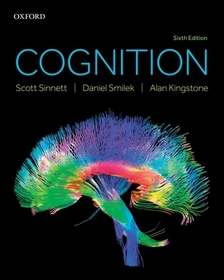
Cognition
-
10% KEDVEZMÉNY?
- A kedvezmény csak az 'Értesítés a kedvenc témákról' hírlevelünk címzettjeinek rendeléseire érvényes.
- Kiadói listaár GBP 85.99
-
38 824 Ft (36 975 Ft + 5% áfa)
Az ár azért becsült, mert a rendelés pillanatában nem lehet pontosan tudni, hogy a beérkezéskor milyen lesz a forint árfolyama az adott termék eredeti devizájához képest. Ha a forint romlana, kissé többet, ha javulna, kissé kevesebbet kell majd fizetnie.
- Kedvezmény(ek) 10% (kb. 3 883 Ft)
- Kedvezményes ár 34 941 Ft (33 278 Ft + 5% áfa)
Iratkozzon fel most és részesüljön kedvezőbb árainkból!
Feliratkozom
38 824 Ft

Beszerezhetőség
Csak rendelésre kapható a kiadónál, kissé időigényes.
Why don't you give exact delivery time?
A beszerzés időigényét az eddigi tapasztalatokra alapozva adjuk meg. Azért becsült, mert a terméket külföldről hozzuk be, így a kiadó kiszolgálásának pillanatnyi gyorsaságától is függ. A megadottnál gyorsabb és lassabb szállítás is elképzelhető, de mindent megteszünk, hogy Ön a lehető leghamarabb jusson hozzá a termékhez.
A termék adatai:
- Kiadás sorszáma 6
- Kiadó OUP Canada
- Megjelenés dátuma 2016. március 31.
- ISBN 9780199019700
- Kötéstípus Keménykötés
- Terjedelem528 oldal
- Méret 256x210x24 mm
- Súly 1134 g
- Nyelv angol
- Illusztrációk 73 photos; 144 figures; 12 tables 0
Kategóriák
Rövid leírás:
Cognition, sixth edition is a core text intended for students studying cognitive psychology at the second- and third-year levels. This text provides a comprehensive introduction to the field, examining the mental processes behind how knowledge is acquired.
TöbbHosszú leírás:
This engaging guide to the hidden corridors of the mind explores the mental processes through which we interact with the world. Drawing on the work of esteemed researchers and scholars, Cognition applies real-life examples to key theories in order to create an accessible, yet comprehensive primer to the field.
My goal in teaching Cognitive Psychology is to share my enthusiasm for this subject with students, and I feel like this text would help me to do that; it's current, engaging, and appropriately challenging."
Tartalomjegyzék:
Introduction
Case Study: What Is Cognition?
Cognitive Psychology and Information Processing
Information Theory
Models of Information-Processing
Ecological Validity
Metacognition and Cognitive Psychology
The Range of Cognitive Psychology
Cognitive Neuroscience
Case Study: Head Office
The Brain as the Organ of the Mind
The Relation between Mind and Brain
Methods in Cognitive Neuroscience
Perception
Case Study: An Unusual Perceptual Experience
The Physiology of Visual Perception NEW
The Ventral Pathway and Object Recognition
Context and Feedback Effects in Perception
The Dorsal Pathway and the Relation between Perception and Action
Interactions Between the Ventral and Dorsal Pathways
Multimodal Perception
The Varieties of Attention
Case Study: A Total Wreck
James's Description of Attention
Selective Attention
Dual Tasks and the Limits of Attention
Task Switching
Sustained Attention NEW
Overt Visual Attention
Memory Systems
Case Study: What Was That Movie . . . ?
Understanding Memory Systems NEW
Modal Model of Memory
- Sensory Memory NEW
- Short-Term Memory NEW
- Long-Term Memory
Working Memory
Further Developments in Memory Systems Theory
Connectionist Models of Memory
Aging and Memory Disorders
Memory Traces and Memory Schemas
Case Study: When Memory Fails
Introduction
Schema-based Theories of Memory
Scripts
Autobiographical Memory NEW
Levels of Processing
Two Approaches to Memory Research
Imagery
Case Study: Time-Space Synesthesia and Number Forms
Memory and Imagery
Synesthesia and Eidetic Imagery
Mental Rotation
Egocentric Perspective Transformations
Controversy over the Nature of Mental Imagery
Cognitive Maps and Mental Models
Auditory Imagery NEW
Concepts
Case Study: Grasping a New Concept
The Classical Approach
Learning Complex Rules
Wittgenstein's Analysis of Concepts
Rosch and Prototypicality
Embodied Cognition
Folk Biology
Language
Case Study: Reading in the "Olden Days"
The Structure of Language - The Building Blocks of Language NEW
Transformational Grammar
The Innateness Hypothesis
Communication and Comprehension
The Social Context of Language
Language, Cognition, and Culture
Problem-Solving
Case Study: Vaccinating in the Wake of Wakefield NEW
Insight Problems and the Gestalt Theory of Thinking
Current Approaches to Insight Problems
Functional Fixedness and the Design of Tools
The Flexibility-Rigidity Dimension
Artificial Intelligence Approaches to Problem-Solving
Thinking Aloud as a Method for Studying Human Problem-Solving
Can Computer Programs Experience Insight?
Solving Problems in Science
Reasoning, Judgment, and Choice
Case Study: The (In)famous Hockey Stick NEW
Reasoning
Judgment and Choice
Ecological Rationality
Training in Statistical Reasoning
Intelligence and Creativity
Case Study: A Child Prodigy
The Concept of Intelligence: Historical Background
General Intelligence (g)
The Flynn Effect
Sternberg's Theory of Successful Intelligence
Howard Gardner and the Theory of Multiple Intelligences
Expertise
Creativity
Consciousness NEW
Case Study: Blindsight
Distinguishing among Different Levels of Consciousness
Unconscious Perception?
Consciousness and the Grand Illusion?
Meta-consciousness?
Consciousness and the Brain?
Deficits of Consciousness
Glossary
Note: All chapters end with
- Summary
- Case Study Wrap-Up
- Key Concepts
- In the Know: Review Questions
- Links to Other Chapters
- Further Reading

