

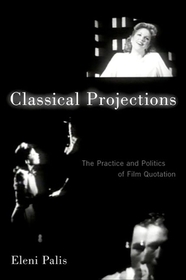
Classical Projections
The Practice and Politics of Film Quotation
-
10% KEDVEZMÉNY?
- A kedvezmény csak az 'Értesítés a kedvenc témákról' hírlevelünk címzettjeinek rendeléseire érvényes.
- Kiadói listaár GBP 105.00
-
47 407 Ft (45 150 Ft + 5% áfa)
Az ár azért becsült, mert a rendelés pillanatában nem lehet pontosan tudni, hogy a beérkezéskor milyen lesz a forint árfolyama az adott termék eredeti devizájához képest. Ha a forint romlana, kissé többet, ha javulna, kissé kevesebbet kell majd fizetnie.
- Kedvezmény(ek) 10% (cc. 4 741 Ft off)
- Kedvezményes ár 42 667 Ft (40 635 Ft + 5% áfa)
Iratkozzon fel most és részesüljön kedvezőbb árainkból!
Feliratkozom
47 407 Ft

Beszerezhetőség
Megrendelésre a kiadó utánnyomja a könyvet. Rendelhető, de a szokásosnál kicsit lassabban érkezik meg.
Why don't you give exact delivery time?
A beszerzés időigényét az eddigi tapasztalatokra alapozva adjuk meg. Azért becsült, mert a terméket külföldről hozzuk be, így a kiadó kiszolgálásának pillanatnyi gyorsaságától is függ. A megadottnál gyorsabb és lassabb szállítás is elképzelhető, de mindent megteszünk, hogy Ön a lehető leghamarabb jusson hozzá a termékhez.
A termék adatai:
- Kiadó OUP USA
- Megjelenés dátuma 2022. május 27.
- ISBN 9780197558171
- Kötéstípus Keménykötés
- Terjedelem180 oldal
- Méret 241x159x15 mm
- Súly 395 g
- Nyelv angol 207
Kategóriák
Rövid leírás:
How does post-classical cinema visualize its awareness of coming after a "classical" or "golden age"? How do post-classical filmmakers claim or disavow classical history? How do historically disenfranchised post-classical filmmakers, whether by gender, sexuality, or race, grapple with exclusionary and stereotype-ridden canons? Classical Projections offers a new way of seeing quotations of films within other films.
TöbbHosszú leírás:
Quotations are a standard way that the humanities make meaning; the pull-quote, epigraph, and quotation are standard for citing evidence and invoking and interrogating authority in both literary and scholarly writing. However, film studies has yet to seriously examine how moving images can quote one another, convening interaction and creating new knowledge across time.
Classical Projections offers "film quotation" as a new concept for understanding how preexisting moving image fragments are reframed and re-viewed within subsequent films. As a visual corollary to literary quotation, film quotations embed film fragments in on-screen movie screens. Though film quotations have appeared since silent cinema, Classical Projections focuses on quotations of classical Hollywood film--mainstream American studio production, 1915-1950--as quoted in post-classical Hollywood, roughly 1960 to present. This strategic historical frame asks: how does post-classical cinema visualize its awareness of coming after a classical or golden age? How do post-classical filmmakers claim or disavow classical history? How do historically disenfranchised post-classical filmmakers, whether by gender, sexuality, or race, grapple with exclusionary and stereotype-ridden canons?
As a constitutive element of post-classical authorship, film quotations amass and manufacture classical Hollywood in retrospective, highly strategic ways. By revealing how quotational tellings of film history build and embolden exclusionary, myopic canons, Classical Projections uncovers opportunities to construct more capacious cultural memory.
This book's solidly interdisciplinary framing sustains richly detailed research and analysis. It will speak to broad audiences across film, media, and cultural studies, as well as gender and women's studies and critical race theory. Palis's analysis takes the most subtle and incisive type of approach to questions of both the canon and authorship. Her argument bypasses more traditional, additive or inclusive canon 'revision' in favor of a radical reshaping, reframing, and re-contextualizing of the canonical history of U.S. cinema since the 'New Hollywood.
Tartalomjegyzék:
Introduction
Chapter 1: "Quoting Genre and Creating Canon"
Chapter 2: "Film Quotation and the Oppositional Gaze"
Chapter 3: "'D-I-Y' Quotation and Created Appropriation"
Chapter 4: "Film Quotation and Visual Sovereignty"
Chapter 5: "Film Quotation, Foreign and Domestic"
Chapter 6: "Cinephilic Pilgrimage and Authorial Scandal"
Annotated Appendix
Index

