

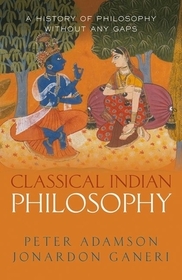
Classical Indian Philosophy
A history of philosophy without any gaps, Volume 5
Sorozatcím: A History of Philosophy;
-
10% KEDVEZMÉNY?
- A kedvezmény csak az 'Értesítés a kedvenc témákról' hírlevelünk címzettjeinek rendeléseire érvényes.
- Kiadói listaár GBP 30.99
-
13 991 Ft (13 325 Ft + 5% áfa)
Az ár azért becsült, mert a rendelés pillanatában nem lehet pontosan tudni, hogy a beérkezéskor milyen lesz a forint árfolyama az adott termék eredeti devizájához képest. Ha a forint romlana, kissé többet, ha javulna, kissé kevesebbet kell majd fizetnie.
- Kedvezmény(ek) 10% (kb. 1 399 Ft)
- Kedvezményes ár 12 592 Ft (11 993 Ft + 5% áfa)
Iratkozzon fel most és részesüljön kedvezőbb árainkból!
Feliratkozom
13 991 Ft

Beszerezhetőség
Megrendelésre a kiadó utánnyomja a könyvet. Rendelhető, de a szokásosnál kicsit lassabban érkezik meg.
Why don't you give exact delivery time?
A beszerzés időigényét az eddigi tapasztalatokra alapozva adjuk meg. Azért becsült, mert a terméket külföldről hozzuk be, így a kiadó kiszolgálásának pillanatnyi gyorsaságától is függ. A megadottnál gyorsabb és lassabb szállítás is elképzelhető, de mindent megteszünk, hogy Ön a lehető leghamarabb jusson hozzá a termékhez.
A termék adatai:
- Kiadó OUP Oxford
- Megjelenés dátuma 2020. március 26.
- ISBN 9780198851769
- Kötéstípus Keménykötés
- Terjedelem422 oldal
- Méret 240x159x38 mm
- Súly 660 g
- Nyelv angol 0
Kategóriák
Rövid leírás:
Adamson and Ganeri present a lively introduction to one of the world's richest intellectual traditions: the philosophy of classical India. They guide us through such famous works as the Vedas and the Upani?ads, and tell the stories of how Buddhism and Jainism developed. Anyone curious about South Asian philosophy can start here.
TöbbHosszú leírás:
Peter Adamson and Jonardon Ganeri present a lively introduction to one of the world's richest intellectual traditions: the philosophy of classical India. They begin with the earliest extant literature, the Vedas, and the explanatory works that these inspired, known as Upani?ads. They also discuss other famous texts of classical Vedic culture, especially the Mah?bh?rata and its most notable section, the Bhagavad-G?ta, alongside the rise of Buddhism and Jainism. In this opening section, Adamson and Ganeri emphasize the way that philosophy was practiced as a form of life in search of liberation from suffering. Next, the pair move on to the explosion of philosophical speculation devoted to foundational texts called 'sutras,' discussing such traditions as the logical and epistemological Ny?ya school, the monism of Advaita Ved?nta, and the spiritual discipline of Yoga. In the final section of the book, they chart further developments within Buddhism, highlighting Nag?rjuna's radical critique of 'non-dependent' concepts and the no-self philosophy of mind found in authors like Dign?ga, and within Jainism, focusing especially on its 'standpoint' epistemology. Unlike other introductions that cover the main schools and positions in classical Indian philosophy, Adamson and Ganeri's lively guide also pays attention to philosophical themes such as non-violence, political authority, and the status of women, while considering textual traditions typically left out of overviews of Indian thought, like the C?rvaka school, Tantra, and aesthetic theory as well. Adamson and Ganeri conclude by focusing on the much-debated question of whether Indian philosophy may have influenced ancient Greek philosophy and, from there, evaluate the impact that this area of philosophy had on later Western thought.
The ideal introduction to Indian philosophy for someone new to the field. The notes and bibliography provide ample opportunity to delve deeper into the subject matter... I cannot recommend this book highly enough.
Tartalomjegyzék:
Origins
Begin at the End: Introduction to Indian Philosophy
Scriptures, Schools, and Systems: A Historical Overview
Kingdom for a Horse: India in the Vedic Period
Hide and Seek: The Upani?ads
Indra's Search: The Self in the Upani?ads
You Are What You Do: Karma in the Upani?ads
Case Worker: P??ini's Grammar
Suffering and Smiling: The Buddha
Crossover Appeal: The Nature of the Buddha's Teaching
Carry a Big Stick: Ancient Indian Political Thought
Better Half: Women in Ancient India
Grand Illusion: Dharma and Deception in the Mah?bh?rata
World on a String: The Bhagavad-g?t?
Mostly Harmless: Non-Violence
The Age of the S?tra
A Tangled Web: The Age of the S?tra
When in Doubt: The Rise of Skepticism
Master of Ceremonies: Jaimini's M?m??s?-s?tra
Innocent Until Proven Guilty: M?m??s? on Knowledge and Language
Source Code: B?dar?ya?a's Ved?nta-s?tra
No Two Ways About It: ?a?kara and Advaita Ved?nta
Communication Breakdown: Bhart?hari on Language
The Theory of Evolution: ??varak???a's S??khya-k?rik?
Who Wants to Live Forever? Early ?yurvedic Medicine
Practice Makes Perfect: Pata?jali's Yoga-s?tra
Where There's Smoke There's Fire: Gautama's Ny?ya-s?tra
What You See Is What You Get: Ny?ya on Perception
Standard Deductions: Ny?ya on Reasoning
The Truth Shall Set You Free: Ny?ya on the Mind
Fine Grained Analysis: Ka??da's Vai?e?ika-s?tra
The Whole Story: Vai?e?ika on Complexity and Causation
A Day in the Life: Theories of Time
The Wolf's Footprint: Indian Naturalism
Mind out of Matter: Materialist Theories of the Self
Buddhists and Jainas
We Beg to Differ: The Buddhists and Jainas
It All Depends: N?g?rjuna on Emptiness
Motion Denied: N?g?rjuna on Change
No Four Ways About It: N?g?rjuna's Tetralemma
Taking Perspective: The Jaina Theory of Standpoints
Well Qualified: The Jainas on Truth
Change of Mind: Vasubandhu and Yog?c?ra Buddhism
Who's Pulling Your Strings? Buddhaghosa on No-Self and Autonomy
Under Construction: Dign?ga on Perception and Language
Follow the Evidence: Dign?ga's Logic
Doors of Perception: Dign?ga on Consciousness
Beyond Ancient India
In Good Taste: The Rasa Aesthetic Theory
Learn by Doing: Tantra
Looking East: Indian Influence on Greek Thought
The Buddha and I: Indian Influence on Islamic and European Thought
What Happened Next: Indian Philosophy After Dign?ga

