

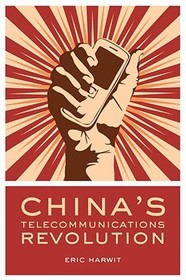
China's Telecommunications Revolution
-
10% KEDVEZMÉNY?
- A kedvezmény csak az 'Értesítés a kedvenc témákról' hírlevelünk címzettjeinek rendeléseire érvényes.
- Kiadói listaár GBP 100.00
-
45 150 Ft (43 000 Ft + 5% áfa)
Az ár azért becsült, mert a rendelés pillanatában nem lehet pontosan tudni, hogy a beérkezéskor milyen lesz a forint árfolyama az adott termék eredeti devizájához képest. Ha a forint romlana, kissé többet, ha javulna, kissé kevesebbet kell majd fizetnie.
- Kedvezmény(ek) 10% (cc. 4 515 Ft off)
- Kedvezményes ár 40 635 Ft (38 700 Ft + 5% áfa)
Iratkozzon fel most és részesüljön kedvezőbb árainkból!
Feliratkozom
45 150 Ft

Beszerezhetőség
Megrendelésre a kiadó utánnyomja a könyvet. Rendelhető, de a szokásosnál kicsit lassabban érkezik meg.
Why don't you give exact delivery time?
A beszerzés időigényét az eddigi tapasztalatokra alapozva adjuk meg. Azért becsült, mert a terméket külföldről hozzuk be, így a kiadó kiszolgálásának pillanatnyi gyorsaságától is függ. A megadottnál gyorsabb és lassabb szállítás is elképzelhető, de mindent megteszünk, hogy Ön a lehető leghamarabb jusson hozzá a termékhez.
A termék adatai:
- Kiadás sorszáma és címe mobile phone company rivalry
- Kiadó OUP Oxford
- Megjelenés dátuma 2008. február 28.
- ISBN 9780199233748
- Kötéstípus Keménykötés
- Terjedelem268 oldal
- Méret 242x162x20 mm
- Súly 566 g
- Nyelv angol
- Illusztrációk tables and figures 0
Kategóriák
Rövid leírás:
The most comprehensive text to date on China's telecommunications industry, this book considers the way Chinese companies and the government acted in concert to put telephones and Internet access in the hands of hundreds of millions in less than 25 years, and looks at the economic and political consequences of this telecommunications "revolution".
TöbbHosszú leírás:
China's telecommunications industry has seen revolutionary transformation and growth over the past three decades. Chinese Internet users number nearly 150 million, and the PRC expects to quickly pass the US in total numbers of connected citizens. The number of mobile and fixed-line telephone users soared from a mere 2 million in 1980 to a total of nearly 800 million in 2007. China has been the most successful developing nation in history for spreading telecommunications access at an unparalleled rapid pace.
This book tells how China conducted its remarkable "telecommunications revolution". It examines both corporate and government policy to get citizens connected to both voice and data networks, looks at the potential challenges to the one-party government when citizens get this access, and considers the new opportunities for networking now offered to the people of one of the world's fastest growing economies.
The book is based on the author's fieldwork conducted in several Chinese cities, as well as extensive archival research. It focuses on key issues such as building and running the country's Internet, mobile phone company rivalry, foreign investment in the sector, and telecommunications in China's vibrant city of Shanghai. It also considers the country's internal "digital divide", and questions how equitable the telecommunications revolution has been. Finally, it examines the ways the PRC's entry to the World Trade Organization will shape the future course of telecommunications growth.
China's Telecommunication Revolution will be the benchmark study for students, researchers and scholars of China's media and telecommunications. It will be an essential reading in courses on global media policy and regional development. In addition, Harwit's book is clearly written, making it accessible for non-academic readers interested in China's policy-making institutions.
Tartalomjegyzék:
Industrial Policy and the Chinese Telecommunications Industry
China's Telecommunications History and Policy Trajectory
Telecommunications Competition in the 1990s and 2000s
China's Internet and Government Policy
Building the Network: The Role of Telecommunications Equipment Companies
Telecommunications in Shanghai: A Case Focus on the Municipal Government's Role
The Digital Divide of Telephones and the Internet
Industrial Policy and Lessons of the Telecommunications Revolution

