

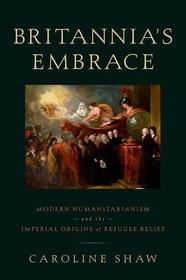
Britannia's Embrace
Modern Humanitarianism and the Imperial Origins of Refugee Relief
-
10% KEDVEZMÉNY?
- A kedvezmény csak az 'Értesítés a kedvenc témákról' hírlevelünk címzettjeinek rendeléseire érvényes.
- Kiadói listaár GBP 102.50
-
46 278 Ft (44 075 Ft + 5% áfa)
Az ár azért becsült, mert a rendelés pillanatában nem lehet pontosan tudni, hogy a beérkezéskor milyen lesz a forint árfolyama az adott termék eredeti devizájához képest. Ha a forint romlana, kissé többet, ha javulna, kissé kevesebbet kell majd fizetnie.
- Kedvezmény(ek) 10% (kb. 4 627 Ft)
- Kedvezményes ár 41 651 Ft (39 668 Ft + 5% áfa)
Iratkozzon fel most és részesüljön kedvezőbb árainkból!
Feliratkozom
46 278 Ft

Beszerezhetőség
Megrendelésre a kiadó utánnyomja a könyvet. Rendelhető, de a szokásosnál kicsit lassabban érkezik meg.
Why don't you give exact delivery time?
A beszerzés időigényét az eddigi tapasztalatokra alapozva adjuk meg. Azért becsült, mert a terméket külföldről hozzuk be, így a kiadó kiszolgálásának pillanatnyi gyorsaságától is függ. A megadottnál gyorsabb és lassabb szállítás is elképzelhető, de mindent megteszünk, hogy Ön a lehető leghamarabb jusson hozzá a termékhez.
A termék adatai:
- Kiadó OUP USA
- Megjelenés dátuma 2015. október 29.
- ISBN 9780190200985
- Kötéstípus Keménykötés
- Terjedelem328 oldal
- Méret 152x236x25 mm
- Súly 612 g
- Nyelv angol 0
Kategóriák
Rövid leírás:
Britannia's Embrace revises current understandings about the origins of refuge, which have focused exclusively on the period post-1914. It argues that the responsibility to protect persecuted foreigners developed in nineteenth-century Britain through a popular movement that equated refugee relief with what it meant to be liberal on a global stage.
TöbbHosszú leírás:
On the eve of the American Revolution, the refugee was, according to British tradition, a Protestant who sought shelter from continental persecution. By the turn of the twentieth century, however, British refuge would be celebrated internationally as being open to all persecuted foreigners. Britain had become a haven for fugitives as diverse as Karl Marx and Louis Napoleon, Simon Bolivar and Frederick Douglass. How and why did the refugee category expand? How, in a period when no law forbade foreigners entry to Britain, did the refugee emerge as a category for humanitarian and political action? Why did the plight of these particular foreigners become such a characteristically British concern?
Current understandings about the origins of refuge have focused on the period after 1914. Britannia's Embrace offers the first historical analysis of the origins of this modern humanitarian norm in the long nineteenth century. At a time when Britons were reshaping their own political culture, this charitable endeavor became constitutive of what it meant to be liberal on the global stage. Like British anti-slavery, its sister movement, campaigning on behalf of foreign refugees seemed to give purpose to the growing empire and the resources of empire gave it greater strength. By the dawn of the twentieth century, British efforts on behalf of persecuted foreigners declined precipitously, but its legacies in law and in modern humanitarian politics would be long-lasting.
In telling this story,Britannia's Embrace puts refugee relief front and center in histories of human rights and international law and of studies of Britain in the world. In so doing, it describes the dynamic relationship between law, resources, and moral storytelling that remains critical to humanitarianism today.
[F]ascinating... Britannia's Embrace is a very good book.
Tartalomjegyzék:
Acknowledgments
Introduction: Britannia's Embrace
Part I: The Rise of Liberal Refuge
Chapter One: Catholic Emigres and the Protestant Nation
Chapter Two: The Consolation of Refuge
Chapter Three: Telling Stories, Taking Action
Chapter Four: Taking Refuge in Empire
Chapter Five: Colonial Refuge in the Metropolitan Eye
Part II: A National Tradition or a Universal Right? Refuge and the Law
Chapter Six: Heroes, Villains, and the Parameters of Political Asylum
Chapter Seven: Probing the Limits of Imperial Humanitarianism
Chapter Eight: Hardening the Humanitarian Heart
Conclusion: Moral Politics and the Quest for a Language of Right
Notes
Bibliography
Index

