

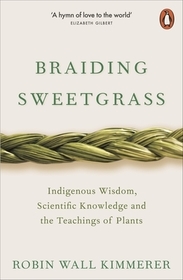
Braiding Sweetgrass
Indigenous Wisdom, Scientific Knowledge and the Teachings of Plants
-
20% KEDVEZMÉNY?
- Kiadói listaár GBP 12.99
-
6 205 Ft (5 910 Ft + 5% áfa)
Az ár azért becsült, mert a rendelés pillanatában nem lehet pontosan tudni, hogy a beérkezéskor milyen lesz a forint árfolyama az adott termék eredeti devizájához képest. Ha a forint romlana, kissé többet, ha javulna, kissé kevesebbet kell majd fizetnie.
- Kedvezmény(ek) 20% (cc. 1 241 Ft off)
- Kedvezményes ár 4 964 Ft (4 728 Ft + 5% áfa)
- A kedvezmény érvényes eddig: 2026. május 31.
4 964 Ft

Beszerezhetőség
Becsült beszerzési idő: A Prosperónál jelenleg nincsen raktáron, de a kiadónál igen. Beszerzés kb. 3-5 hét..
A Prosperónál jelenleg nincsen raktáron.
Why don't you give exact delivery time?
A beszerzés időigényét az eddigi tapasztalatokra alapozva adjuk meg. Azért becsült, mert a terméket külföldről hozzuk be, így a kiadó kiszolgálásának pillanatnyi gyorsaságától is függ. A megadottnál gyorsabb és lassabb szállítás is elképzelhető, de mindent megteszünk, hogy Ön a lehető leghamarabb jusson hozzá a termékhez.
A termék adatai:
- Kiadó Penguin Books Ltd
- Megjelenés dátuma 2020. április 23.
- Kötetek száma B-format paperback
- ISBN 9780141991955
- Kötéstípus Puhakötés
- Terjedelem400 oldal
- Méret 196x128x25 mm
- Súly 302 g
- Nyelv angol 106
Kategóriák
Hosszú leírás:
'A hymn of love to the world ... A journey that is every bit as mythic as it is scientific, as sacred as it is historical, as clever as it is wise' Elizabeth Gilbert, author of Eat, Pray, Love
As a botanist, Robin Wall Kimmerer has been trained to ask questions of nature with the tools of science. As a member of the Citizen Potawatomi Nation, she embraces the notion that plants and animals are our oldest teachers. In Braiding Sweetgrass, Kimmerer brings these two ways of knowledge together.
Drawing on her life as an indigenous scientist, a mother, and a woman, Kimmerer shows how other living beings - asters and goldenrod, strawberries and squash, salamanders, algae, and sweetgrass - offer us gifts and lessons, even if we've forgotten how to hear their voices. In a rich braid of reflections that range from the creation of Turtle Island to the forces that threaten its flourishing today, she circles toward a central argument: that the awakening of a wider ecological consciousness requires the acknowledgment and celebration of our reciprocal relationship with the rest of the living world. For only when we can hear the languages of other beings will we be capable of understanding the generosity of the earth, and learn to give our own gifts in return.

