

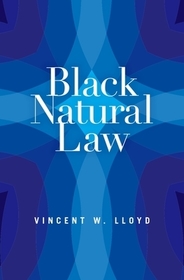
Black Natural Law
-
10% KEDVEZMÉNY?
- A kedvezmény csak az 'Értesítés a kedvenc témákról' hírlevelünk címzettjeinek rendeléseire érvényes.
- Kiadói listaár GBP 81.00
-
36 571 Ft (34 830 Ft + 5% áfa)
Az ár azért becsült, mert a rendelés pillanatában nem lehet pontosan tudni, hogy a beérkezéskor milyen lesz a forint árfolyama az adott termék eredeti devizájához képest. Ha a forint romlana, kissé többet, ha javulna, kissé kevesebbet kell majd fizetnie.
- Kedvezmény(ek) 10% (cc. 3 657 Ft off)
- Kedvezményes ár 32 914 Ft (31 347 Ft + 5% áfa)
Iratkozzon fel most és részesüljön kedvezőbb árainkból!
Feliratkozom
36 571 Ft

Beszerezhetőség
Megrendelésre a kiadó utánnyomja a könyvet. Rendelhető, de a szokásosnál kicsit lassabban érkezik meg.
Why don't you give exact delivery time?
A beszerzés időigényét az eddigi tapasztalatokra alapozva adjuk meg. Azért becsült, mert a terméket külföldről hozzuk be, így a kiadó kiszolgálásának pillanatnyi gyorsaságától is függ. A megadottnál gyorsabb és lassabb szállítás is elképzelhető, de mindent megteszünk, hogy Ön a lehető leghamarabb jusson hozzá a termékhez.
A termék adatai:
- Kiadó OUP USA
- Megjelenés dátuma 2016. július 28.
- ISBN 9780199362189
- Kötéstípus Keménykötés
- Terjedelem200 oldal
- Méret 160x239x22 mm
- Súly 451 g
- Nyelv angol 0
Kategóriák
Rövid leírás:
Black Natural Law offers a new way of understanding the African American political tradition, and it argues that this tradition has collapsed into incoherence. Vincent William Lloyd revives Black politics by telling stories of its central figures in a way that exhibits the connections between their religious, philosophical, and political ideas.
TöbbHosszú leírás:
Black Natural Law offers a new way of understanding the African American political tradition. Iconoclastically attacking left (including James Baldwin and Audre Lorde), right (including Clarence Thomas and Ben Carson), and center (Barack Obama), Vincent William Lloyd charges that many Black leaders today embrace secular, white modes of political engagement, abandoning the deep connections between religious, philosophical, and political ideas that once animated Black politics. By telling the stories of Frederick Douglass, Anna Julia Cooper, W. E. B. Du Bois, and Martin Luther King, Jr., Lloyd shows how appeals to a higher law, or God's law, have long fueled Black political engagement. Such appeals do not seek to implement divine directives on earth; rather, they pose a challenge to the wisdom of the world, and they mobilize communities for collective action. Black natural law is deeply democratic: while charismatic leaders may provide the occasion for reflection and mobilization, all are capable of discerning the higher law using our human capacities for reason and emotion.
At a time when continuing racial injustice poses a deep moral challenge, the most powerful intellectual resources in the struggle for justice have been abandoned. Black Natural Law recovers a rich tradition, and it examines just how this tradition was forgotten. A Black intellectual class emerged that was disconnected from social movement organizing and beholden to white interests. Appeals to higher law became politically impotent: overly rational or overly sentimental. Recovering the Black natural law tradition provides a powerful resource for confronting police violence, mass incarceration, and today's gross racial inequities.
Black Natural Law will change the way we understand natural law, a topic central to the Western ethical and political tradition. While drawing particularly on African American resources, Black Natural Law speaks to all who seek politics animated by justice.
I find Lloyd's claim provocative and persuasive. Black Natural Law offers a stunning critique of the sociological ideologies that lay the foundation for oppression. It assumes the integrity of all humans-which is the basis for its 'normativity'-and asserts that we can know 'God's law,' 'the dictates of conscience, or simply justice' (5).
Tartalomjegyzék:
Contents
Preface
Chapter 1: On Frederick Douglass
Chapter 2: On Anna Julia Cooper
Chapter 3: On W. E. B. Du Bois
Chapter 4: On Martin Luther King, Jr.
Chapter 5: Decline and Detritus
Conclusion: Against Pessimism
Afterword: Beyond Secularism and Multiculturalism

