

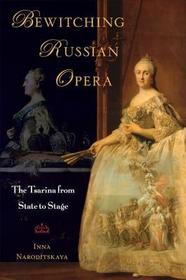
Bewitching Russian Opera
The Tsarina from State to Stage
-
10% KEDVEZMÉNY?
- A kedvezmény csak az 'Értesítés a kedvenc témákról' hírlevelünk címzettjeinek rendeléseire érvényes.
- Kiadói listaár GBP 115.00
-
51 922 Ft (49 450 Ft + 5% áfa)
Az ár azért becsült, mert a rendelés pillanatában nem lehet pontosan tudni, hogy a beérkezéskor milyen lesz a forint árfolyama az adott termék eredeti devizájához képest. Ha a forint romlana, kissé többet, ha javulna, kissé kevesebbet kell majd fizetnie.
- Kedvezmény(ek) 10% (kb. 5 192 Ft)
- Kedvezményes ár 46 730 Ft (44 505 Ft + 5% áfa)
Iratkozzon fel most és részesüljön kedvezőbb árainkból!
Feliratkozom
51 922 Ft

Beszerezhetőség
Megrendelésre a kiadó utánnyomja a könyvet. Rendelhető, de a szokásosnál kicsit lassabban érkezik meg.
Why don't you give exact delivery time?
A beszerzés időigényét az eddigi tapasztalatokra alapozva adjuk meg. Azért becsült, mert a terméket külföldről hozzuk be, így a kiadó kiszolgálásának pillanatnyi gyorsaságától is függ. A megadottnál gyorsabb és lassabb szállítás is elképzelhető, de mindent megteszünk, hogy Ön a lehető leghamarabb jusson hozzá a termékhez.
A termék adatai:
- Kiadó OUP USA
- Megjelenés dátuma 2012. február 16.
- ISBN 9780195340587
- Kötéstípus Keménykötés
- Terjedelem416 oldal
- Méret 165x239x38 mm
- Súly 743 g
- Nyelv angol
- Illusztrációk 72 music examples and 9 halftone illustrations 0
Kategóriák
Rövid leírás:
In Bewitching Russian Opera , Inna Naroditskaya investigates the musical lives of four female monarchs who ruled Russia for most of the eighteenth century - Catherine I, Anna, Elizabeth, and Catherine the Great. Engaging with ethnomusicological, historical, and philological approaches, her study traces the tsarinas' deeply invested interest in musical drama, as each built theaters, established drama schools, commissioned operas and ballets, and themselves wrote and produced musical plays. Naroditskaya examines the creative output of the tsarinas across the contexts in which they worked and lived, revealing significant connections between their personal creative aspirations and contemporary musical-theatrical practices, and the political and state affairs conducted during their reigns. Bewitching Russian Opera ultimately demonstrates that the theater served as an experimental space for these imperial women, in which they rehearsed, probed, and formulated gender and class roles, and enacted on the musical stage political ambitions and international conquests which they would later carry out on the world stage itself.
TöbbHosszú leírás:
In Bewitching Russian Opera: The Tsarina from State to Stage, Inna Naroditskaya investigates the musical lives of four female monarchs who ruled Russia for most of the eighteenth century - Catherine I, Anna, Elizabeth, and Catherine the Great. Engaging with ethnomusicological, historical, and philological approaches, her study traces the tsarinas' deeply invested interest in musical drama, as each built theaters, established drama schools, commissioned operas and ballets, and themselves wrote and produced musical plays. Naroditskaya examines the creative output of the tsarinas across the contexts in which they worked and lived, revealing significant connections between their personal creative aspirations and contemporary musical-theatrical practices, and the political and state affairs conducted during their reigns. Bewitching Russian Opera ultimately demonstrates that the theater served as an experimental space for these imperial women, in which they rehearsed, probed, and formulated gender and class roles, and enacted on the musical stage political ambitions and international conquests which they would later carry out on the world stage itself.
Beginning with the eighteenth-century imperial court, Naroditskaya illustrates the increased theatricality of the court and the popularity of musical theater among nobles, which occurred alongside an appropriation of folk and court ceremonies into the theater. Through contemporary performance theory, she demonstrates how the opportunity for role-playing and costume-changing in performative spaces allowed individuals to cross otherwise rigid boundaries of class and gender. A close look at a series of operas and musical theater productions - from Catherine the Great's fairy tale operas to Tchaikovsky's Pique Dame - illuminates the transition of these royal women from powerful political and cultural figures during their own reigns, to a marginalized and unreal Other under the patriarchal dominance of the subsequent period. These tsarinas successfully fostered the concept of a modern nation and collective national identity, only to then have their power and influence undone in Russian cultural consciousness through the fairy-tales operas of the 19th century that positioned tsarinas as "magical" and dangerous figures rightfully displaced and conquered--by triumphant heroes on the stage, and by the new patriarchal rulers in the state.
The author makes her arguments in a refreshingly conversational style that avoids jargon, and her writing about music dazzles. Reading this important book is like enjoying an evening of opera with an in-the-know friend who keeps whispering gem-like observations. Russian opera deserves this fresh perspective.
Tartalomjegyzék:
Introduction
Overture: Russia's Imperial Prima Donnas
1. Russian Minervas Staging Empire
2. The Play of Possibilities: Serfs Enacting Aristocrats and Countesses Playing Peasants
3. Catherine the Empress(ario): Making Tales into Princely Operas
4. Oleg at the Roots of Russian Historical Opera
Interlude: to Patria and Nation
5. Ruslan and Liudmila
6. Rusalka: Water, Power, and Women
7. Mlada and Inescapable Female Circle
8. Sadko: He is the Hero!
9. Queen of Spades
Bibliography

