

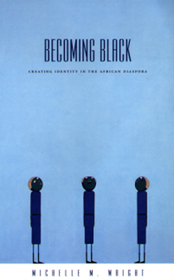
Becoming Black
Creating Identity in the African Diaspora
-
10% KEDVEZMÉNY?
- A kedvezmény csak az 'Értesítés a kedvenc témákról' hírlevelünk címzettjeinek rendeléseire érvényes.
- Kiadói listaár GBP 90.00
-
40 635 Ft (38 700 Ft + 5% áfa)
Az ár azért becsült, mert a rendelés pillanatában nem lehet pontosan tudni, hogy a beérkezéskor milyen lesz a forint árfolyama az adott termék eredeti devizájához képest. Ha a forint romlana, kissé többet, ha javulna, kissé kevesebbet kell majd fizetnie.
- Kedvezmény(ek) % (cc. 0 Ft off)
- Kedvezményes ár 0 Ft (0 Ft + 5% áfa)
Iratkozzon fel most és részesüljön kedvezőbb árainkból!
Feliratkozom
40 635 Ft

Beszerezhetőség
A kiadónál véglegesen elfogyott, nem rendelhető. Érdemes újra keresni a címmel, hátha van újabb kiadás.
Why don't you give exact delivery time?
A beszerzés időigényét az eddigi tapasztalatokra alapozva adjuk meg. Azért becsült, mert a terméket külföldről hozzuk be, így a kiadó kiszolgálásának pillanatnyi gyorsaságától is függ. A megadottnál gyorsabb és lassabb szállítás is elképzelhető, de mindent megteszünk, hogy Ön a lehető leghamarabb jusson hozzá a termékhez.
A termék adatai:
- Kiadó Duke University Press
- Megjelenés dátuma 2004. január 7.
- Kötetek száma Cloth over boards
- ISBN 9780822332114
- Kötéstípus Keménykötés
- Terjedelem296 oldal
- Méret 241x152x28 mm
- Súly 522 g
- Nyelv angol 0
Kategóriák
Hosszú leírás:
Wright argues that three nineteenth-century American and European works addressing race-Thomas Jefferson’s Notes on the State of Virginia, G. W. F. Hegel’s Philosophy of History, and Count Arthur de Gobineau’s Essay on the Inequality of the Human Races-were particularly influential in shaping twentieth-century ideas about Black subjectivity. She considers these treatises in depth and describes how the revolutionary Black thinkers W. E. B. Du Bois, AimÉ CÉsaire, LÉopold SÉdar Senghor, and Frantz Fanon countered the theories they promulgated. She explains that while Du Bois, CÉsaire, Senghor, and Fanon rejected the racist ideologies of Jefferson, Hegel, and Gobineau, for the most part they did so within what remained a nationalist, patriarchal framework. Such persistent nationalist and sexist ideologies were later subverted, Wright shows, in the work of Black women writers including Carolyn Rodgers and Audre Lorde and, more recently, the British novelists Joan Riley, Naomi King, Jo Hodges, and Andrea Levy. By considering diasporic writing ranging from Du Bois to Lorde to the contemporary African novelists Simon Njami and Daniel Biyaoula, Wright reveals Black subjectivity as rich, varied, and always evolving.
Tartalomjegyzék:
Acknowledgments
vii
Introduction: Being and Becoming Black in the West 1
1. The European and American Invention of the Black Other
27
2. The Trope of Masking in the Works of W. E. B. Du Bois, Leopold Sedar Senghor, and Aime Cesaire 66
3. Some Women Disappear: Frantz Fanon's Legacy in Black Nationalist Thought and the Black (Male) Subject
111
4. How I Got Ovah: Masking to Motherhood and the Diasporic Black Female Subject 136
5. The Urban Diaspora: Black Subjectivities in Berlin, London, and Paris
183
Epilogue: If the Black Is a Subject, Can the Subaltern Speak? 229
Notes 233
Bibliography 261
Index 269

