

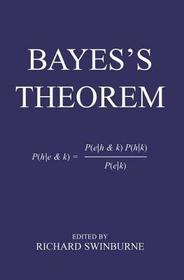
Bayes's Theorem
Sorozatcím: Proceedings of the British Academy; 113;
-
10% KEDVEZMÉNY?
- A kedvezmény csak az 'Értesítés a kedvenc témákról' hírlevelünk címzettjeinek rendeléseire érvényes.
- Kiadói listaár GBP 20.00
-
9 030 Ft (8 600 Ft + 5% áfa)
Az ár azért becsült, mert a rendelés pillanatában nem lehet pontosan tudni, hogy a beérkezéskor milyen lesz a forint árfolyama az adott termék eredeti devizájához képest. Ha a forint romlana, kissé többet, ha javulna, kissé kevesebbet kell majd fizetnie.
- Kedvezmény(ek) 10% (kb. 903 Ft)
- Kedvezményes ár 8 127 Ft (7 740 Ft + 5% áfa)
Iratkozzon fel most és részesüljön kedvezőbb árainkból!
Feliratkozom
9 030 Ft

Beszerezhetőség
Becsült beszerzési idő: A Prosperónál jelenleg nincsen raktáron, de a kiadónál igen. Beszerzés kb. 3-5 hét..
A Prosperónál jelenleg nincsen raktáron.
Why don't you give exact delivery time?
A beszerzés időigényét az eddigi tapasztalatokra alapozva adjuk meg. Azért becsült, mert a terméket külföldről hozzuk be, így a kiadó kiszolgálásának pillanatnyi gyorsaságától is függ. A megadottnál gyorsabb és lassabb szállítás is elképzelhető, de mindent megteszünk, hogy Ön a lehető leghamarabb jusson hozzá a termékhez.
A termék adatai:
- Kiadó The British Academy
- Megjelenés dátuma 2005. május 12.
- ISBN 9780197263419
- Kötéstípus Puhakötés
- Terjedelem160 oldal
- Méret 234x157x4 mm
- Súly 312 g
- Nyelv angol
- Illusztrációk 3 tables, 3 figures 0
Kategóriák
Rövid leírás:
Bayes's theorem is a tool for assessing how probable evidence makes some hypothesis. The papers in this volume consider the worth and applicability of the theorem. Richard Swinburne sets out the philosophical issues. Elliott Sober argues that there are other criteria for assessing hypotheses. Colin Howson, Philip Dawid and John Earman consider how the theorem can be used in statistical science, in weighing evidence in criminal trials, and in assessing evidence for the occurrence of miracles. David Miller argues for the worth of the probability calculus as a tool for measuring propensities in nature rather than the strength of evidence. The volume ends with the original paper containing the theorem, presented to the Royal Society in 1763.
TöbbHosszú leírás:
Bayes's theorem is a tool for assessing how probable evidence makes some hypothesis. The papers in this volume consider the worth and applicability of the theorem. Richard Swinburne sets out the philosophical issues. Elliott Sober argues that there are other criteria for assessing hypotheses. Colin Howson, Philip Dawid and John Earman consider how the theorem can be used in statistical science, in weighing evidence in criminal trials, and in assessing evidence for the occurrence of miracles. David Miller argues for the worth of the probability calculus as a tool for measuring propensities in nature rather than the strength of evidence. The volume ends with the original paper containing the theorem, presented to the Royal Society in 1763.
TöbbTartalomjegyzék:
- Introduction
- Bayesianism - its scopes and limits
- Bayesianism in Statistics
- Bayes's Theorem and Weighing Evidence by Juries
- Bayes, Hume, Price, and Miracles
- Propensities May Satisfy Bayes's Theorem
- 'An Essay Towards Solving a Problem in the Doctrine of Chances' by Thomas Bayes, presented to the Royal Society by Richard Price. Preceded by a historical introduction by G A Barnard.

