

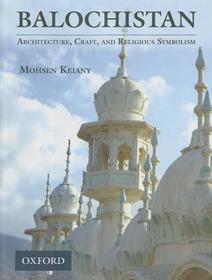
Balochistan: Architecture, Craft, and Religious Symbolism
-
10% KEDVEZMÉNY?
- A kedvezmény csak az 'Értesítés a kedvenc témákról' hírlevelünk címzettjeinek rendeléseire érvényes.
- Kiadói listaár GBP 41.99
-
18 958 Ft (18 055 Ft + 5% áfa)
Az ár azért becsült, mert a rendelés pillanatában nem lehet pontosan tudni, hogy a beérkezéskor milyen lesz a forint árfolyama az adott termék eredeti devizájához képest. Ha a forint romlana, kissé többet, ha javulna, kissé kevesebbet kell majd fizetnie.
- Kedvezmény(ek) 10% (kb. 1 896 Ft)
- Kedvezményes ár 17 062 Ft (16 250 Ft + 5% áfa)
Iratkozzon fel most és részesüljön kedvezőbb árainkból!
Feliratkozom
18 958 Ft

Beszerezhetőség
A kiadónál véglegesen elfogyott, nem rendelhető. Érdemes újra keresni a címmel, hátha van újabb kiadás.
Why don't you give exact delivery time?
A beszerzés időigényét az eddigi tapasztalatokra alapozva adjuk meg. Azért becsült, mert a terméket külföldről hozzuk be, így a kiadó kiszolgálásának pillanatnyi gyorsaságától is függ. A megadottnál gyorsabb és lassabb szállítás is elképzelhető, de mindent megteszünk, hogy Ön a lehető leghamarabb jusson hozzá a termékhez.
A termék adatai:
- Kiadó OUP Pakistan
- Megjelenés dátuma 2015. január 22.
- ISBN 9780199067848
- Kötéstípus Keménykötés
- Terjedelem370 oldal
- Méret 246x189x24 mm
- Súly 828 g
- Nyelv angol
- Illusztrációk 295 colour/ 75 b&w 0
Kategóriák
Hosszú leírás:
This research work explores the living tradition of Baluchistan and provides a deeper understanding of its religo-cultural aspects. The architectural and artistic traditions are well-documented in this book. The material presented on prayer rugs, tents, and aspects of the nomadic and semi-nomadic architecture is wholly original. The research first focuses on the social environment of Baluchistan, in order to understand the input of local culture and tribo-religious
influences of local architecture. The Baluchi lifestyle is analysed on a broad plane, taking into account native architecture including mosques and symbolic minarets as key factors, together with their design, characteristics, social contextualisation and methods of production.
Tartalomjegyzék:
Contents
Preface xiii
List of Figures xv
List of Tables xxiv
Introduction 1
1.1 Study Contents 3
1.2 The Aims and Objectives of the Study 6
1.3 Methodological Approachs 7
1.4 The Structure of the Book 11
Balochistan: Geography, History, and Language 13
2.1 Geography 15
2.2 History 17
2.3 Tribal structure 19
2.3.1 Baloch 20
2.3.2Brahui 20
2.3.3Pashtuns 21
2.4 Languages in Balochistan22
2.4.1 Balochi 23
2.4.2 Brahui 24
2.4.3 Pashto 24
2.4.4 Dari 25
2.5 Socio-economic Environment
26
2.5.1 Social Pattern 27
2.5.2 Economy 28
2.6 Faith and Beliefs 32
Nomadic Lifestyle in Balochistan 35
3.1Nomadic Architecture
38
3.1.1 Tents 39
3.2 The Structure of the Black Tent in Balochistan 42
3.2.1 Cloth 44
3.2.2Tent Flaps 47
3.2.3 Guy Rope 48
3.2.4 Fastener51
3.2.5 Pole or Post 53
3.2.6 Pegs 56
3.3 Encampment
59
Semi-nomadic Lifestyle in Balochistan 65
4.1 Architecture and Construction Materials 68
4.2 Reed, Timber and Straw Houses 69
4.3 Tree Shelters 77
4.4 Semi-nomadic Stone Houses 79
4.5 Semi-nomadic Mud and Earth Shelters
85
The Settled People of Balochistan 91
5.1 Architecture and Building Materials 92
5.2 The Structure of Permanent Houses in Rural Areas of Balochistan 93
5.2.1 Foundations 93
5.2.2 Roofing 95
5.2.2.1 Temporary Roofs 96
5.2.2.2 Permanent Roofs 96
5.3 Typology of the Houses in Rural Areas of Balochistan 103
5.3.1 Courtyard Houses 103
5.3.2 One-room Houses 104
5.3.3 Two-room Houses 105
5.3.4 Three or more Room Houses in Balochistan 107
5.3.5 Two Storey Houses
110
5.4 Socio-cultural Environment of Balochistan 111
5.5 Gender Segregation 115
5.5.1 Purdah or Privacy of Women 117
5.5.2 Baithak: A Sitting Room for Men 118
Balochi Rugs: Functions and Meanings 123
6.1 Prayer Rugs (Symbolic Meanings and Function) 126
6.1.1Straw Praying Mat 126
6.1.2 Prayer Rug or Carpet (Janamaz) 128
6.2 Symbolic Animals on Baloch Rugs 132
6.3 Symbolic Forms of Mosques on Baloch Pictorial Textiles 136
Mosque Architecture 143
7.1 Islamic Architecture 145
7.2 Mosque, the House of God 148
7.2 Development of Mosque Architecture 150
7.4 Typology of Rural Mosques in Balochistan 153
7.4.1 The Stoned Marked Mosques 154
7.4.2 The Short or Low Wall Mosques 159
7.4.3 The Permanent Roofed Mosques 165
Architectural Elements of the Mosque: Function and Meanings 175
8.1 Mihrab or Prayer Niches180
8.1.1 The Appearance of Mihrab182
8.1.2 The Symbolic Meaning of Mihrab 185
8.2 The Pulpit or Minbar 188
8.2.1 History of Minbar 188
8.2.2 Symbolic Meaning of Minbar 189
8.3 The Dome 190
8.3.1 Symbolic Meaning of the Dome 192
8.4 Minaret 193
8.4.1 The Origin of the Minaret 194
8.5 The Functions of the Minaret 207
8.5.1 The Minaret for Calls to Prayer 207
8.5.2 The Minaret, the Tower of Victory 210
8.5.3 The Minaret as Navigation Sign 213
8.6 Typology of the Minaret 216
8.7 The Significance of the Minaret in Balochistan 221
8.7.1 Site Visits (Case Study) 221
8.7.2 Visual Survey 222
8.7.3 Interview 225
8.8 Typology of Minarets in Balochistan 227
8.8.1 Manufactured Minaret 227
8.8.2 Handmade Minaret 233
Symbolism and the Minaret 241
9.1 What is a Symbol? 243
9.2 What is the Significance of a Symbol? 247
9.3 Religious Symbols 250
9.4 Minaret as an Islamic Symbol 255
9.5Symbolic Minarets in Balochistan 262
9.5.1 Stone Minarets 262
9.5.1.1 Single-stone Minarets 262
9.5.1.2 Cairn-stone and Stone-tower Minarets 264
9.5.2 Brick Minarets 267
9.5.3 Jar Minarets 269
9.5.4 Arrow Minarets 272
9.5.5 Glass Minarets 274
9.5.6 Horn Minarets 276
9.5.7 Hookah Minarets 280
Conclusion 287
10.1 The General Findings of the Research 290
10.2 General Findings in Relation to Minarets and Symbolism 295
10.3 Survey Analysis: Specific Findings and Original Contribution to New Knowledge
297
10.4 Illustrations 300
10.5 Research Limitations 300
10.6 Recommendations for Future Research 302
Bibliography 305
Glossary 331

