

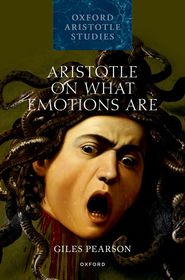
Aristotle on What Emotions Are
Sorozatcím: Oxford Aristotle Studies Series;
-
20% KEDVEZMÉNY?
- A kedvezmény csak az 'Értesítés a kedvenc témákról' hírlevelünk címzettjeinek rendeléseire érvényes.
- Kiadói listaár GBP 103.00
-
46 504 Ft (44 290 Ft + 5% áfa)
Az ár azért becsült, mert a rendelés pillanatában nem lehet pontosan tudni, hogy a beérkezéskor milyen lesz a forint árfolyama az adott termék eredeti devizájához képest. Ha a forint romlana, kissé többet, ha javulna, kissé kevesebbet kell majd fizetnie.
- Kedvezmény(ek) 20% (cc. 9 301 Ft off)
- Kedvezményes ár 37 204 Ft (35 432 Ft + 5% áfa)
- A kedvezmény érvényes eddig: 2026. június 30.
Iratkozzon fel most és részesüljön kedvezőbb árainkból!
Feliratkozom
46 504 Ft

Beszerezhetőség
Becsült beszerzési idő: A Prosperónál jelenleg nincsen raktáron, de a kiadónál igen. Beszerzés kb. 3-5 hét..
A Prosperónál jelenleg nincsen raktáron.
Why don't you give exact delivery time?
A beszerzés időigényét az eddigi tapasztalatokra alapozva adjuk meg. Azért becsült, mert a terméket külföldről hozzuk be, így a kiadó kiszolgálásának pillanatnyi gyorsaságától is függ. A megadottnál gyorsabb és lassabb szállítás is elképzelhető, de mindent megteszünk, hogy Ön a lehető leghamarabb jusson hozzá a termékhez.
A termék adatai:
- Kiadó OUP Oxford
- Megjelenés dátuma 2024. augusztus 16.
- ISBN 9780198879343
- Kötéstípus Keménykötés
- Terjedelem400 oldal
- Méret 240x160x26 mm
- Súly 754 g
- Nyelv angol 529
Kategóriák
Rövid leírás:
Providing the first systematic interpretation of what Aristotle thinks emotions are and pointing to some philosophical merits of his account, this book addresses, among other things, his view on how emotions form; how they relate to beliefs and perceptions; how they relate to desires; and how different emotions are distinguished from each other.
TöbbHosszú leírás:
This book provides the first systematic interpretation of what Aristotle thinks occurrent emotions are and points to some philosophical merits of his account. It is argued that he holds that emotions are representational pleasures or distresses that are formed in response to other intentional states that apprehend their objects. Even this bare formulation of his view is notable in several respects. First, the idea that the pleasures or distresses of emotions are representational--directed at objects in the world (or ourselves)--contrasts sharply with accounts that identify emotions with non-representational sensations or feelings. Second, the notion that emotions are pleasurable or distressful responses to other intentional states that apprehend their objects provides a fundamental contrast with many current accounts which instead view emotions as (in part) modes of apprehension or kinds of epistemic state themselves. Third, Aristotle's view stands in opposition to motivational accounts of emotions, insofar as while he thinks that emotions interact with desires or motivational states in important ways, he does not think they are themselves (even in part) motivational states. They are representational pleasures or distresses alone. Together, these three points give Aristotle a novel understanding of the representational role emotions play; namely, neither descriptive, nor prescriptive, but reactive. Besides developing these ideas, both textually and philosophically, the book also explores how Aristotle individuates emotion types; his understanding of the material dimension of emotions; and how his view can provide a novel explanation of recalcitrant emotions, a notoriously problematic phenomenon for many recent accounts of emotions.
The reader who studies this book and compares it carefully with Aristotle's text will learn a great deal, the process would have been made easier by a number of editorial modifications, such as supplying missing words and numerals and observing the difference of gerunds from participles.
Tartalomjegyzék:
Introduction : What This Book Aims to Achieve (and What It Doesn't). A Map
Some Key Terminology and Distinctions. The Prospects for an Analysis of Emotions in Terms of Other Intentional States
PART I. EMOTIONS AS PLEASURES AND DISTRESSES
Emotions as Representational Hedonic States
Pleasure and Distress as Contributing to the Individuation of Emotion Types
Emotions as Hedonic States That Are Formed in Response to Intentional States That Apprehend Their Objects
Emotions and the Account(s) of Pleasure in the Ethics
PART II. Emotion-Types
Anger (orgē)
Some Other (Putative) Links between Emotions and Desires
Appetite (Epithumia)
PART III. THE MATERIAL DIMENSION OF EMOTIONS AND SOME PROBLEMATIC CASES
The Material or Bodily Dimension of Emotions
Some Problematic Cases and the Supplements in the EE Specification of the Emotions
PART IV. FURTHER PHILOSOPHICAL CONSIDERATIONS AND A SIGNIFICANT PHILOSOPHICAL ADVANTAGE
Contrast with a Contemporary Motivational Theory. Which Representational Role(s) Do Emotions Play?
Explaining Recalcitrant Emotions with Aristotle
Catalogue of Aristotle's Emotions as Representational Pleasures or Distresses

