

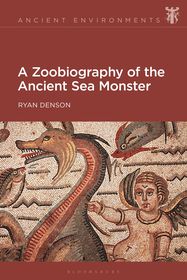
A Zoobiography of the Ancient Sea Monster
Sorozatcím: Ancient Environments;
-
10% KEDVEZMÉNY?
- A kedvezmény csak az 'Értesítés a kedvenc témákról' hírlevelünk címzettjeinek rendeléseire érvényes.
- Kiadói listaár GBP 85.00
-
38 377 Ft (36 550 Ft + 5% áfa)
Az ár azért becsült, mert a rendelés pillanatában nem lehet pontosan tudni, hogy a beérkezéskor milyen lesz a forint árfolyama az adott termék eredeti devizájához képest. Ha a forint romlana, kissé többet, ha javulna, kissé kevesebbet kell majd fizetnie.
- Kedvezmény(ek) 10% (kb. 3 837 Ft)
- Kedvezményes ár 34 540 Ft (32 895 Ft + 5% áfa)
Iratkozzon fel most és részesüljön kedvezőbb árainkból!
Feliratkozom
38 377 Ft

Beszerezhetőség
Még nem jelent meg, de rendelhető. A megjelenéstől számított néhány héten belül megérkezik.
Why don't you give exact delivery time?
A beszerzés időigényét az eddigi tapasztalatokra alapozva adjuk meg. Azért becsült, mert a terméket külföldről hozzuk be, így a kiadó kiszolgálásának pillanatnyi gyorsaságától is függ. A megadottnál gyorsabb és lassabb szállítás is elképzelhető, de mindent megteszünk, hogy Ön a lehető leghamarabb jusson hozzá a termékhez.
A termék adatai:
- Kiadó Bloomsbury Publishing (UK)
- Megjelenés dátuma 2026. szeptember 3.
- Kötetek száma Hardback
- ISBN 9781350451872
- Kötéstípus Keménykötés
- Terjedelem232 oldal
- Méret 234x156 mm
- Nyelv angol
- Illusztrációk 17 bw illus 700
Kategóriák
Hosszú leírás:
Examining a vast corpus of literary references and artistic representations, this volume offers the first comprehensive study of the ketos - the sea monster imagined by the ancient Greeks and Romans.
The chapters examine the three central traditions of thought that existed about this imaginary animal in Graeco-Roman culture. The first tradition concerns the ketos as a divinely associated monster: a force aligned with marine gods (chiefly Poseidon) and one which was fought by Heracles and Perseus. The second tradition features the ketos in more naturalised contexts, as depicted among ancient geographers and historians, as a type of monster roaming the distant waters of the Atlantic and Indian Oceans. The third tradition concerns the fusion of the ketos with Leviathan and the other Old Testament sea monsters in the minds of early Christians. Accordingly, this classical sea monster became the image of the creature that swallowed Jonah, and, alternatively, a monster associated with the Devil and cosmological evil.
While other monsters of Graeco-Roman mythology, such as the Minotaur and Medusa, are household names in modern popular culture, the ketos has effectively been lost in the modern imagination. Yet it was no small part of the Graeco-Roman imagination. This sea monster formed a key aspect as to how the sea-adjacent societies of ancient Greece and Rome perceived ancient marine environments. It was this fantastic sea beast that so haunted ancient mariners, and in turn, which contributed to ancient perceptions of the marine world as a profoundly alien and hostile environment.
Tartalomjegyzék:
List of Figures
List of Tables
Acknowledgements
Series Preface
Note on Orthography
List of Abbreviations
Introduction: Recovering a Lost Classical Monster
Part One: The Divinely Associated Tradition
Chapter 1: The Pets of Marine Divinities
Chapter 2: The Hesione and Andromeda Myths
Part Two: The Ethnographical Tradition
Chapter 3: The Kete of the Mediterranean
Chapter 4: The Kete of the Outer Seas
Part Three: The Christian Tradition
Chapter 5: Jonah's Ketos
Chapter 6: The Christian Assimilation of Leviathan and the Ketos
Conclusion: Did the Ancient Greeks and Romans Believe in their Sea Monsters?
Notes
Bibliography
Index
Notes
Bibliography
Index

