

-
10% KEDVEZMÉNY?
- Kiadói listaár GBP 155.00
-
69 982 Ft (66 650 Ft + 5% áfa)
Az ár azért becsült, mert a rendelés pillanatában nem lehet pontosan tudni, hogy a beérkezéskor milyen lesz a forint árfolyama az adott termék eredeti devizájához képest. Ha a forint romlana, kissé többet, ha javulna, kissé kevesebbet kell majd fizetnie.
- Kedvezmény(ek) 10% (cc. 6 998 Ft off)
- Kedvezményes ár 62 984 Ft (59 985 Ft + 5% áfa)
62 984 Ft

Beszerezhetőség
Még nem jelent meg, de rendelhető. A megjelenéstől számított néhány héten belül megérkezik.
Why don't you give exact delivery time?
A beszerzés időigényét az eddigi tapasztalatokra alapozva adjuk meg. Azért becsült, mert a terméket külföldről hozzuk be, így a kiadó kiszolgálásának pillanatnyi gyorsaságától is függ. A megadottnál gyorsabb és lassabb szállítás is elképzelhető, de mindent megteszünk, hogy Ön a lehető leghamarabb jusson hozzá a termékhez.
A termék adatai:
- Kiadás sorszáma 1
- Kiadó Routledge
- Megjelenés dátuma 2026. szeptember 29.
- ISBN 9781041158820
- Kötéstípus Keménykötés
- Terjedelem228 oldal
- Méret 234x156 mm
- Nyelv angol 0
Kategóriák
Rövid leírás:
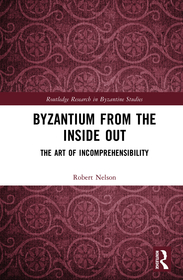
No matter how smart we are, we end up grappling with ideas that resist understanding. In this book, Byzantium is identified as the archetypical civilization that nurtured its innermost doubts. It shows how religious dogma was riddled with inscrutable quandaries, where the highest imaginable entity—God—is considered incomprehensible.
TöbbHosszú leírás:
No matter how smart we are, we end up grappling with ideas that resist understanding. In this book, Byzantium is identified as the archetypical civilization that nurtured its innermost doubts. It shows how religious dogma was riddled with inscrutable quandaries, where the highest imaginable entity—God—is considered incomprehensible. Byzantine writers develop a doctrine of divine knowledge as a holy hiatus; and many of the features of Byzantine culture that look odd or irregular to modern eyes are expressions of a religious outlook that venerates a God who cannot be grasped.
From this perspective, Byzantium from the Inside Out solves many puzzles. Why did Byzantine artists paint pictures where spatial recession points the wrong way? Why did they create mosaics and icons with a gold backdrop when it negates space? Why were the faithful so terrified of a worm that chewed their flesh in the grave after death? Why did Byzantine people sigh so much and why did they speculate about what people did not say rather than what they did say? And why were they constantly reproaching themselves?
Beginning with what is special about Byzantium, the book reveals how incomprehensibility became a dimension of later aesthetics. The study of this inside-out civilization gives non-Byzantinists a new reason to look back to Byzantium, where the aesthetics of incomprehensibility were born. Byzantium from the Inside Out uses philological methods to support its theories but it does not demand a knowledge of Greek and is written in accessible language.
TöbbTartalomjegyzék:
Acknowledgments
List of Abbreviations
Chapter 1: Introduction to an incomprehensible empire
Chapter 2: Reverse perspective: how Byzantine art looks at itself
Chapter 3: The holy inscrutability of the gold backdrop
Chapter 4: Your personal worm: the story of the soil
Chapter 5: The empire of sighs: Byzantium and the breath of regret
Chapter 6: Apophatic grammar: the exegetical artefact from nothing
Chapter 7: Beating yourself up in Byzantium: a history of contrition and heartbreak
Chapter 8: The name Byzantium
Chapter 9: Conclusion
Index
Több
