

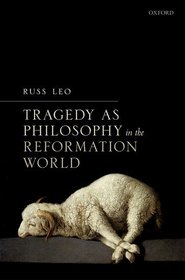
Tragedy as Philosophy in the Reformation World
- Publisher's listprice GBP 100.00
-
45 150 Ft (43 000 Ft + 5% VAT)
The price is estimated because at the time of ordering we do not know what conversion rates will apply to HUF / product currency when the book arrives. In case HUF is weaker, the price increases slightly, in case HUF is stronger, the price goes lower slightly.
- Discount 10% (cc. 4 515 Ft off)
- Discounted price 40 635 Ft (38 700 Ft + 5% VAT)
Subcribe now and take benefit of a favourable price.
Subscribe
45 150 Ft

Availability
printed on demand
Why don't you give exact delivery time?
Delivery time is estimated on our previous experiences. We give estimations only, because we order from outside Hungary, and the delivery time mainly depends on how quickly the publisher supplies the book. Faster or slower deliveries both happen, but we do our best to supply as quickly as possible.
Product details:
- Publisher OUP Oxford
- Date of Publication 29 January 2019
- ISBN 9780198834212
- Binding Hardback
- No. of pages312 pages
- Size 243x162x22 mm
- Weight 586 g
- Language English 0
Categories
Short description:
Russ Leo examines how Reformation poets, theologians, and humanist critics turned to tragedy to understand providence and agencies human and divine. He explores the ways in which influential early modern poets and critics argued that tragedy was distinct from performance, and uniquely suited to philosophical reflection.
MoreLong description:
Tragedy as Philosophy in the Reformation World examines how sixteenth- and seventeenth-century poets, theologians, and humanist critics turned to tragedy to understand providence and agencies human and divine in the crucible of the Reformation. Rejecting familiar assumptions about tragedy, vital figures like Philipp Melanchthon, David Pareus, Lodovico Castelvetro, John Rainolds, and Daniel Heinsius developed distinctly philosophical ideas of tragedy, irreducible to drama or performance, inextricable from rhetoric, dialectic, and metaphysics. In its proximity to philosophy, tragedy afforded careful readers crucial insight into causality, probability, necessity, and the terms of human affect and action. With these resources at hand, poets and critics produced a series of daring and influential theses on tragedy between the 1550s and the 1630s, all directly related to pressing Reformation debates concerning providence, predestination, faith, and devotional practice. Under the influence of Aristotle's Poetics, they presented tragedy as an exacting forensic tool, enabling attentive readers to apprehend totality. And while some poets employed tragedy to render sacred history palpable with new energy and urgency, others marshalled a precise philosophical notion of tragedy directly against spectacle and stage-playing, endorsing anti-theatrical theses on tragedy inflected by the antique Poetics. In other words, this work illustrates the degree to which some of the influential poets and critics in the period, emphasized philosophical precision at the expense of--even to the exclusion of--dramatic presentation. In turn, the work also explores the impact of scholarly debates on more familiar works of vernacular tragedy, illustrating how William Shakespeare's Hamlet and John Milton's 1671 poems take shape in conversation with philosophical and philological investigations of tragedy. Tragedy as Philosophy in the Reformation World demonstrates how Reformation took shape in poetic as well as theological and political terms while simultaneously exposing the importance of tragedy to the history of philosophy.
Leo's TPRW offers a selection of insightful analyses that could interest a range of scholars in different fields, including reception history of the Bible and of Aristotle, historical theology, history of philosophy, history of the Protestant Reformation, literary criticism, and hermeneutics, and it may even help a tragedian or two. There is so much of value here.
Table of Contents:
Introduction--Tragedy's Intellectual Resources
Part I [Protasis] Tragedy and Theology
Reformation Tragedy and Revelation: David Pareus' Tragic Typology
Lodovico Castelvetro's Heterodox Poetics: Tragic Accommodation
John Rainolds, Hamlet, and the Anti-Theatrical Aristotle
Part II [Epitasis] Tragedy and the Limits of Philosophy
Necessity, Between Tragedy and Predestination: Daniel Heinsius and De tragoediae constitutione (1611)
Greek Tragedy and Hebrew Antiquity in John Milton's 1671 Poems
Conclusion [Catastrophe]

