

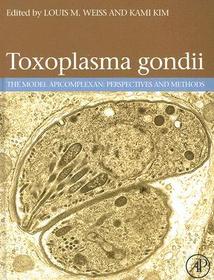
Toxoplasma Gondii
The Model Apicomplexan. Perspectives and Methods
- Publisher's listprice EUR 143.00
-
55 855 Ft (53 196 Ft + 5% VAT)
The price is estimated because at the time of ordering we do not know what conversion rates will apply to HUF / product currency when the book arrives. In case HUF is weaker, the price increases slightly, in case HUF is stronger, the price goes lower slightly.
- Discount 10% (cc. 5 585 Ft off)
- Discounted price 50 270 Ft (47 876 Ft + 5% VAT)
Subcribe now and take benefit of a favourable price.
Subscribe
55 855 Ft

Availability
Out of print
Why don't you give exact delivery time?
Delivery time is estimated on our previous experiences. We give estimations only, because we order from outside Hungary, and the delivery time mainly depends on how quickly the publisher supplies the book. Faster or slower deliveries both happen, but we do our best to supply as quickly as possible.
Product details:
- Edition number 2
- Publisher Elsevier Science
- Date of Publication 2 March 2007
- ISBN 9780123695420
- Binding Hardback
- No. of pages800 pages
- Size 246x188 mm
- Weight 1980 g
- Language English 0
Categories
Long description:
Toxoplasmosis is caused by a one-celled protozoan parasite known as Toxoplasma gondii. In the United States, it is estimated that approximately 30% of cats, the primary carriers, have been infected by T. gondii. Most humans contract toxoplasmosis by eating cyst-contaminated raw or undercooked meat, vegetables, or milk products or when they come into contact with the T. gondii eggs from cat feaces while cleaning a cat's litterbox, gardening, or playing in a sandbox. Approx 1 in 4 (more than 60 million) people in the USA are infected with the parasite, and in the UK between 0.5 and 1% of individuals become infected each year. By the age of 50, 40% of people test positive for the parasite. The predilection of this parasite is for the central nervous system (CNS) causing behavioral and personality alterations as well as fatal necrotizing encephalitis, and is especially dangerous for HIV infected patients.Though there have been tremendous strides in our understanding of the biology of Toxoplasma gondii in the last decade, there has been no systemic review of all of the information that has accumulated. Toxoplasma gondii provides the first comprehensive summary of literature on this organism by leading experts in the field who were responsible for organising the 7th International Congress on Toxoplasmosis in May 2003. It offeres systematic reviews of the biology of this pathogen as well as descriptions of the methods and resources used. Within the next year the T. gondii genome will be completed making this an indispensable research resource for biologists, physicians, parasitologists, and for all those contemplating experiments using T. gondii.
MoreTable of Contents:
Chapter 1: The History and Life Cycle of Toxoplasma gondii
Chapter 2: The Ultrastructure of Toxoplasma gondii
Chapter 3: Population Structure and Epidemiology of Toxoplasma gondii
Chapter 4: Clinical Disease and Diagnostics
Chapter 5: Ocular Disease Due to Toxoplasma gondii
Chapter 6: Toxoplasmosis in Wild and Domestic Animals
Chapter 7: Toxoplasma Animal Models and Therapeutics
Chapter 8: Biochemistry and Metabolism of Toxoplasma gondii
Chapter 9: The Apicoplast and Mitochondrion of Toxoplasma gondii
Chapter 10: Calcium Storage and Homeostasis in Toxoplasma gondii
Chapter 11: Toxoplasma Secretory Proteins and their Roles in Cell Invasion and Intracellular Survival
Chapter 12: Alterations in Host-Cell Biology due to Toxoplasma gondii
Chapter 13: Bradyzoite Development
Chapter 14: Development and Application of Classical Genetics in Toxoplasma gondii
Chapter 15: Genetic Manipulation of Toxoplasma gondii
Chapter 16: Gene Regulation
Chapter 17: The Secretory Protein Repertoire and Expanded Gene Families of Toxoplasma gondii and Other Apicomplexa
Chapter 18: Comparative Aspects of Nucleotide and Amino-acid Metabolism in Toxoplasma gondii and other Apicomplexa
Chapter 19: Toxoplasma as a Model System for Apicomplexan Drug Discovery
Chapter 20: Proteomics of Toxoplasma gondii
Chapter 21: Cerebral Toxoplasmosis: Pathogenesis and Host Resistance
Chapter 22: Innate Immunity in Toxoplasma gondii Infection
Chapter 23: Adaptive Immunity and Genetics of the Host Immune Response
Chapter 24: Vaccination Against Toxoplasmosis: Current Status and Future Prospects
Epilogue
INDEX
More
