

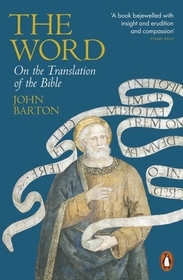
The Word
On the Translation of the Bible
-
GET 20% OFF
- Publisher's listprice GBP 12.99
-
5 864 Ft (5 585 Ft + 5% VAT)
The price is estimated because at the time of ordering we do not know what conversion rates will apply to HUF / product currency when the book arrives. In case HUF is weaker, the price increases slightly, in case HUF is stronger, the price goes lower slightly.
- Discount 20% (cc. 1 173 Ft off)
- Discounted price 4 691 Ft (4 468 Ft + 5% VAT)
- Discount is valid until: 31 August 2026
4 691 Ft

Availability
Uncertain availability. Please turn to our customer service.
Why don't you give exact delivery time?
Delivery time is estimated on our previous experiences. We give estimations only, because we order from outside Hungary, and the delivery time mainly depends on how quickly the publisher supplies the book. Faster or slower deliveries both happen, but we do our best to supply as quickly as possible.
Product details:
- Publisher Penguin Books Ltd
- Date of Publication 2 November 2023
- Number of Volumes B-format paperback
- ISBN 9780141993041
- Binding Paperback
- No. of pages320 pages
- Size 198x129x18 mm
- Weight 238 g
- Language English 0
Categories
Long description:
From the Sunday Times bestselling author of A History of the Bible, this is the story of how the Bible has been translated, and why it matters
The Bible is held to be both universal and specific, the source of fundamental truths inscribed in words that are exact and sacred. For much of the history of Judaism and almost the entirety of Christianity, however, believers have overwhelmingly understood scripture not in the languages in which it was first written but rather in their own - in translation.
This book examines how saints, scholars and interpreters from ancient times down to the present have produced versions of the Bible in the language of their day while remaining true to the original. It explains the challenges they negotiated, from minute textual ambiguities up to the sweep of style and stark differences in form and thought between the earliest writings and the latest, and it exposes the bearing these have on some of the most profound questions of faith: the nature of God, the existence of the soul and possibility of its salvation.
Reading dozens of renderings alongside their ancient Hebrew and Greek antecedents, John Barton traces the migration of biblical words and ideas across linguistic borders, illuminating original meanings as well as the ways they were recast. 'Translators have been among the principal agents in mediating the Bible's message,' he writes, 'even in shaping what that message is.' At the separation of Christianity from Judaism and Protestantism from Catholicism, Barton demonstrates, vernacular versions did not only spring from fault lines in religious thinking but also inspired and moulded them. The product of a lifetime's study of scripture, The Word itself reveals the central book of our culture anew - as it was written and as we know it.

