

- Publisher's listprice GBP 102.50
-
46 278 Ft (44 075 Ft + 5% VAT)
The price is estimated because at the time of ordering we do not know what conversion rates will apply to HUF / product currency when the book arrives. In case HUF is weaker, the price increases slightly, in case HUF is stronger, the price goes lower slightly.
- Discount 10% (cc. 4 627 Ft off)
- Discounted price 41 651 Ft (39 668 Ft + 5% VAT)
Subcribe now and take benefit of a favourable price.
Subscribe
46 278 Ft

Availability
printed on demand
Why don't you give exact delivery time?
Delivery time is estimated on our previous experiences. We give estimations only, because we order from outside Hungary, and the delivery time mainly depends on how quickly the publisher supplies the book. Faster or slower deliveries both happen, but we do our best to supply as quickly as possible.
Product details:
- Publisher OUP USA
- Date of Publication 18 August 2016
- ISBN 9780190209063
- Binding Hardback
- No. of pages304 pages
- Size 213x137x30 mm
- Weight 635 g
- Language English
- Illustrations 92 halftones and 8 line drawings 0
Categories
Short description:
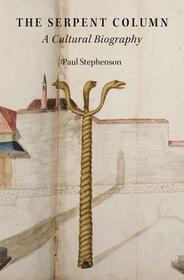
Paul Stephenson twists together multiple strands to relate the cultural biography of a unique monument, the Serpent Column, which stands today in Istanbul 2500 years after it was raised at Delphi.
MoreLong description:
The Serpent Column, a bronze sculpture that has stood in Delphi and Constantinople, today Istanbul, is a Greek representation of the Near Eastern primordial combat myth: it is Typhon, a dragon defeated by Zeus, and also Python slain by Apollo. The column was created after the Battle of Plataia (479BC), where the sky was dominated by serpentine constellations and by the spiralling tails of the Milky Way. It was erected as a votive for Apollo and as a monument to the victory of the united Greek poleis over the Persians. It is as a victory monument that the column was transplanted to Constantinople and erected in the hippodrome. The column remained a monument to cosmic victory through centuries, but also took on other meanings. Through the Byzantine centuries these interpretation were fundamentally Christian, drawing upon serpentine imagery in Scripture, patristic and homiletic writings. When Byzantines saw the monument they reflected upon this multivalent serpentine symbolism, but also the fact that it was a bronze column. For these observers, it evoked the Temple's brazen pillars, Moses' brazen serpent, the serpentine tempter of Genesis (Satan), and the beast of Revelation. The column was inserted into Christian sacred history, symbolizing creation and the end times. The most enduring interpretation of the column, which is unrelated to religion, and therefore survived the Ottoman capture of the city, is as a talisman against snakes and snake-bites. It is this tale that was told by travellers to Constantinople throughout the Middle Ages, and it is this story that is told to tourists today who visit Istanbul. In this book, Paul Stephenson twists together multiple strands to relate the cultural biography of a unique monument.
Paul Stephenson has set a new landmark and a new benchmark in writing the history of objects and the writing of history through objects. The extraordinary fertility of his research, the subtlety of his arguments, the elegant economy of his prose, and the uniqueness of the object all make this a hard act to follow. ... He is, however, the first to label his work a cultural biography. It sounds pretentious, but it aptly echoes late antique and Byzantine beliefs in the animation of statues, and effectively states what should be every historians ideal: to ensure that the relics of the past get a life however inanimate and truncated they may be.
Table of Contents:
Contents
Preface
Acknowledgements
List of Illustrations
1. Studying the Plataian Tripod
2. Plataia
3. Delphi
4. Constantinople in Late Antiquity
5. Constantinople in the Middle Ages
6. Fountain
7. Talisman
8. Istanbul
Conclusion
Bibliography

